Pocket Watches · Watch
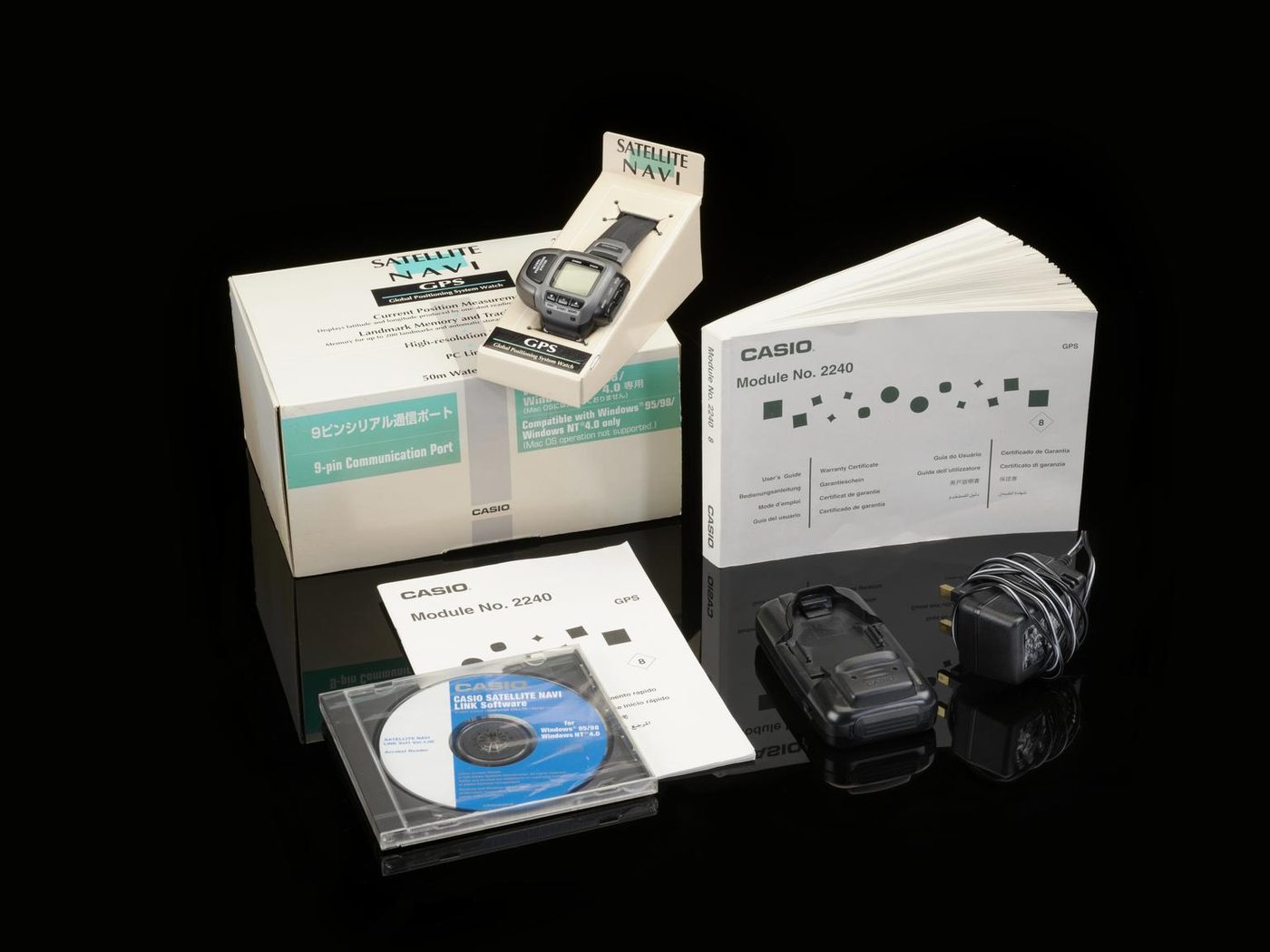
Pocket watch by Casio Computer Company Limited, Japan, circa 1999
- Maker / attribution
- Casio Computer Company Limited (maker)
- Date
- circa 1999
- Historical period
- Mechanical Renaissance (1990 – 2010)
- Country of origin
- Japan
- Place
- Japan, Japan
- Object type
- Watch
- Holding institution
- Science Museum Group, London
- Accession / object no.
- 2021-644
- Credit line
- Jeremy Simons
- Catalogue title (original)
- Casio GPS Watch Module 2240
Record summary
Held and catalogued by Science Museum Group, London (object number 2021-644), this is a watch by Casio Computer Company Limited, made in Japan, Japan, dated circa 1999. The Atlas places it in the Mechanical Renaissance period (1990 – 2010) of its Pocket Watches collection. The record is illustrated with 4 photographs.
Assembled from the source record's structured fields. Dates and attributions are given as the source states them; where a field is missing the Atlas leaves it blank rather than estimating.
Catalogue description
Science Museum Group description
The Casio Navi series, launched in 1999, was the first civilian wristwatch with built in GPS capabilities. This watch is an early example of GPS embedded into a device as a secondary, mobile function, something which has now become synonymous with smartphone technology and has dramatically changed the how we navigate the world. The development of extremely cheap, relatively accurate quartz liquid crystal display (LCD) digital watch movements in the 1990s prompted watch manufacturers to add extra functions to make their watches stand out from the many available. Other novelty features alongside GPS included a blood-pressure monitor, senor for forecasting weather trends and from 2000 MP3 player and digital camera. This watch is a second-generation model from the Casio Navi series. It is an example of a personal navigation assistant, a portable electronic product which combines a positions capability (such as GPS) and navigation functions. The first application of PDAs was used by military forces during the First Gulf War after which a huge civilian market emerged. In ‘GPS Mode’ this watch provided the user with a Position Screen (showing latitude, longitude, bearing, speed and maximum speed), Altitude Graph Screen (shows a bar graph based on altitude readings), Plot Screen (shows a continuous record of movement as a series of dots plotted on the display) and Graphical Navigation Screen (showing the direction and distance from the current location to destination). The user could exchange GPS data between the watch and their computer using the watch’s interface/charger unit. While GPS was a novelty feature when this watch was released, it is now embedded into a range of mobile consumer products. As GPS navigation systems became more and more widespread and popular, the pricing of such system began to fall. GPS watches have become a distinct market and most often used for fitness and sports purposes. They have also been repurposed in research used to monitor mobility in older adults and track patters of physical activities in adolescents. GPS equipped mobile phones have now eclipsed the sale of dedicated GPS units. As smartphone technology developed, a GPS chip eventually became standard. Now everyone has their own personal navigation assistant in their pocket, while this has enabled greater mobility there are also privacy concerns about the use of geo-location data.
Historical context
Mechanical Renaissance (1990 – 2010)
Mechanical watches return as cultural objects; independent watchmaking flourishes.
Collectors' interest in antique pocket watches grew, and a few houses made new pocket watches with grand complications as technical showpieces.
Read the period in the timelineMore pocket watches from this periodEarlier: Quartz Revolution
Atlas type guide
Pocket watches
The pocket watch was the dominant personal timekeeper from the late seventeenth century until the First World War. Its development tracks the history of the escapement: verge watches with fusees until the late eighteenth century; Thomas Mudge's lever escapement (c. 1755) and the cylinder escapement popularised by George Graham and later by Swiss makers; and the Swiss and English lever watches of the nineteenth century. Lépine's bar-bridge calibre and keyless winding made watches thinner and easier to use.
Industrialisation transformed the trade: American factories such as Waltham (from 1850) and Elgin produced interchangeable parts by machine, and Swiss makers responded with their own mechanisation after the 1876 Philadelphia Exhibition. By 1900 a reliable watch was affordable to millions; the finest makers continued to produce complications and precision watches.
What to look for
- The escapement: verge (crown wheel), cylinder, duplex, English or Swiss lever.
- Key winding (a square arbor in dial or back) or keyless crown winding.
- Signatures and serial numbers on the movement, dial and inside case back.
- Hallmarks, case maker's marks and gold or silver standards stamped in the case.
- Dial material: enamel, silver, gold, later printed metal.
Dating clues
- Verge watches dominate before c. 1800; cylinder watches c. 1770–1900; lever watches after c. 1820.
- Keyless winding: increasingly common after c. 1860.
- Manufacturer serial number lists exist for Waltham, Elgin, Longines, Omega, Patek Philippe and others.
General guidance written by the Atlas editors about this kind of object. It is not a statement about this particular piece; for that, rely on the source record above and on physical examination.
Read next:Verge escapementDetached lever escapementFuseeIdentification Centre
Related records
Pocket Watches · 1991
Limited edition watch designed by Eta relating to David Bowie's Serious Moonlight live tour, 1991
Victoria and Albert Museum, London
Pocket Watches · 1993
Pocket watch by Lesage, France, 1993
Palais Galliera - Musée de la Mode de la Ville de Paris
Pocket Watches · 1997
Watch, Hong Kong, 1997
Victoria and Albert Museum, London
Pocket Watches · circa 1998
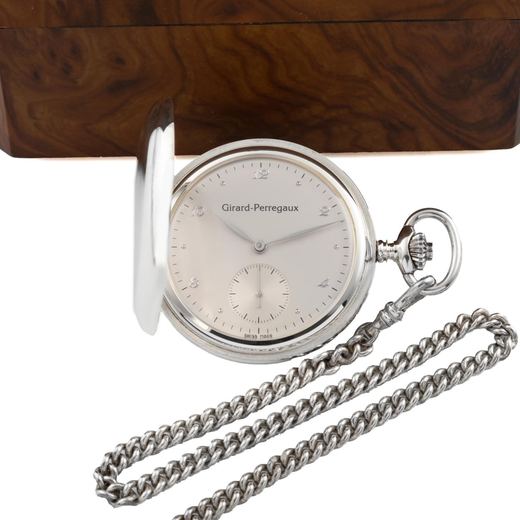
Girard Perregaux pocket watch, circa 1998
Antiquorum auction archive, Geneva
Pocket Watches · 1999
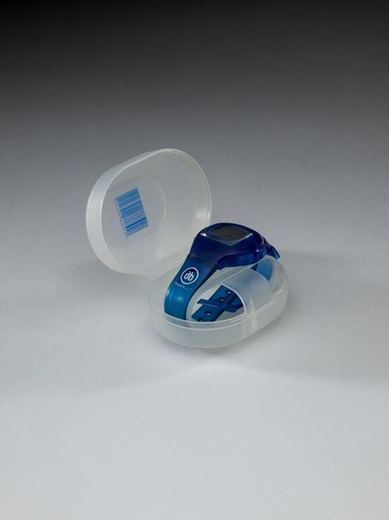
Blue digital talking watch in case, made by Virgin Records to promote the David Bowie album Hours , 1999
Victoria and Albert Museum, London
Pocket Watches · 1999
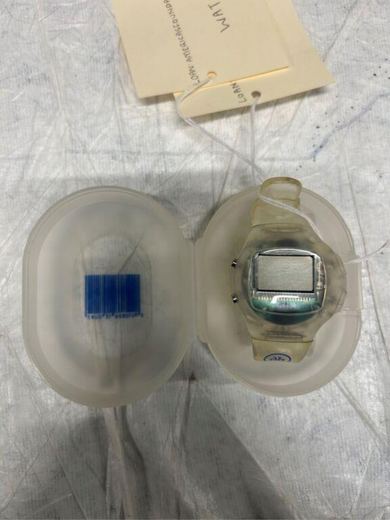
Transparent digital talking watch in case, made by Virgin Records to promote the David Bowie album Hours , 1999
Victoria and Albert Museum, London
Pocket Watches · 1999
Watch made by Akteo/ Canal Productions, to promote David Bowie's show in Paris on the Hours Tour , 1999
Victoria and Albert Museum, London
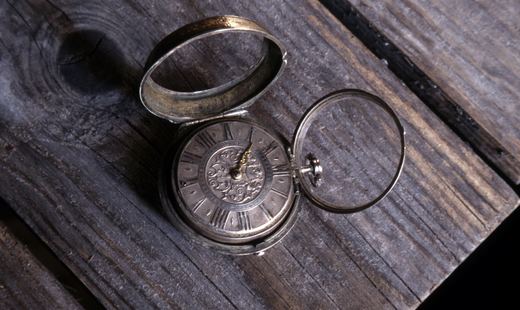
Pocket Watches · 2002
Pocket watch, Sweden, 2002
Blekinge Museum