Clocks · Clock
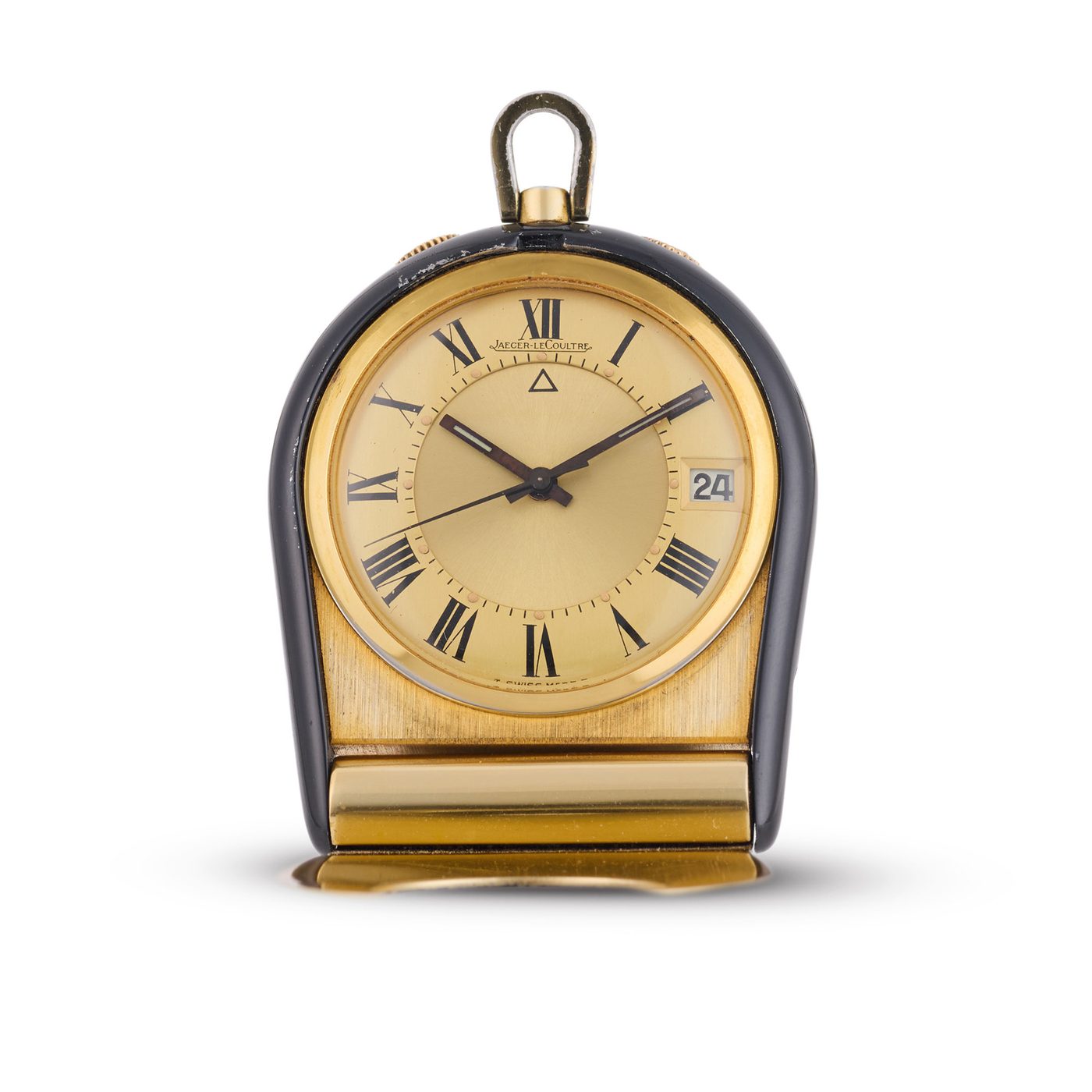
Jaeger Lecoultre Travel Desk Clock, Sold in 1970
- Maker / attribution
- Jaeger Lecoultre (brand / maker)
- Date
- Sold in 1970
- Historical period
- Quartz Revolution (1969 – 1990)
- Country of origin
- Switzerland
- Object type
- Clock
- Materials / technique
- stainless steel
- Auction house
- Antiquorum auction archive, Geneva
- Lot
- Lot 374-63
- Credit line
- Auction lot record: LOT 63
- Catalogue title (original)
- JAEGER LECOULTRE, TRAVEL DESK CLOCK, ALARM, STAINLESS STEEL AND GOLD PLATED
Record summary
Catalogued by Antiquorum auction archive, Geneva (lot Lot 374-63), this is a clock by Jaeger Lecoultre, made in Switzerland, dated Sold in 1970. The Atlas places it in the Quartz Revolution period (1969 – 1990) of its Clocks collection. Materials and techniques recorded by the source: stainless steel. The record is illustrated with 2 photographs.
Assembled from the source record's structured fields. Dates and attributions are given as the source states them; where a field is missing the Atlas leaves it blank rather than estimating.
Catalogue description
Antiquorum catalogue description
EUR 150 - 650 / CHF 150 - 600 / USD 150 - 650 A fine, gold plated and stainless steel, manual wind travel alarm desk clock
Lot specifications (Antiquorum)
Caliber: 911; Case No.: 1249310; Movement No.: 2085091; Signature: Dial, case and movement; Accessories: JLC original fitted box, leather pouch, cetificate and instruction manual
Historical context
Quartz Revolution (1969 – 1990)
Seiko's Astron begins mass quartz timekeeping; traditional industries contract sharply.
Quartz movements and digital displays made accurate clocks cheap and ubiquitous after the early 1970s. LED and LCD clocks, clock radios and radio-controlled clocks appeared, while traditional mechanical clockmaking contracted sharply in Germany, France and Britain.
Read the period in the timelineMore clocks from this periodEarlier: Modern Mechanical Horology
Atlas type guide
Alarm clocks
Alarm work is among the oldest clock functions: monastic clocks woke monks for night prayers, and Renaissance table clocks often carried an alarm disc set by a pin. A separate spring or weight is released at the set time and drives a hammer against a bell. Some early alarms also lit a candle by striking a flint — the 'tinder pistol' alarm.
The cheap, mass-produced alarm clock arrived in the second half of the nineteenth century. American firms such as Seth Thomas and Westclox (the 'Big Ben' of 1910) and German makers such as Junghans and Kienzle made millions of drum-shaped alarms with pin-pallet escapements. Electric, quartz and digital alarm clocks followed in the twentieth century.
What to look for
- A separate alarm-setting dial or disc and an extra winding key.
- Twin bells on top (common after c. 1920) or a bell enclosed in the base.
- Pin-pallet escapements in inexpensive factory alarms.
- Trademarks and patent dates on dial or back.
Dating clues
- Renaissance alarm table clocks: sixteenth to seventeenth centuries.
- Drum alarm clocks: from the 1870s.
- Luminous dials with radium paint: c. 1910–1960.
General guidance written by the Atlas editors about this kind of object. It is not a statement about this particular piece; for that, rely on the source record above and on physical examination.
Related records
Clocks · circa 1960's
Jaeger Lecoultre Ados Calendrier, circa 1960's
Antiquorum auction archive, Geneva
Clocks · circa 1970
Jaeger Lecoultre Table Clock, circa 1970
Antiquorum auction archive, Geneva
Clocks · circa 1970
Jaeger Lecoultre clock, ref. 5052, circa 1970
Antiquorum auction archive, Geneva
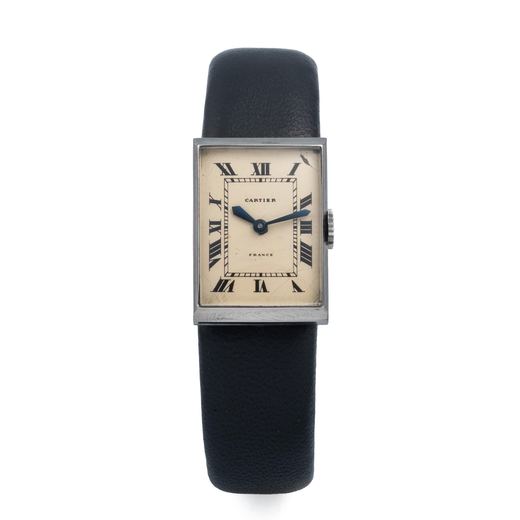
Wristwatches · 1936
Jaeger Lecoultre wristwatch, 1936
Antiquorum auction archive, Geneva
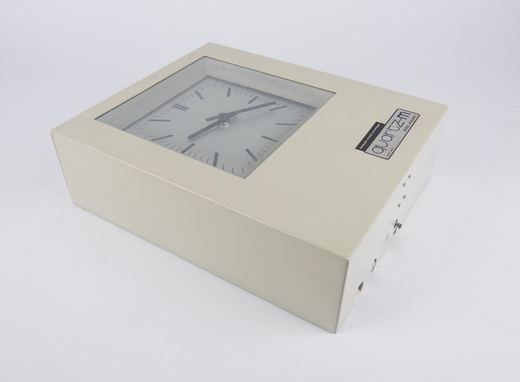
Clocks · 1965-1975
Quartz master clock QM 1, with movement by Patek Phillippe, Switzerland, 1965-1975. Supplied by English Clock Systems.
Science Museum Group, London
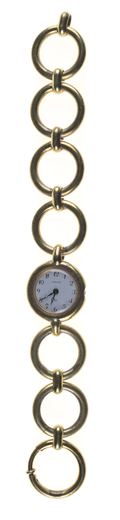
Clocks · 1970
Clock by Heno, Switzerland, 1970
Museum Rotterdam
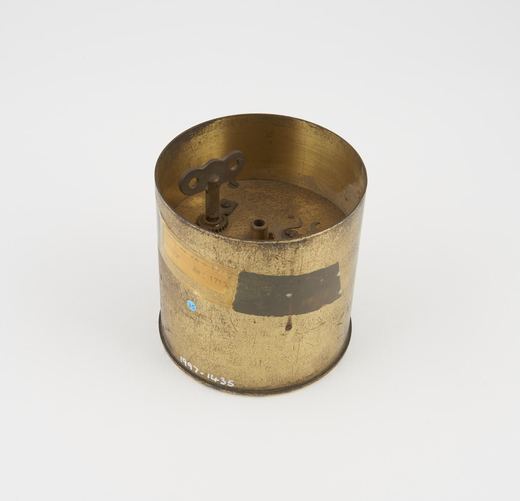
Clocks · 1973
Clock and drum, Mk 2A, c.1973, 7 day, Swiss made.
Science Museum Group, London
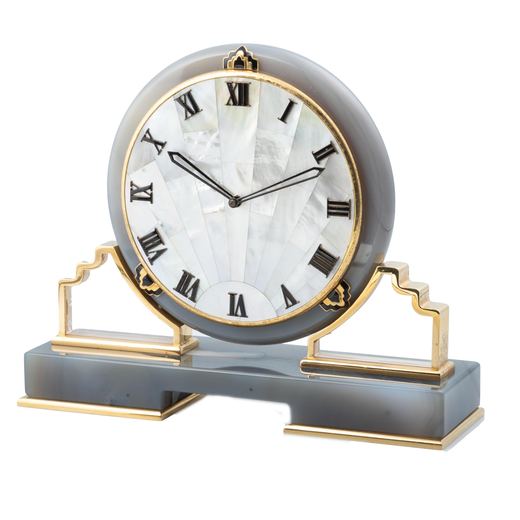
Clocks · circa 1980's
Cartier "art Deco", circa 1980's
Antiquorum auction archive, Geneva