Instruments · Sandglass
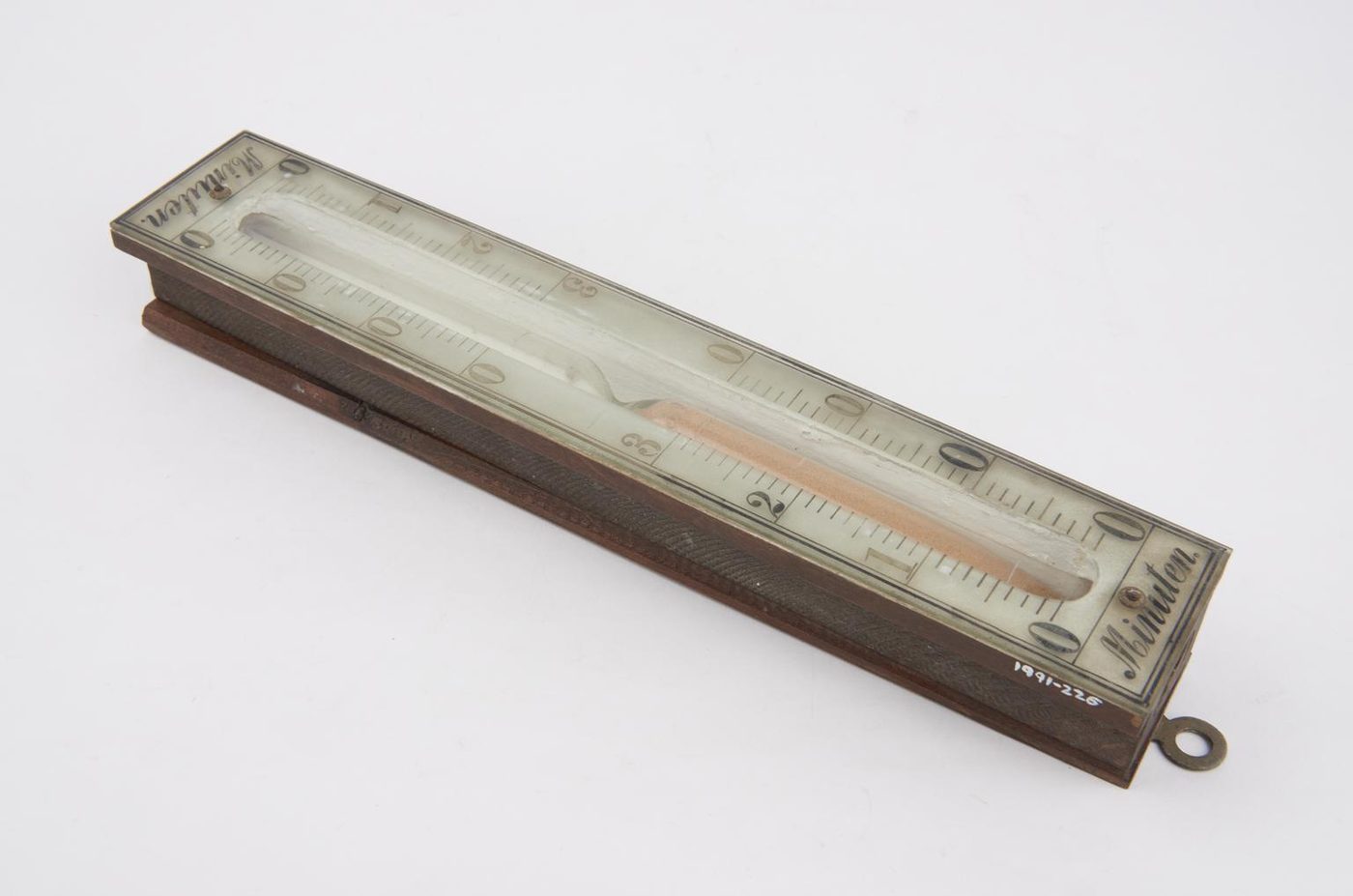
Hourglass, Germany, 1800–1850
- Maker / attribution
- Unrecorded in source
- Date
- 1800–1850
- Historical period
- Precision & Scientific Horology (1750 – 1850)
- Country of origin
- Germany
- Object type
- Sandglass
- Dimensions
- overall: 338 mm x 56 mm x 44 mm,
- Holding institution
- Science Museum Group, London
- Accession / object no.
- 1991-226
- Credit line
- Wellcome Trust
- Catalogue title (original)
- Sand-glass, single with cylindrical ampoules in mahogany mount
Record summary
Held and catalogued by Science Museum Group, London (object number 1991-226), this is a sandglass, made in Germany, dated 1800–1850. The Atlas places it in the Precision & Scientific Horology period (1750 – 1850) of its Instruments collection. Recorded dimensions: overall: 338 mm x 56 mm x 44 mm. The record is illustrated with 1 photograph.
Assembled from the source record's structured fields. Dates and attributions are given as the source states them; where a field is missing the Atlas leaves it blank rather than estimating.
Catalogue description
The source record does not include a narrative description. The structured fields above are reproduced from it.
Historical context
Precision & Scientific Horology (1750 – 1850)
Harrison solves longitude; Mudge invents the lever; Breguet's Paris workshop defines the modern watch.
The longitude problem was solved by the marine chronometer and lunar distance methods; dividing engines made precision scales possible, and observatories set time by transit instruments.
Read the period in the timelineMore instruments from this periodEarlier: Early Modern Horology
Atlas type guide
Sandglasses and hourglasses
A sandglass measures an interval rather than telling the time of day: a fixed quantity of fine material runs from one bulb into the other through a narrow neck. Documented in Europe from the fourteenth century, sandglasses were used on board ship to time watches and to measure speed with the log line, in churches to time sermons, in schools, laboratories and kitchens.
Early glasses were made as two separate bulbs bound together at the neck with a diaphragm and wax and thread; one-piece blown glasses only became usual in the nineteenth century. The 'sand' could be powdered marble, eggshell or metal filings, carefully sieved and dried. Sets of graduated glasses in one frame allowed several intervals to be timed.
What to look for
- Whether the two bulbs are separate and bound at the neck, or blown as one piece.
- The frame: turned wood, brass, silver or pewter, sometimes with pillars and decorated end plates.
- Multiple glasses in a single frame, giving quarter, half, three-quarter and full hours.
- Marine glasses of 30 seconds or 28 seconds used with the log line.
Dating clues
- Bound two-piece glasses predate about 1800; one-piece glasses are generally later.
- Sermon glasses on pulpits and multi-glass frames are characteristic of the sixteenth to eighteenth centuries.
General guidance written by the Atlas editors about this kind of object. It is not a statement about this particular piece; for that, rely on the source record above and on physical examination.
Related records
Instruments · 1701-1800
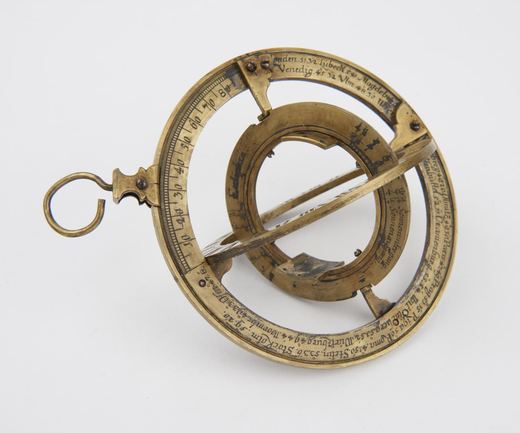
"Astronomical circles" brass part silvered 4in diameter, German, 1701-1800, or " armillary astrolabe"
Science Museum Group, London
Instruments · 1701-1800
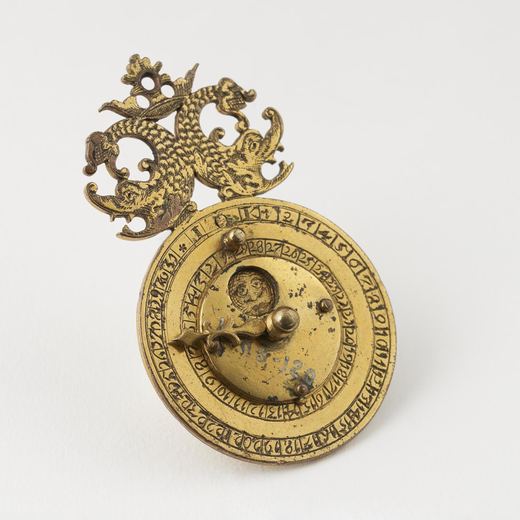
Perpetual calendar, gilt metal, 2½ x 9/16-inches, Germany, 1701-1800.
Science Museum Group, London
Instruments · 1701-1800
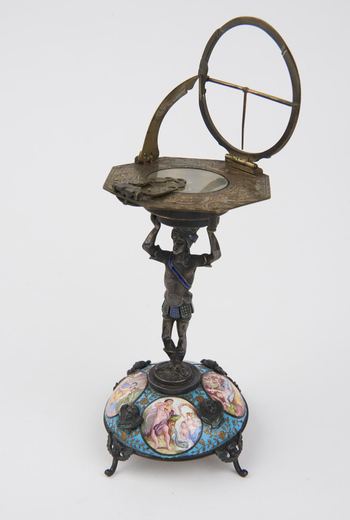
Sundial, Germany, 1701-1800
Science Museum Group, London
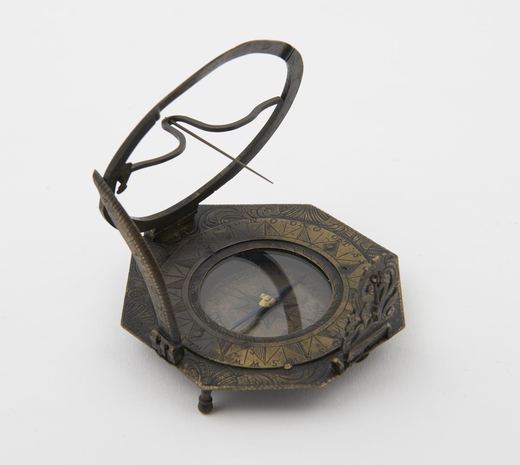
Instruments · 1701-1800
Universal pocket sundial, octagonal base, diameter of hour circle 2 7/8-inches, small plumbob, Germany, 1701-1800 (see note).
Science Museum Group, London
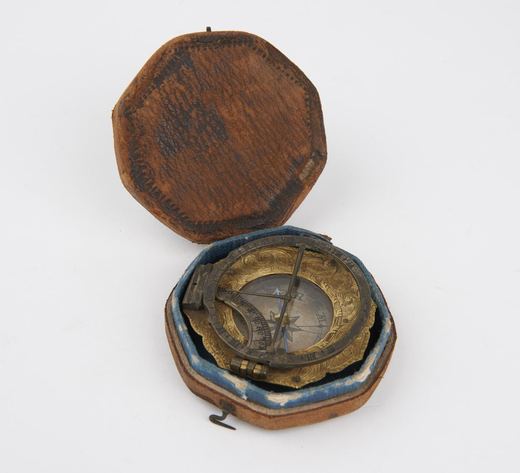
Instruments · 1726-1775
Universal equinoctial sundial of the Augsburg type, signed on the base "L T M" (Ludwig Theodatus Muller). In original case. German, mid 18th century. (B1670)
Science Museum Group, London
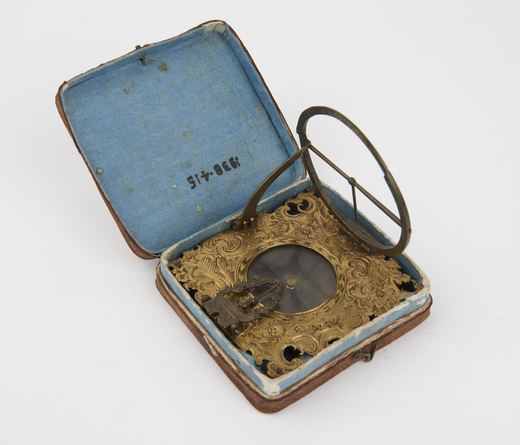
Instruments · 1734-1770
Sundial by Muller, Ludwig Theodatus, Germany, 1734-1770 (Science Museum Group 1938-415)
Science Museum Group, London
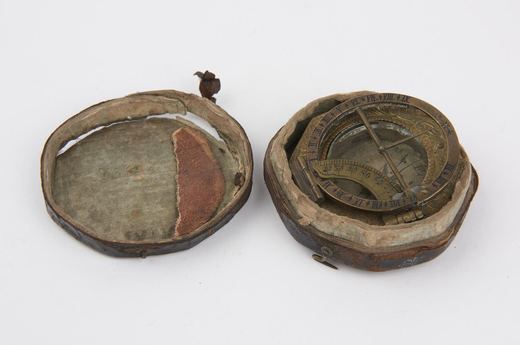
Instruments · 1734-1770
Sundial by Muller, Ludwig Theodatus, Germany, 1734-1770 (Science Museum Group 1991-138)
Science Museum Group, London
Instruments · 1734-1770
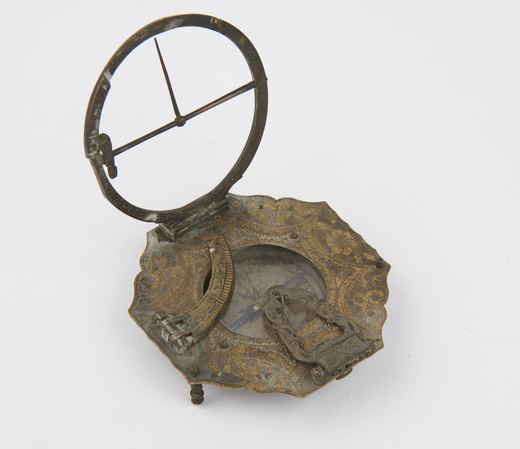
Sundial by Muller, Ludwig Theodatus, Germany, 1734-1770 (Science Museum Group 1991-192)
Science Museum Group, London