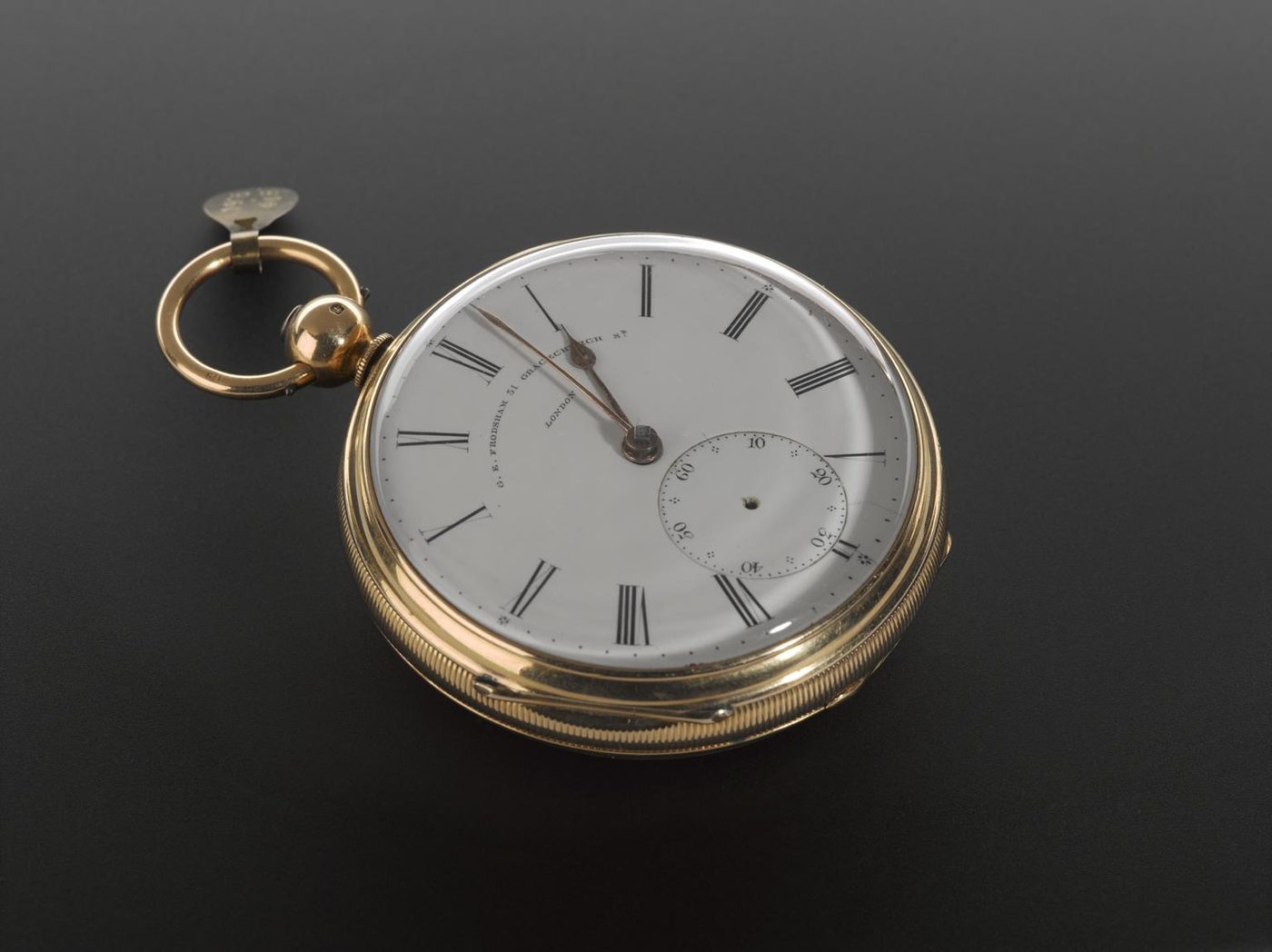
Instruments · Chronometer
Gold-cased Chronometer watch no.728 made by Thomas Earnshaw, 1795-1810
- Maker / attribution
- Earnshaw, Thomas (maker); Thomas Earnshaw (maker)
- Date
- 1795-1810
- Historical period
- Precision & Scientific Horology (1750 – 1850)
- Country of origin
- England
- Place
- London, England, United Kingdom, London
- Object type
- Chronometer
- Dimensions
- Overall: 80 mm x 55 mm x 20 mm, 0.145 kg
- Holding institution
- Science Museum Group, London
- Accession / object no.
- 1915-408
- Credit line
- Mr. Edwin Earnshaw
- Catalogue title (original)
- Chronometer in Gold Case by Thomas Earnsham, 1795-1810
Record summary
Held and catalogued by Science Museum Group, London (object number 1915-408), this is a chronometer by Earnshaw, Thomas, made in London, England, United Kingdom, London, dated 1795-1810. The Atlas places it in the Precision & Scientific Horology period (1750 – 1850) of its Instruments collection. Recorded dimensions: Overall: 80 mm x 55 mm x 20 mm, 0.145 kg. The record is illustrated with 4 photographs.
Assembled from the source record's structured fields. Dates and attributions are given as the source states them; where a field is missing the Atlas leaves it blank rather than estimating.
Catalogue description
The source record does not include a narrative description. The structured fields above are reproduced from it.
Inscriptions & marks
;
Historical context
Precision & Scientific Horology (1750 – 1850)
Harrison solves longitude; Mudge invents the lever; Breguet's Paris workshop defines the modern watch.
The longitude problem was solved by the marine chronometer and lunar distance methods; dividing engines made precision scales possible, and observatories set time by transit instruments.
Read the period in the timelineMore instruments from this periodEarlier: Early Modern Horology
Atlas type guide
Chronographs and split-seconds watches
A chronograph is a watch with an additional seconds hand that can be started, stopped and returned to zero independently of the timekeeping. Louis Moinet built an early example in 1816 and Nicolas Rieussec a recording 'chronographe' in 1821; Adolphe Nicole's heart-shaped reset cam (patented 1862) made the modern return-to-zero possible. Split-seconds (rattrapante) chronographs add a second hand that can be stopped for intermediate times; flyback chronographs restart instantly.
Chronographs were essential tools for doctors (pulsometer scales), artillery (telemeter), engineers and sport. In wristwatches, Valjoux, Venus, Lemania and later the automatic chronographs of 1969 (Zenith El Primero, the Chronomatic Calibre 11 group and Seiko 6139) are milestones.
What to look for
- Push-pieces on the case band or a single button in the crown (monopusher).
- Subsidiary registers for minutes and hours; tachymeter, telemeter or pulsometer scales.
- Column wheel versus cam control visible in the movement.
- Calibre markings of specialist makers (Valjoux, Lemania, Venus, Landeron).
Dating clues
- Pocket chronographs with heart cam reset: after 1862.
- Wrist chronographs: from c. 1910; two-button designs from the 1930s.
- Automatic chronographs: from 1969.
General guidance written by the Atlas editors about this kind of object. It is not a statement about this particular piece; for that, rely on the source record above and on physical examination.
Related records
Instruments · 1795-1805
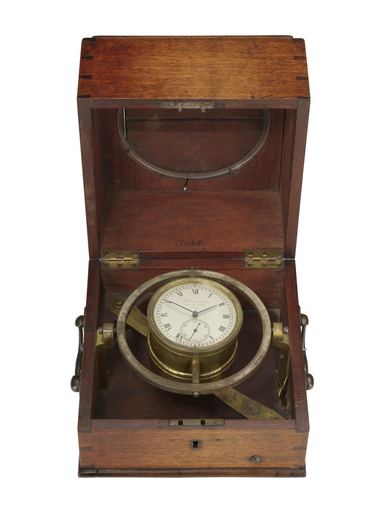
Marine chronometer by Earnshaw, Thomas, England, 1795-1805
Science Museum Group, London
Instruments · 1800-1834
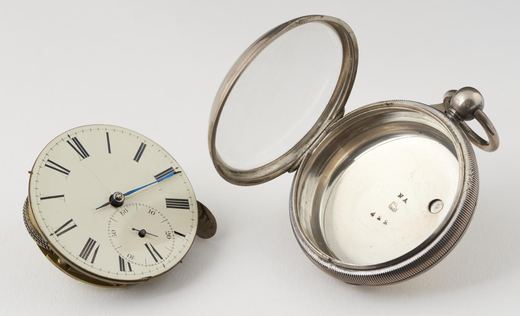
Chronometer watch in silver case by Thos. Earnshaw, London, no.422 (also 2653), 1800-1834
Science Museum Group, London
Instruments · hallmarked 1825
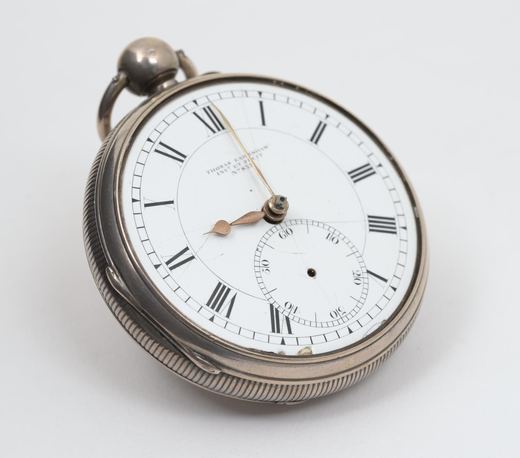
Chronometer watch in silver case by Thomas Earnshaw, London, no.837 (also 3669). Hall marked 1825
Science Museum Group, London
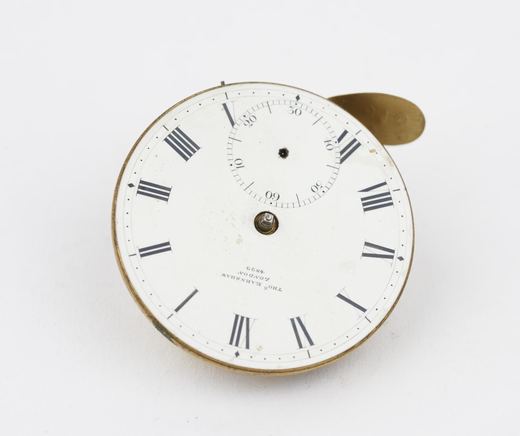
Movements & Components · 1801-1829
Duplex, by T. Earnshaw, 1801-1829, England
Science Museum Group, London
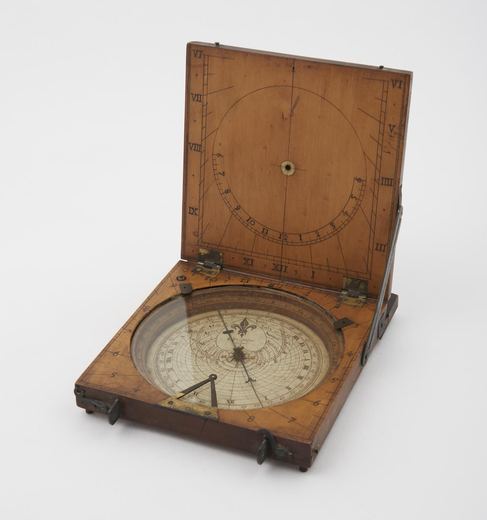
Instruments · 1731-1776
Azimuth compass sundial by James Ferguson, London, England, 1731-1776. Could also be used as a tablet sundial - string gnomon is missing (see note).
Science Museum Group, London
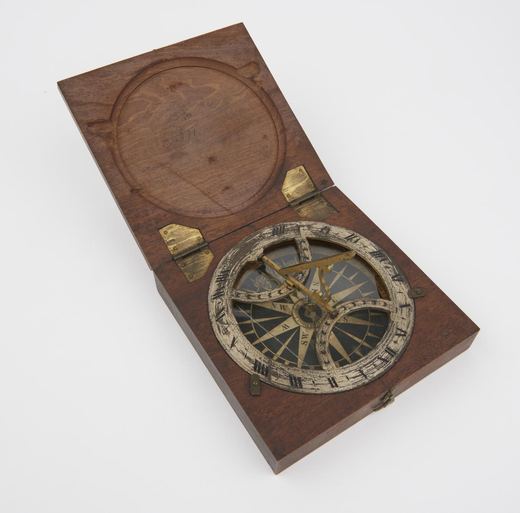
Instruments · 1738-1777
Azimuth sundial 4 3/8" diam, with folding gnomon fitted in mahogany case, made by B. Martin
Science Museum Group, London
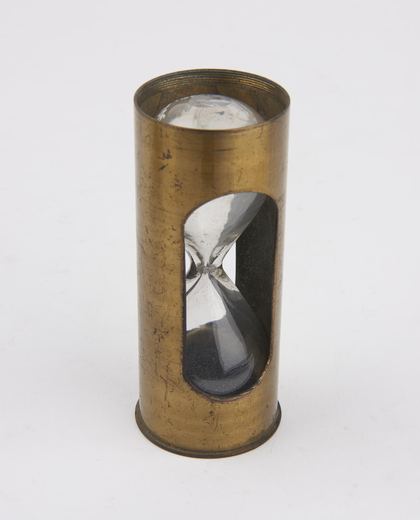
Instruments · 1750–1799
Ship's log glass. Single sand-glass in cylindrical brass mount (end cap missing). 15 seconds. Horne Type B. ?English, second half of the 18th century
Science Museum Group, London
Instruments · 1750–1799
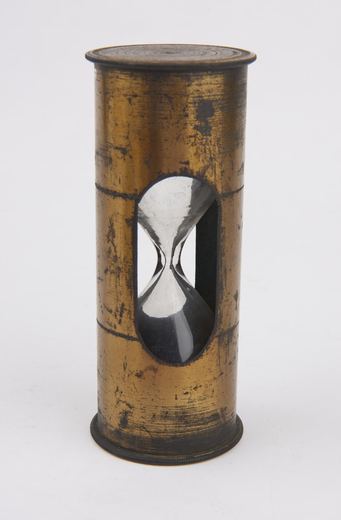
Ship's log glass. Single sand-glass in cylindrical brass mount. 30 seconds. Horne Type B. ?English, second half of the 18th century (Science Museum Group 1991-207)
Science Museum Group, London