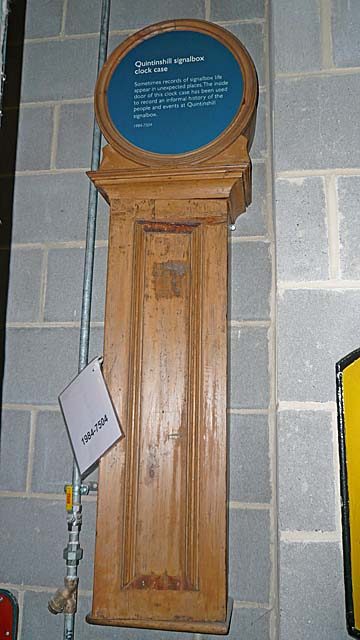
Movements & Components · Clock case
Clock case, United Kingdom, 1915-1916
- Maker / attribution
- Unrecorded in source
- Date
- 1915-1916
- Historical period
- Golden Age of Mechanical Watchmaking (1900 – 1945)
- Country of origin
- United Kingdom
- Place
- United Kingdom, United Kingdom
- Object type
- Clock case
- Dimensions
- overall: 1422 mm x 305 mm x 178 mm,
- Holding institution
- Science Museum Group, London
- Accession / object no.
- 1984-7504
- Credit line
- Hey, Arthur
- Catalogue title (original)
- Clock Case from Quintinshill Signal Box
Record summary
Held and catalogued by Science Museum Group, London (object number 1984-7504), this is a clock case, made in United Kingdom, United Kingdom, dated 1915-1916. The Atlas places it in the Golden Age of Mechanical Watchmaking period (1900 – 1945) of its Movements & Components collection. Recorded dimensions: overall: 1422 mm x 305 mm x 178 mm. The record is illustrated with 1 photograph.
Assembled from the source record's structured fields. Dates and attributions are given as the source states them; where a field is missing the Atlas leaves it blank rather than estimating.
Catalogue description
Science Museum Group description
This Caledonian Railway clock case from the signal box is inscribed on the inside of the door with signallers’ signatures from 1916 until the 1960s, plus events surrounding the life of the signal box. What appears to be the first entry reads ‘Q’HILL May 22 – 1915’. The accident at Quintinshill remains Britain’s worst railway disaster. A double collision, the disaster claimed the lives of over 200 people. Quintinshill was a small block post near Gretna Junction, just over the Scottish border. On the morning of 22 May 1915, circumstances had conspired that three trains were standing at Quintinshill – a goods train on both the up and down loop, and a local service train on the up main line. The signalmen, distracted by passing the time of day, failed to realise that accepting a fourth train, a special troop train travelling to Liverpool, would cause a collision. The troop train, drawn by express engine No. 121 came into sight, travelling very fast and collided head-on with the local train. The local train was sent careering across the track, and the troop train’s fifteen carriages were smashed to smithereens. As if this were not awful enough, more tragedy was about to strike. To compound their negligence, the signalmen had not set the signals to stop another Scottish express which was travelling from Euston. Despite the local train’s guardsman and the crew of one of the goods trains’ best efforts, the driver of the Scottish express could not stop his train. It was being pulled by two four-coupled bogie engines and all in all weight over 600 tons. It crashed into the wreckage, mowing down many of the survivors of the first collision. The Great Central rolling stock of the troop train was gas lit, and as it crashed coals from the engine ignited the gas, spreading the flames aggressively across the whole train. By the time the fire was completely out all 15 coaches of the troop train, four from the Scottish express, and five goods wagons had been completely destroyed by the fire. A final death toll was never established as the service rolls of the troops on the special train was destroyed in the fire. Speculation has been rife about the suggestion of mercy killings and suicides of some soldiers trapped in the troop train, as well as cover-ups and negligence on behalf of the train companies. The signalmen responsible for the disaster were both charged with manslaughter (in England) and culpable homicide (in Scotland) but were released in 1916 and returned to work on the railways.
Historical context
Golden Age of Mechanical Watchmaking (1900 – 1945)
The wristwatch displaces the pocket watch; waterproof cases, self-winding and grand complications.
Precision lever movements, electric clock mechanisms and new alloys (invar, elinvar) characterised the period.
Read the period in the timelineMore movements & components from this periodEarlier: Industrial Revolution
Atlas type guide
Cases, keys and accessories
Clock and watch cases protect the movement and express taste and status. Watch cases were made by separate specialist case-makers whose marks, along with assay hallmarks, help to date and place them. Clock cases were the work of cabinet-makers, bronze founders, ceramic factories and silversmiths, so they belong as much to the history of decorative arts as to horology.
Keys, chatelaines, watch stands, watch papers and winding tools are part of the material culture of timekeeping: they show how timepieces were worn, displayed, wound and maintained.
What to look for
- Case maker's sponsor's marks and assay hallmarks in gold and silver cases.
- Materials: shagreen, tortoiseshell, enamel, porcelain, jasperware, gilt bronze.
- Breguet-style ratchet keys, crank keys and watch-key fobs.
- Engraved names, presentations and dates.
Dating clues
- English hallmark date letters allow exact dating of the case assay.
- Porcelain cases from Meissen and Sèvres: mostly eighteenth century.
General guidance written by the Atlas editors about this kind of object. It is not a statement about this particular piece; for that, rely on the source record above and on physical examination.
Related records
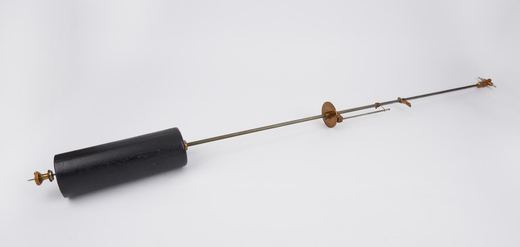
Movements & Components · 1900-1935
Pendulum from the synchronome clock, by The Synchronome Company Limited, London, England, United Kingdom, 1900-1935
Science Museum Group, London
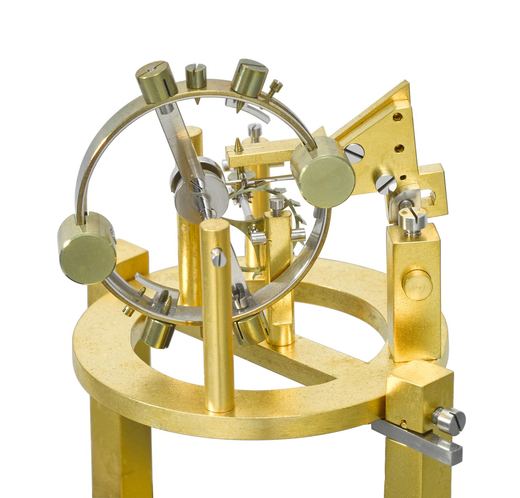
Movements & Components · 1903
Chronometer escapement mounted as an exhibition model and housed in a domed glazed case. Made by William T. Hayes.
Science Museum Group, London
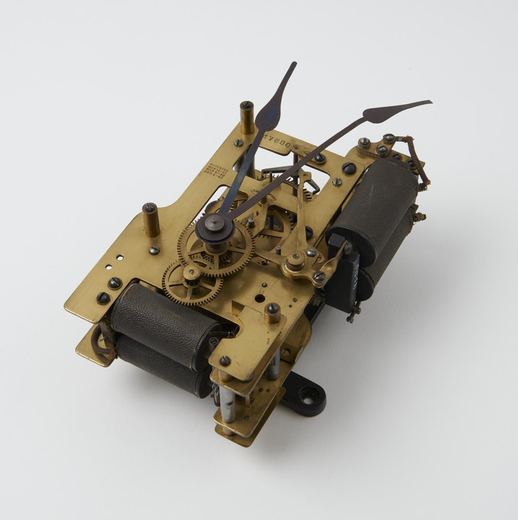
Movements & Components · 1905-1913
'Pond' electric clock (movement only, no dial), by Self Winding Clock Company, New York, United States, 1905-1913.
Science Museum Group, London
Movements & Components · 1905
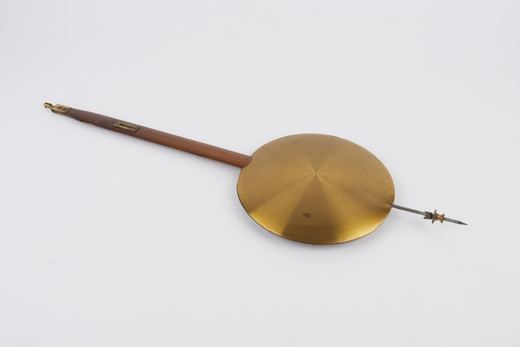
Pendulum from Self-winding electric clock by Svenska Elektriska Urfabriken, Stockholm, 1905
Science Museum Group, London
Movements & Components · 1905
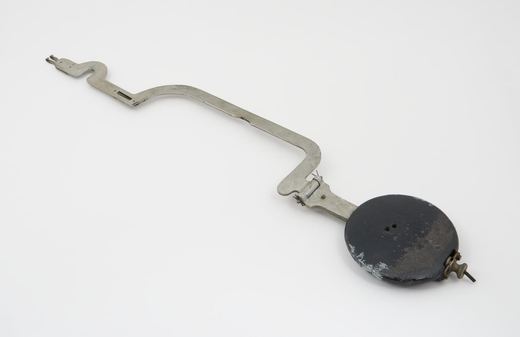
Pendulum from the time recorder, by the British Time Recorder Co. Ltd, London, England, 1940-1970
Science Museum Group, London
Movements & Components · 1905
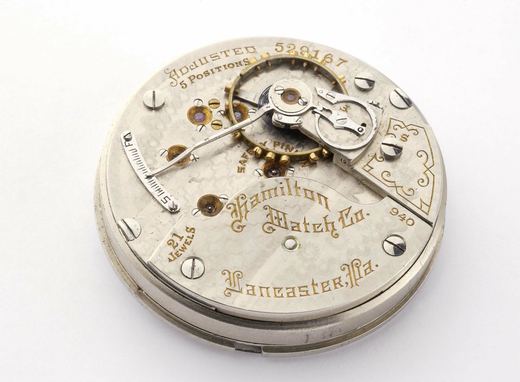
Watch movement, United States, 1905
German Clock Museum
Movements & Components · 1912
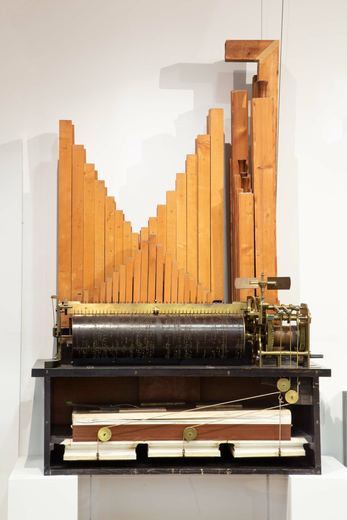
Movement by Josef Muckle, Germany, 1912
German Clock Museum
Movements & Components · 1915–1949
Watch movement, 1915–1949 (Swedish National Museum of Science and Technology S_TEK_object_TEKS0048453)
Swedish National Museum of Science and Technology