Clocks · Clock
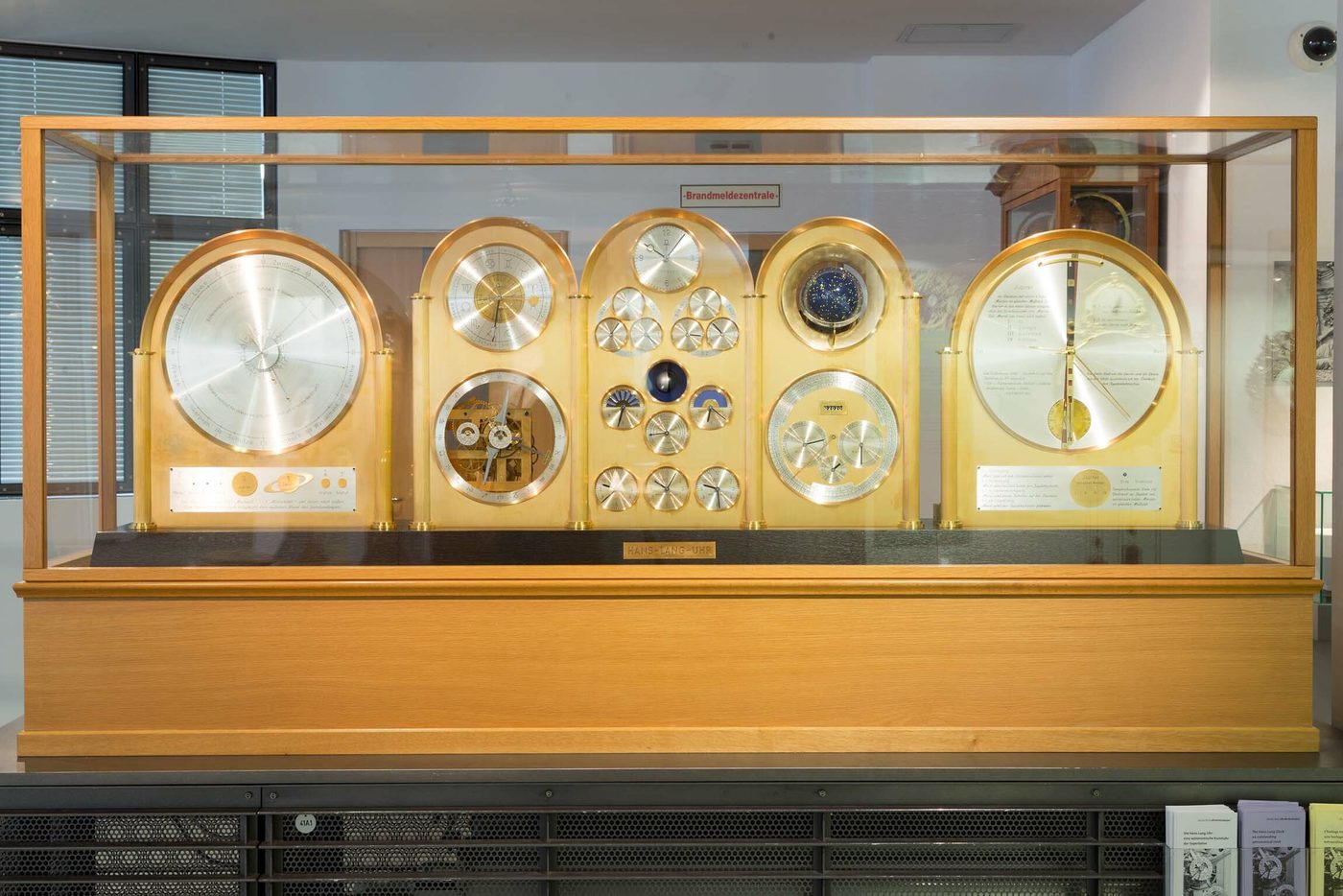
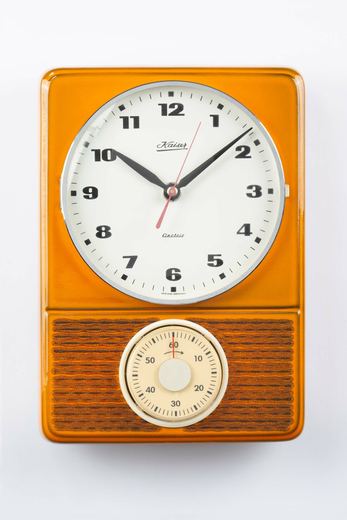
Clock by Hans Lang, Germany, 1986
- Maker / attribution
- Hans Lang (creator)
- Date
- 1986
- Historical period
- Quartz Revolution (1969 – 1990)
- Country of origin
- Germany
- Place
- Essen
- Object type
- Clock
- Holding institution
- German Clock Museum
- Accession / object no.
- Museu_ProvidedCHO_museum_digital_57931__technical_number_
- Catalogue title (original)
- Hans-Lang-Uhr, Hans Lang, Essen, 1986 (German)
Record summary
Held and catalogued by German Clock Museum (object number Museu_ProvidedCHO_museum_digital_57931__technical_number_), this is a clock by Hans Lang, made in Essen, Germany, dated 1986. The Atlas places it in the Quartz Revolution period (1969 – 1990) of its Clocks collection. The record is illustrated with 1 photograph.
Assembled from the source record's structured fields. Dates and attributions are given as the source states them; where a field is missing the Atlas leaves it blank rather than estimating.
Catalogue description
Catalogue description from German Clock Museum (German)
Über seine Idee zur Herstellung dieser astronomischen Kunstuhr berichtete Hans Lang: "Zunächst war nur die Idee, die nebelhafte Vorstellung, eine astronomische Kunstuhr zu bauen, die mehr sein sollte als nur ein Zeitmesser, als nur ein technisches Instrument zur mechanischen Darstellung kosmischer Abläufe. Doch was war nun dieser 'Mehrsinn', um den meine Gedanken schwirrten? Oft hatte ich in Museen einfachste Menschen beobachtet, die vor einem Gemälde standen, in sich versunken, fasziniert vom Zauber eines Kunstwerks, von dem sie weder die Maltechnik, noch die die Kunst- oder Stilrichtung, noch überhaupt die darstellende Handlung verstanden. Es war ganz einfach die Ausstrahlung des Kunstwerkes, was diese Menschen für Augenblicke aus der sie umgebendenden Welt ihrer Sorgen und Geschäftigkeit entführte. Warum sollte nicht auch eine astronomische Kunstuhr diese Ausstrahlung besitzen. Nächtelang grübelte ich über Ausdrucksmöglichkeiten, die, mit der Präsentation und funktionellen Aussage einer astronomischen Kunstuhr, die Faszination einer metaphysischen Einkehr bewirken könnten. In meinen Träumen verdichteten sich die Bilder, die von Kreisen, Bogen und Säulen bestimmt wurden, die dann auch letztlich nach vielen Skizzierungen ihre Ausprägung in der endgültigen Form fanden." (Deutsches Uhrenmuseum Furtwangen)
Shown in the original language of the source catalogue. An editor-reviewed English translation has not yet been published; we do not publish machine translations as authoritative text.
Historical context
Quartz Revolution (1969 – 1990)
Seiko's Astron begins mass quartz timekeeping; traditional industries contract sharply.
Quartz movements and digital displays made accurate clocks cheap and ubiquitous after the early 1970s. LED and LCD clocks, clock radios and radio-controlled clocks appeared, while traditional mechanical clockmaking contracted sharply in Germany, France and Britain.
Read the period in the timelineMore clocks from this periodEarlier: Modern Mechanical Horology
Atlas type guide
Domestic clocks
A clock combines four systems: a source of power (falling weight, coiled spring, or later electricity), a gear train that divides time, an escapement and oscillator that regulate it (foliot, pendulum or balance), and an indicating system of dial and hands or a bell. Its history runs from the large iron weight-driven clocks of the late thirteenth century to Renaissance spring-driven table clocks, the pendulum revolution of 1656, the factory clocks of the nineteenth century and electric and quartz clocks of the twentieth.
Domestic clocks also reflect regional furniture and decorative traditions — English longcase and bracket clocks, French pendules, Viennese regulators, Black Forest and American shelf clocks — and therefore record changing tastes as much as technical progress.
What to look for
- How the clock is powered: weights, spring barrel, fusee, electric coil.
- The oscillator: foliot, short pendulum, long seconds pendulum or balance.
- Whether it strikes: hour only (count wheel) or hours and quarters (rack striking).
- The maker or retailer's name on dial and movement, and any factory trademarks.
- Signs of alteration — replaced dials, converted escapements, 'married' cases.
Dating clues
- Before 1656 clocks used foliots or balances; after, most domestic clocks have pendulums.
- Anchor escapements spread after c. 1670; minute hands became common at the same time.
- Factory production in America and Germany transformed prices after c. 1840.
General guidance written by the Atlas editors about this kind of object. It is not a statement about this particular piece; for that, rely on the source record above and on physical examination.
Related records
Clocks · 1960-1996
Electric clock by Efratom GmbH, Germany, 1960-1996
Science Museum Group, London
Clocks · 1969
Clock by VDO, Germany, 1969
German Clock Museum
Clocks · 1969
Clock by Werner Staiger (Uhrenfabrik), Germany, 1969
German Clock Museum
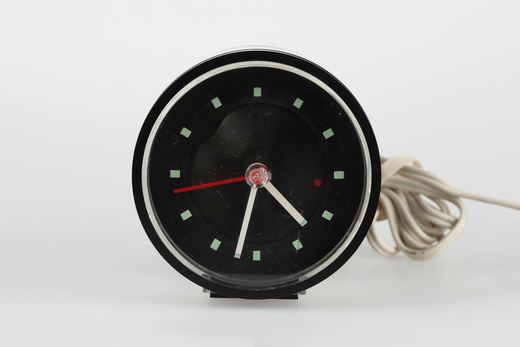
Clocks · 1970
Alarm clock by Werner Staiger (Uhrenfabrik), Germany, 1970
German Clock Museum
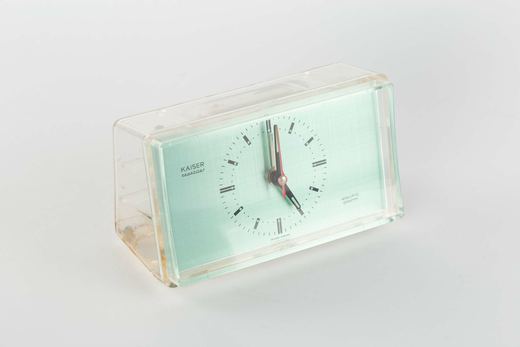
Clocks · 1970
Alarm clock, Germany, 1970 (German Clock Museum Museu_ProvidedCHO_museum_digital_59356__technical_number_)
German Clock Museum
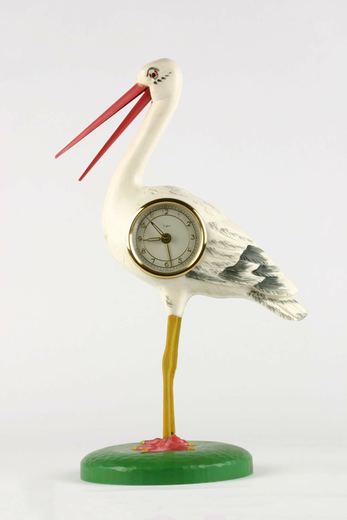
Clocks · 1970
Alarm clock, Germany, 1970 (German Clock Museum Museu_ProvidedCHO_museum_digital_59389__technical_number_)
German Clock Museum
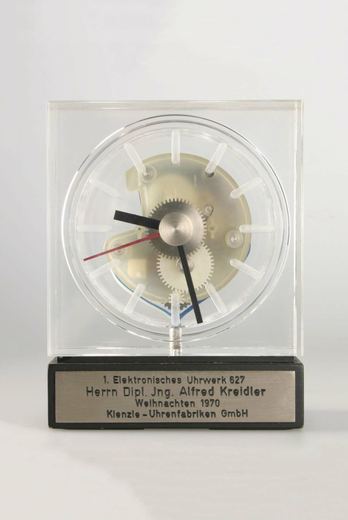
Clocks · 1970
Clock by Kienzle - Uhrenfabrik, Germany, 1970
German Clock Museum
Clocks · 1970
Clock, Germany, 1970
German Clock Museum