Clocks · Alarm clock
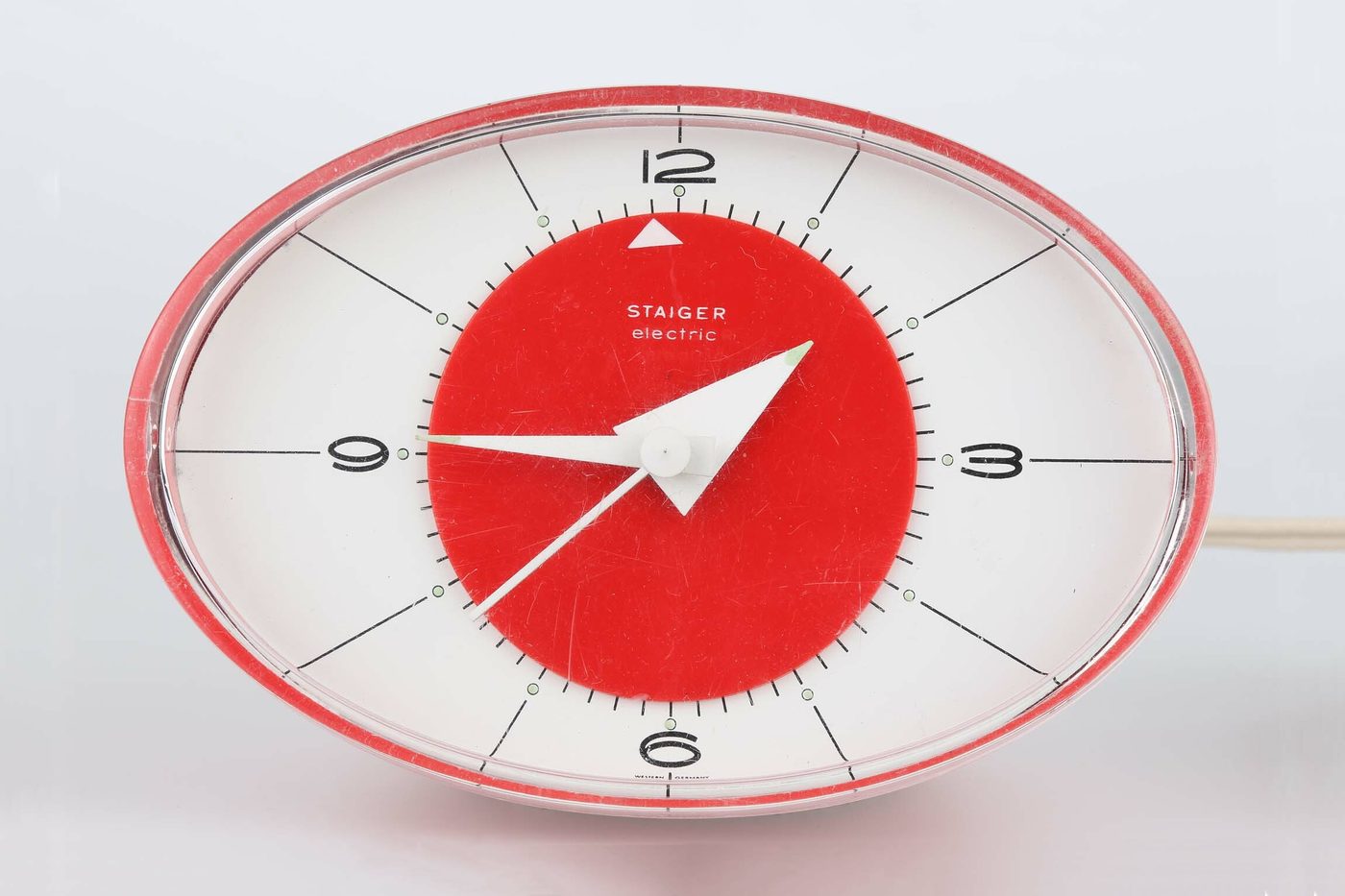
Alarm clock by Werner Staiger (Uhrenfabrik), Germany, 1965
- Maker / attribution
- Werner Staiger (Uhrenfabrik) (creator)
- Date
- 1965
- Historical period
- Modern Mechanical Horology (1945 – 1969)
- Country of origin
- Germany
- Place
- Germany
- Object type
- Alarm clock
- Holding institution
- German Clock Museum
- Accession / object no.
- Museu_ProvidedCHO_museum_digital_59440__technical_number_
- Catalogue title (original)
- Wecker, Staiger, St. Georgen, um 1965 (German)
Record summary
Held and catalogued by German Clock Museum (object number Museu_ProvidedCHO_museum_digital_59440__technical_number_), this is an alarm clock by Werner Staiger (Uhrenfabrik), made in Germany, dated 1965. The Atlas places it in the Modern Mechanical Horology period (1945 – 1969) of its Clocks collection. The record is illustrated with 1 photograph.
Assembled from the source record's structured fields. Dates and attributions are given as the source states them; where a field is missing the Atlas leaves it blank rather than estimating.
Catalogue description
Catalogue description from German Clock Museum (German)
Wecker mit Synchronwerk, Staiger, St. Georgen, um 1965. (Deutsches Uhrenmuseum Furtwangen)
Shown in the original language of the source catalogue. An editor-reviewed English translation has not yet been published; we do not publish machine translations as authoritative text.
Historical context
Modern Mechanical Horology (1945 – 1969)
Tool watches for divers, pilots and astronauts; electric watches anticipate the electronic age.
Post-war clocks combined new materials and industrial design: plastic and metal cases, battery-powered transistor movements from the late 1950s, and design classics by George Nelson, Max Bill and others. The first caesium atomic clock (1955) moved the definition of time from astronomy to physics.
Read the period in the timelineMore clocks from this periodEarlier: Golden Age of Mechanical Watchmaking
Atlas type guide
Alarm clocks
Alarm work is among the oldest clock functions: monastic clocks woke monks for night prayers, and Renaissance table clocks often carried an alarm disc set by a pin. A separate spring or weight is released at the set time and drives a hammer against a bell. Some early alarms also lit a candle by striking a flint — the 'tinder pistol' alarm.
The cheap, mass-produced alarm clock arrived in the second half of the nineteenth century. American firms such as Seth Thomas and Westclox (the 'Big Ben' of 1910) and German makers such as Junghans and Kienzle made millions of drum-shaped alarms with pin-pallet escapements. Electric, quartz and digital alarm clocks followed in the twentieth century.
What to look for
- A separate alarm-setting dial or disc and an extra winding key.
- Twin bells on top (common after c. 1920) or a bell enclosed in the base.
- Pin-pallet escapements in inexpensive factory alarms.
- Trademarks and patent dates on dial or back.
Dating clues
- Renaissance alarm table clocks: sixteenth to seventeenth centuries.
- Drum alarm clocks: from the 1870s.
- Luminous dials with radium paint: c. 1910–1960.
General guidance written by the Atlas editors about this kind of object. It is not a statement about this particular piece; for that, rely on the source record above and on physical examination.
Related records
Clocks · 1952
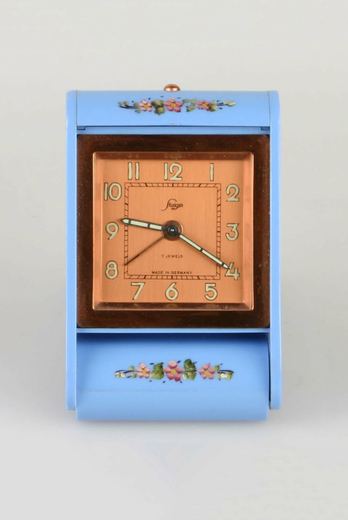
Alarm clock by Werner Staiger (Uhrenfabrik), Germany, 1952
German Clock Museum
Clocks · 1968
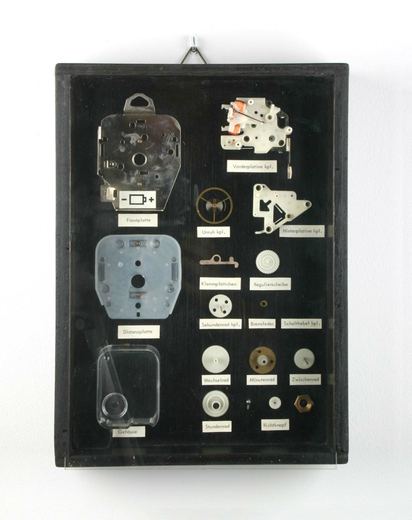
Clock by Werner Staiger (Uhrenfabrik), Germany, 1968
German Clock Museum
Clocks · 1969
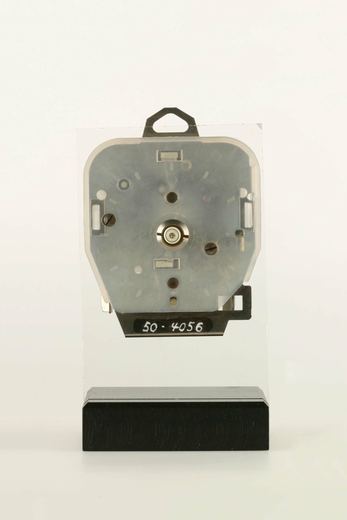
Clock by Werner Staiger (Uhrenfabrik), Germany, 1969
German Clock Museum
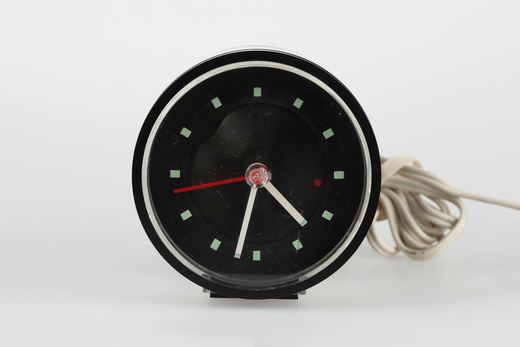
Clocks · 1970
Alarm clock by Werner Staiger (Uhrenfabrik), Germany, 1970
German Clock Museum
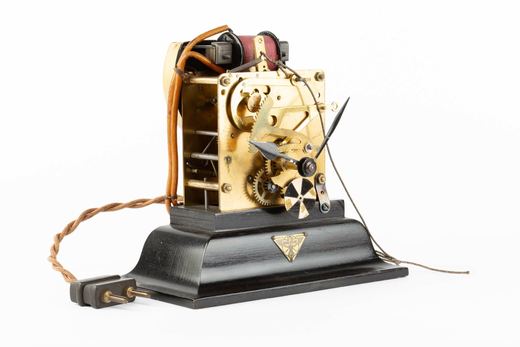
Clocks · 1900–1999
Clock by Friedrich Mauthe, Germany, 1900–1999 (German Clock Museum Museu_ProvidedCHO_museum_digital_59468__technical_number_)
German Clock Museum
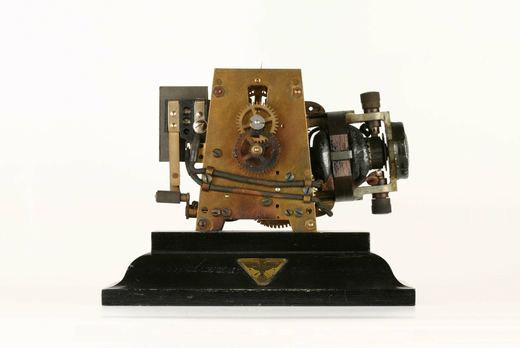
Clocks · 1900–1999
Clock by Friedrich Mauthe, Germany, 1900–1999 (German Clock Museum Museu_ProvidedCHO_museum_digital_59469__technical_number_)
German Clock Museum
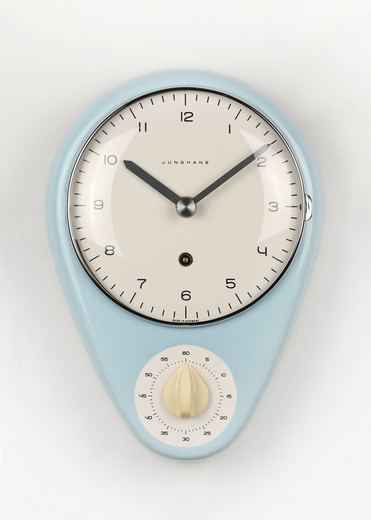
Clocks · 1900–1999
Clock, Germany, 1900–1999 (German Clock Museum Museu_ProvidedCHO_museum_digital_58196__technical_number_)
German Clock Museum
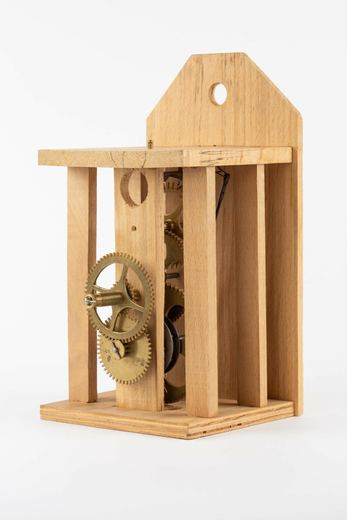
Clocks · 1900–1999
Clock, Germany, 1900–1999 (German Clock Museum Museu_ProvidedCHO_museum_digital_59377__technical_number_)
German Clock Museum