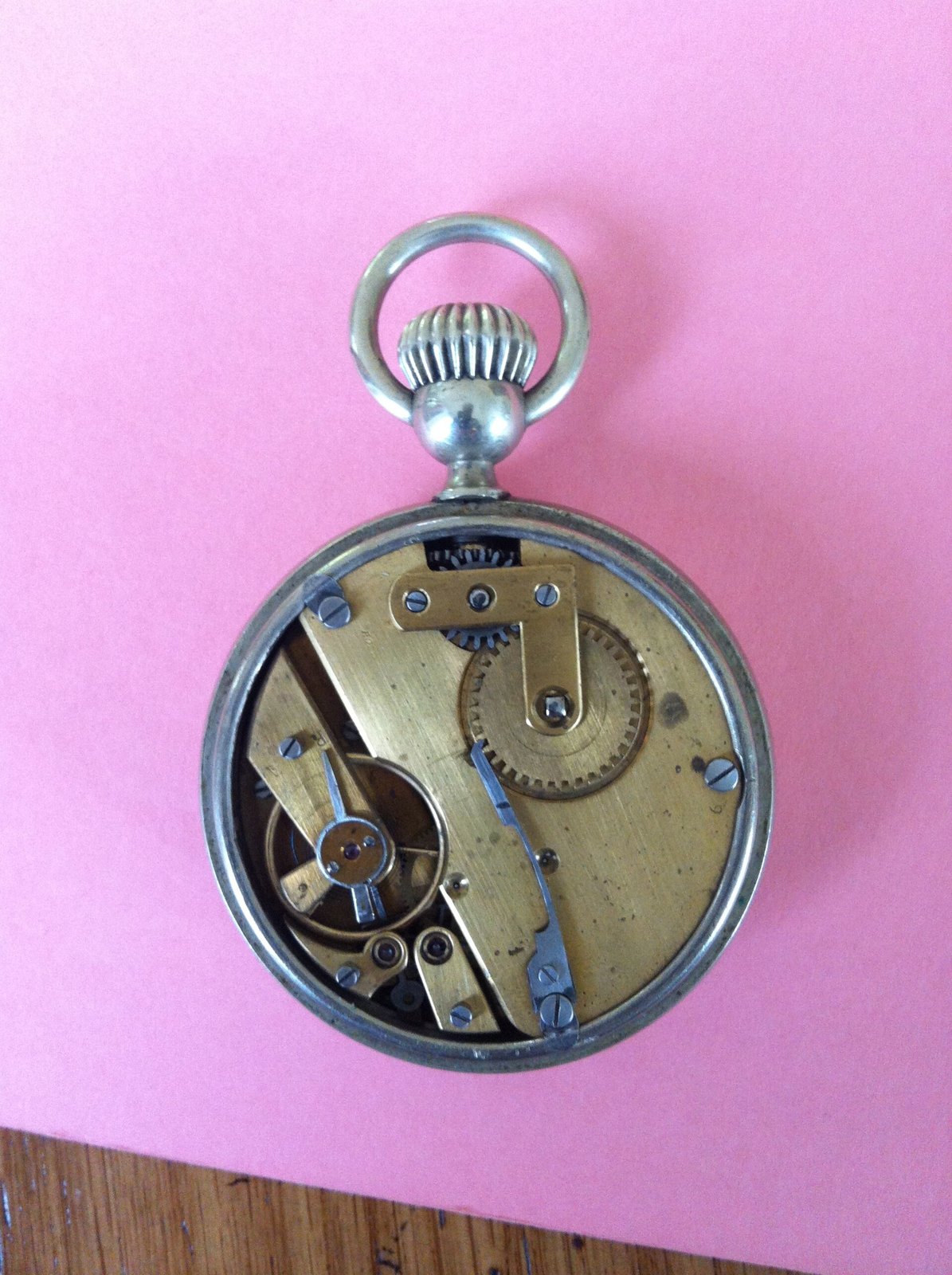
Escapement
Pin-pallet escapement
Also known as: Roskopf escapement · Stiftankerhemmung · Échappement à chevilles
How it works
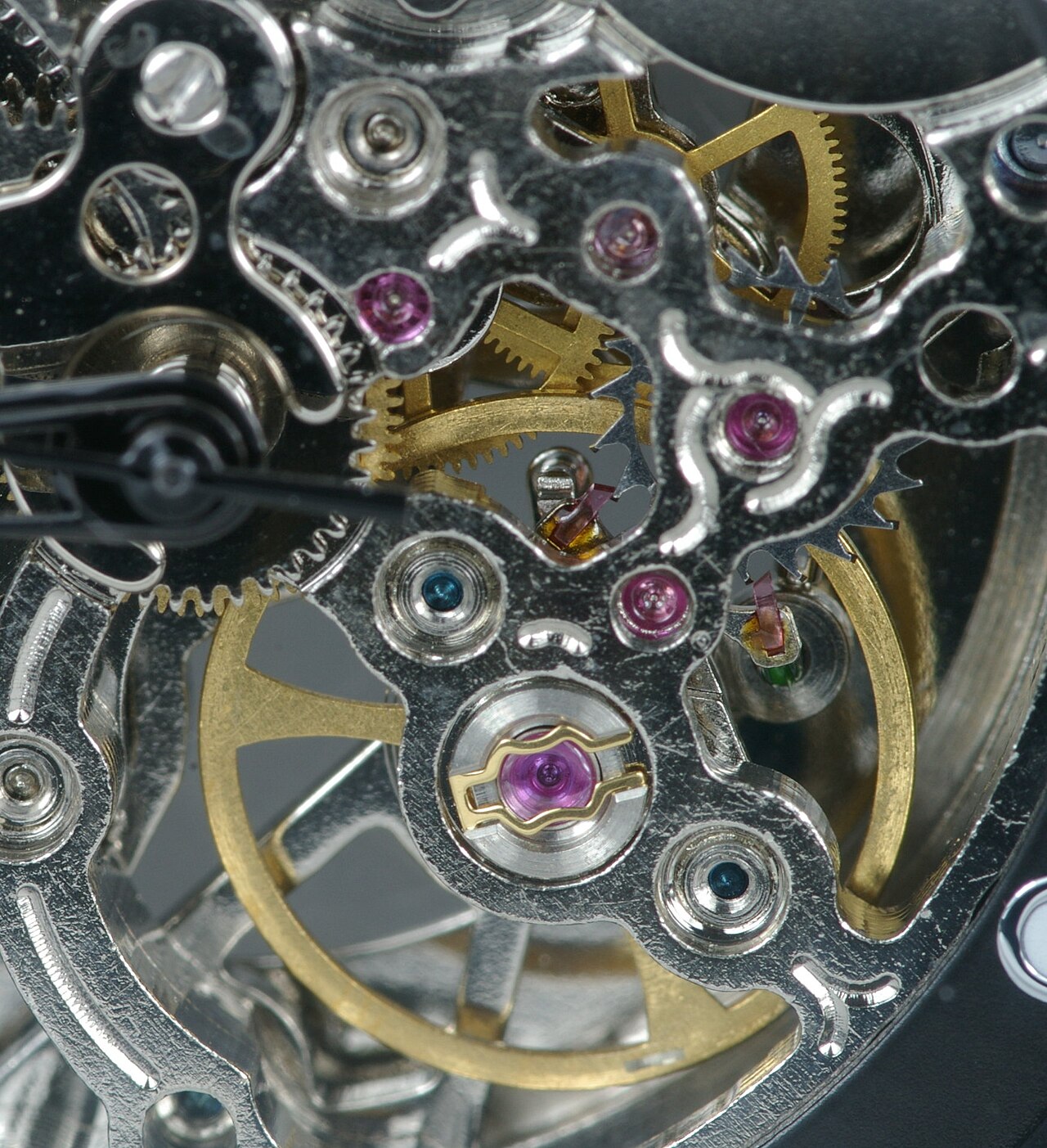
A lever escapement in which the jewelled pallet stones are replaced by two upright hardened-steel pins, and the escape wheel teeth carry the impulse planes. The geometry is otherwise that of a detached lever.
Why it was invented
It made a reliable detached escapement cheap enough for 'everyman' watches and alarm clocks.
- Invented
- popularised 1867
- Credited to
- Georges-Frédéric Roskopf (popularised)
- Historical period
- Industrial Revolution
History and development
Georges-Frédéric Roskopf of La Chaux-de-Fonds launched his inexpensive 'proletarian watch' in 1867, using a simplified pin-lever and a large barrel without centre wheel. Pin-pallet movements went on to power Ingersoll and Timex watches, German alarm clocks and countless 'non-jewelled' watches until quartz replaced them in the 1970s–80s.
Related mechanisms
In the catalogue
Open in the catalogue →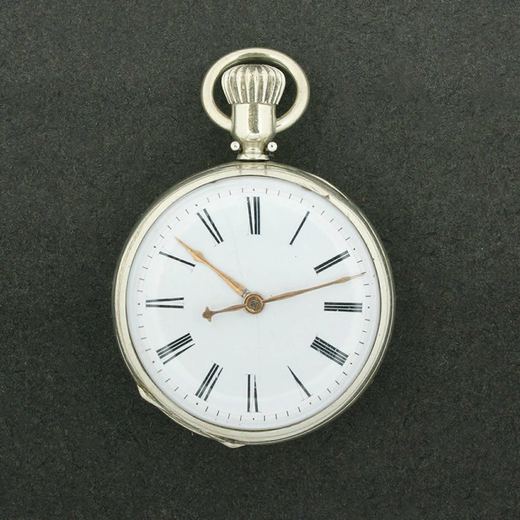
Pocket Watches · 1870
Pocket watch by Japy Frères et Cie., Germany, 1870
German Clock Museum
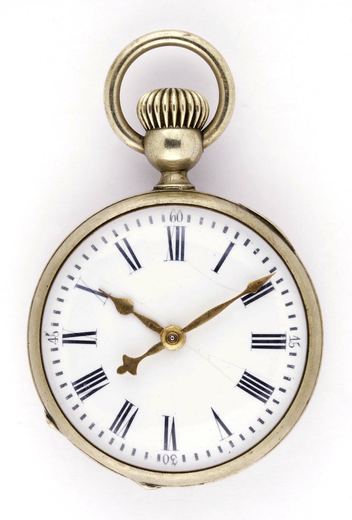
Pocket Watches · 1870
Pocket watch, Switzerland, 1870
German Clock Museum
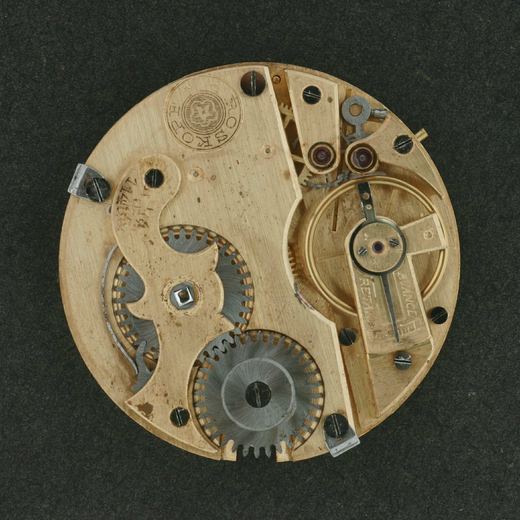
Pocket Watches · 1900
Pocket watch by Vve. Chs. Léon Schmid und Cie, Switzerland, 1900
German Clock Museum
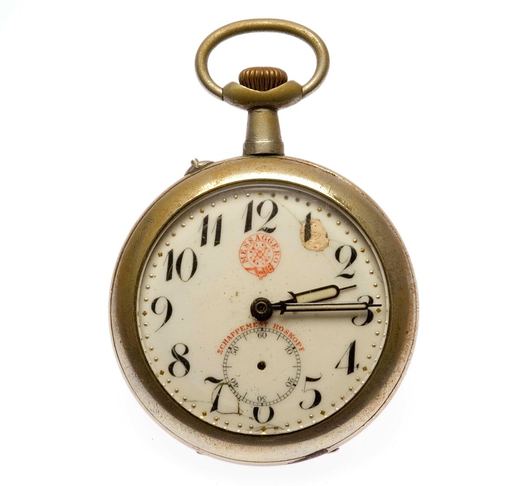
Pocket Watches · 1908
Pocket watch, 1908
Västernorrlands museum
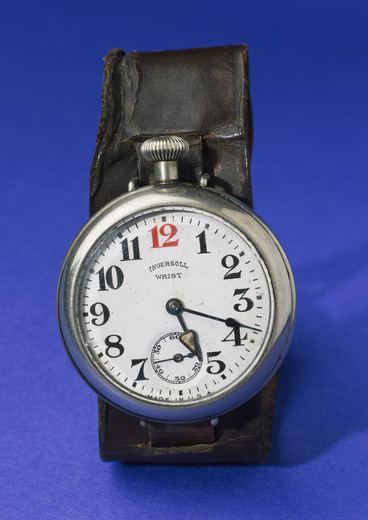
Wristwatches · 1915
"Ingersoll" wrist watch with leather strap, pin pallet escapement and luminous hour hand, 1915
Science Museum Group, London
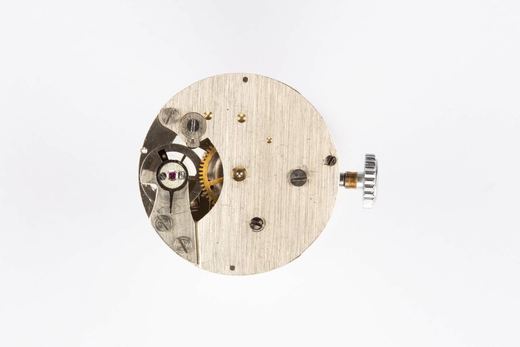
Wristwatches · 1925
Wristwatch, Germany, 1925
German Clock Museum
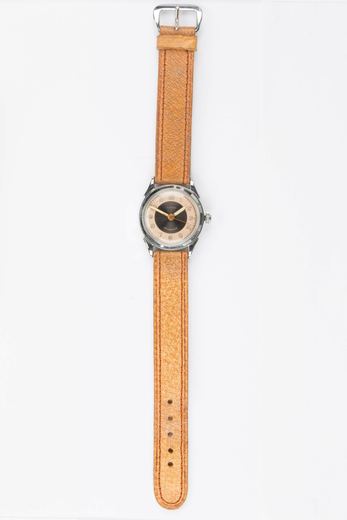
Wristwatches · 1940
Wristwatch, Germany, 1940
German Clock Museum
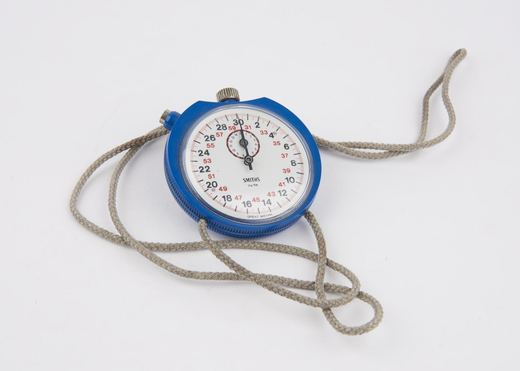
Instruments · 1971
Stop-watch reading to 1/10th of a second, with pin pallet lever escapement and plastics case (see note). Made by Smiths Industries in Great Britain, 1971
Science Museum Group, London
Records are linked when the holding institution's description names this mechanism; check each source record for confirmation.