Wristwatches · Wristwatch
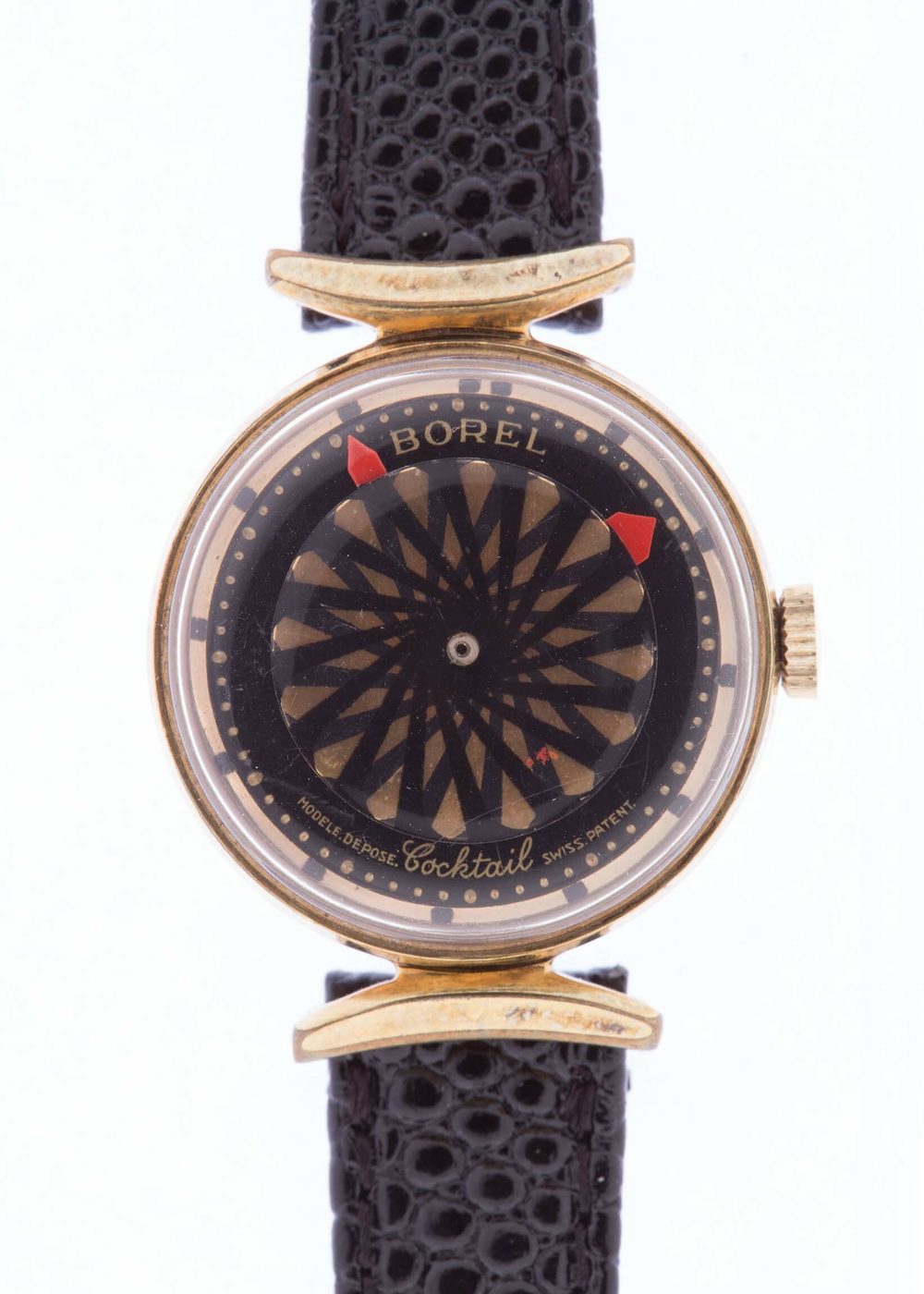
Wristwatch by Fleurier S.A., Switzerland, 1960 (German Clock Museum Museu_ProvidedCHO_museum_digital_31976__technical_number_)
- Maker / attribution
- Fleurier S.A. (creator)
- Date
- 1960
- Historical period
- Modern Mechanical Horology (1945 – 1969)
- Country of origin
- Switzerland
- Place
- La Chaux-de-Fonds
- Object type
- Wristwatch
- Holding institution
- German Clock Museum
- Accession / object no.
- Museu_ProvidedCHO_museum_digital_31976__technical_number_
- Catalogue title (original)
- Armbanduhr, Ernest Borel und Cie. SA, Neuchâtel (CH), um 1960 (German)
Record summary
Held and catalogued by German Clock Museum (object number Museu_ProvidedCHO_museum_digital_31976__technical_number_), this is a wristwatch by Fleurier S.A., made in La Chaux-de-Fonds, Switzerland, dated 1960. The Atlas places it in the Modern Mechanical Horology period (1945 – 1969) of its Wristwatches collection. The record is illustrated with 1 photograph.
Assembled from the source record's structured fields. Dates and attributions are given as the source states them; where a field is missing the Atlas leaves it blank rather than estimating.
Catalogue description
Catalogue description from German Clock Museum (German)
Am 4. Dezember 1952 um 17.30 Uhr meldete die Uhrenfirma Ernest Borel und Cie SA aus Neuchâtel beim Schweizerischen Patentamt die Erfindung einer Uhr, die charakterisiert ist durch mindestens ein Paar sichtbarer Elemente, von denen mindestens eines sich gegenüber dem anderen bewegt, die sich mindestens in einem Bereich überlagern und deren unteres beim Vorbeiziehen des oberen teilweise sichtbar ist, so dass in diesem Bereich ein ästhetischer optischer Effekt entsteht. Diese etwas umständliche Formulierung beschreibt den technisch simplen, aber optisch ungemein reizvollen Effekt von zwei Strahlensternen, die sich gegeneinander drehen. Uhren mit solchen Zifferblättern wurden unter dem Modellnamen Cocktail angeboten. Und da man Cocktails nicht alleine trinken soll, gab es Modelle für Männer und für Frauen. (Deutsches Uhrenmuseum Furtwangen)
Shown in the original language of the source catalogue. An editor-reviewed English translation has not yet been published; we do not publish machine translations as authoritative text.
Historical context
Modern Mechanical Horology (1945 – 1969)
Tool watches for divers, pilots and astronauts; electric watches anticipate the electronic age.
The classic era of the mechanical wristwatch: dive watches, chronographs for motor racing and space flight, GMT watches for jet travel, slim dress watches, automatic calendars, and the rise of Japanese manufacturers alongside Swiss, American, German and Soviet industries.
Read the period in the timelineMore wristwatches from this periodEarlier: Golden Age of Mechanical Watchmaking
Atlas type guide
Quartz, digital and electronic watches
Electronic watches arrived in three steps. The Hamilton Electric 500 (1957) was the first battery-powered wristwatch, still with a balance; Bulova's Accutron (1960) used a tuning fork. On 25 December 1969 Seiko released the Astron 35SQ, the first quartz wristwatch, closely followed by the Swiss Beta 21 group. In 1972 Hamilton's Pulsar introduced the LED digital watch, and LCD displays soon made digital watches cheap.
The 'Quartz Crisis' that followed devastated the Swiss mechanical industry, which lost two-thirds of its workforce between 1970 and 1984 before recovering with the Swatch (1983) and the luxury mechanical revival. Solar, radio-controlled, kinetic and connected smartwatches continue the electronic line.
What to look for
- Battery hatch in the case back and calibre markings with 'Quartz' or a crystal frequency.
- Display technology: LED (red, push-button) versus LCD (always-on).
- Tuning-fork hum and a smoothly sweeping seconds hand on Accutrons.
- Model and reference numbers, often printed on the back.
Dating clues
- Electric balance watches: from 1957.
- Tuning-fork watches: 1960–c. 1977.
- Quartz analogue: from December 1969; LED digital: 1972–c. 1978; LCD from 1973.
General guidance written by the Atlas editors about this kind of object. It is not a statement about this particular piece; for that, rely on the source record above and on physical examination.
Read next:Seiko calibre 35A (Astron)
Related records
Wristwatches · 1960
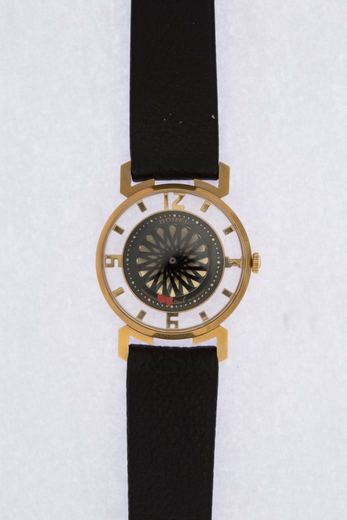
Wristwatch by Fleurier S.A., Switzerland, 1960 (German Clock Museum Museu_ProvidedCHO_museum_digital_65314__technical_number_)
German Clock Museum
Wristwatches · 1900–1999
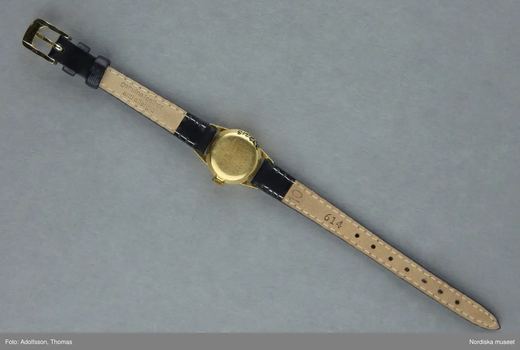
Wristwatch by Certina, Switzerland, 1900–1999
Nordic Museum Foundation
Wristwatches · 1900–1999
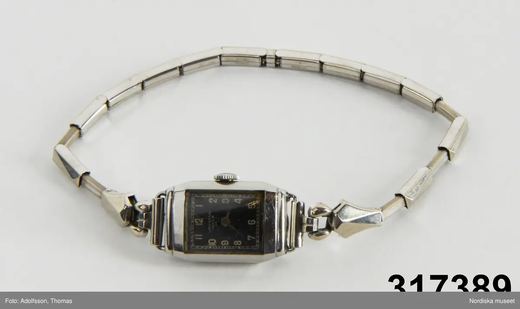
Wristwatch by Universal, Switzerland, 1900–1999
Nordic Museum Foundation
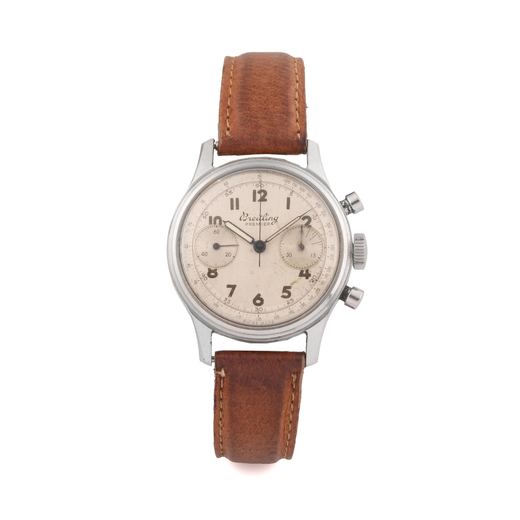
Wristwatches · circa 1945
Breitling Premier, ref. 790, circa 1945
Antiquorum auction archive, Geneva
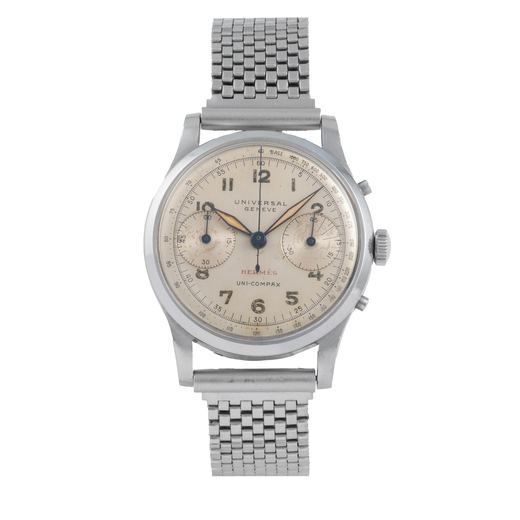
Wristwatches · circa 1945
Universal Genève Uni-Compax, ref. 22492, circa 1945
Antiquorum auction archive, Geneva
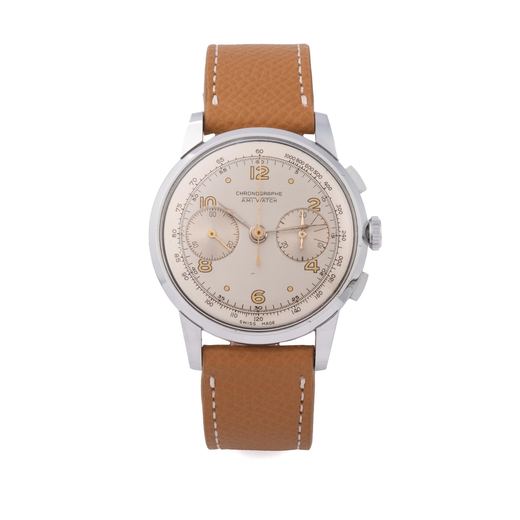
Wristwatches · circa 1950's
Ami Watch Chronographe, circa 1950's
Antiquorum auction archive, Geneva
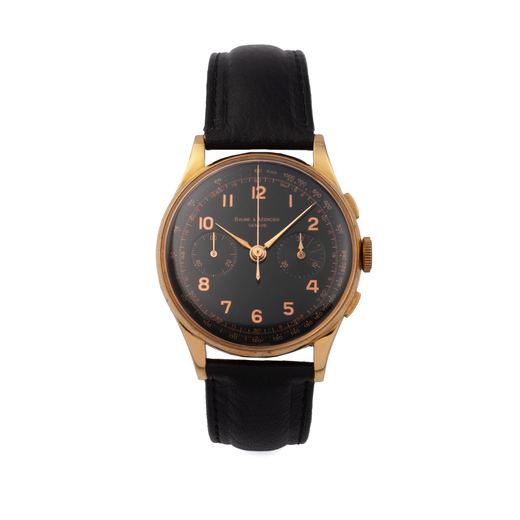
Wristwatches · circa 1950's
Baume & Mercier wristwatch, circa 1950's
Antiquorum auction archive, Geneva
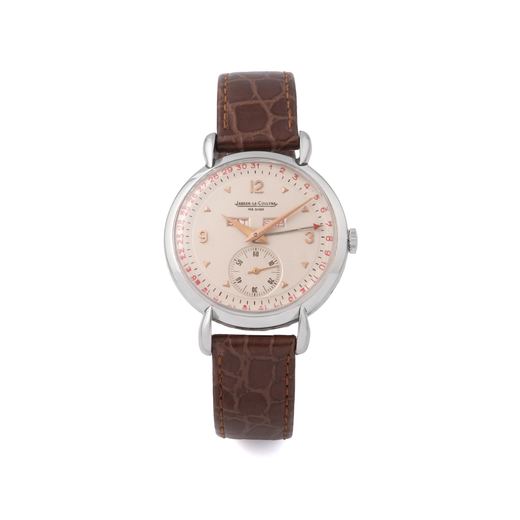
Wristwatches · circa 1950
Jaeger Lecoultre Triple Calendar, circa 1950
Antiquorum auction archive, Geneva