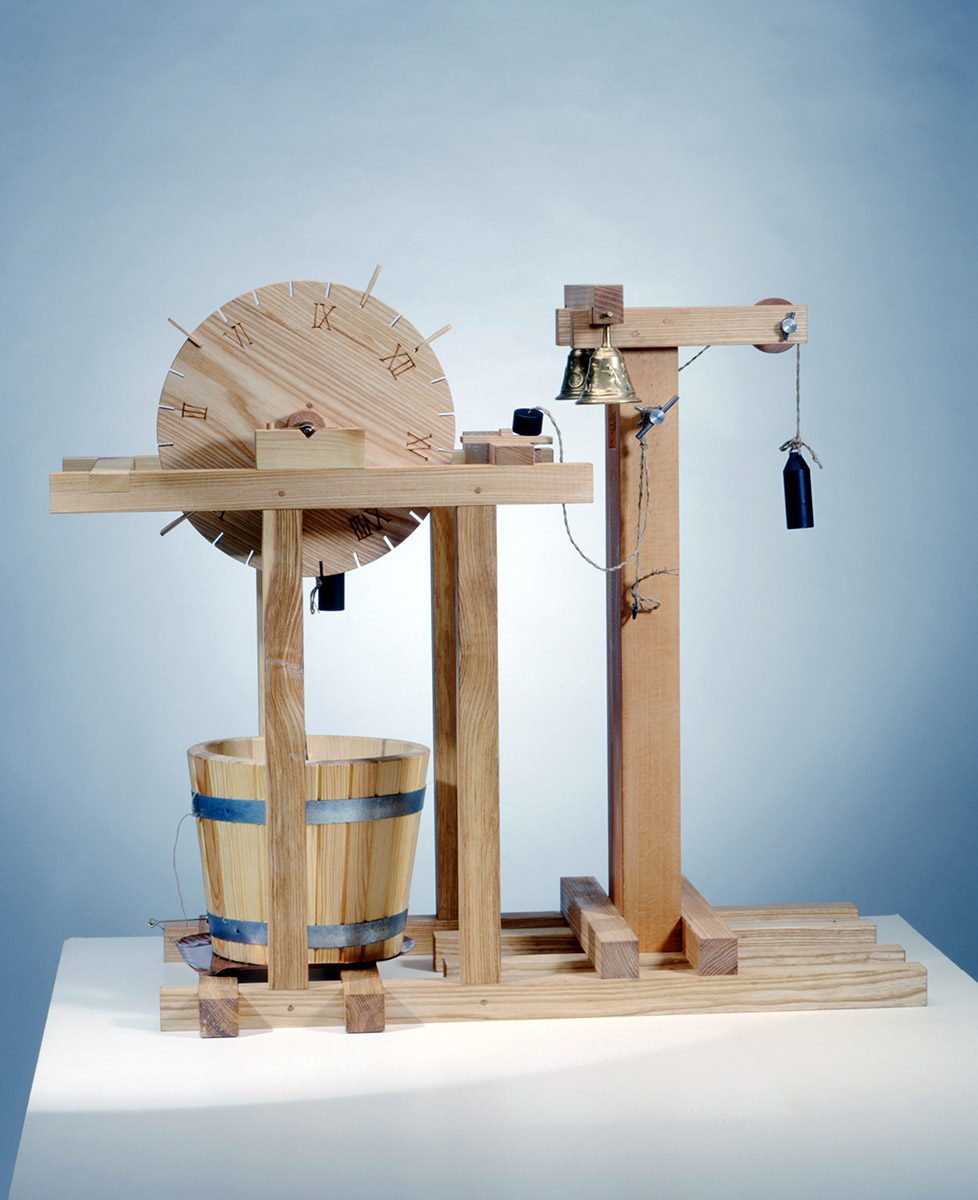
Instruments · Water clock
Water clock by Institut für Technik ... / Münster <Westfalen>, Karlsruhe, 1900–1999
- Maker / attribution
- Institut für Technik ... / Münster (creator)
- Date
- 1900–1999
- Historical period
- Modern Mechanical Horology (1945 – 1969)
- Country of origin
- Unrecorded in source
- Place
- Karlsruhe
- Object type
- Water clock
- Holding institution
- Badisches Landesmuseum Karlsruhe
- Accession / object no.
- item_GUT4G2VVRZHLIIFXNO56TLWI6SMIBAGG
- Catalogue title (original)
- Modell: Klösterliche Wasseruhr mit akustischer Signalgebung (German)
Record summary
Held and catalogued by Badisches Landesmuseum Karlsruhe (object number item_GUT4G2VVRZHLIIFXNO56TLWI6SMIBAGG), this is a water clock by Institut für Technik ... / Münster, made in Karlsruhe, dated 1900–1999. The Atlas places it in the Modern Mechanical Horology period (1945 – 1969) of its Instruments collection. The record is illustrated with 1 photograph.
Assembled from the source record's structured fields. Dates and attributions are given as the source states them; where a field is missing the Atlas leaves it blank rather than estimating.
Catalogue description
Catalogue description from Badisches Landesmuseum Karlsruhe (German)
Die Konstruktion des Uhrlaufwerks basiert auf einer Skizze aus einem katalanischen Manuskript aus der Zeit um 1300. Diese bruchstückhafte Beschreibung von dem Läutwerk einer Uhr stammt aus dem Benediktinerkloster vor Ripoll in Nordspanien. Die Entstehungszeit der Uhr ist ebenso unklar wie die der Beschreibung, die wahrscheinlich aus dem 11. Jahrhundert stammt. Beim Bau des Modells wurden aber auch Elemente verwendet, die mit Sicherheit schon zu Beginn des Hochmittelalters Anwendung fanden.In einem mit Wasser gefüllten Fass schwimmt ein Gewicht. Sobald das Wasser abläuft, senkt sich das Gewicht. Es treibt über ein Seil eine Welle an, auf der das Anzeigerad der Uhr sitzt. An dem Umfang des Anzeigerades lässt sich entsprechend der gewünschten Uhrzeit ein Brettchen in Schlitze stecken. Dieses Brettchen setzt mit der Drehung des Anzeigerades das Fallgewicht für das Läutwerk in Gang. Die Ausflussgeschwindigkeit des Wassers verringert sich mit der Abnahme des Wasserstandes im Fass. Ein gleichmäßiges Sinken des Schwimmergewichts kann trotzdem erreicht werden. Dazu muss nur der Fassquerschnitt mit sinkendem Wasserstand entsprechend abnehmen. Dies ist in dem Modell durch die konische Verjüngung des Fasses nach unten angedeutet.Katalognummerntext im Ausstellungskatalog "Jahrhundertwenden 1000-2000. Rückblicke in die Zukunft, Badisches Landesmuseum 1999/2000, S. 95. Autor: Dr. Karl Pichol, Leiter des Instituts für Technik und ihre Didaktik der Universität Münster, der die Wasseruhr gebaut hat.
Shown in the original language of the source catalogue. An editor-reviewed English translation has not yet been published; we do not publish machine translations as authoritative text.
Historical context
Modern Mechanical Horology (1945 – 1969)
Tool watches for divers, pilots and astronauts; electric watches anticipate the electronic age.
Electronic instruments, quartz frequency standards and the first atomic clocks transformed precision timing in laboratories and broadcasting.
Read the period in the timelineMore instruments from this periodEarlier: Golden Age of Mechanical Watchmaking
Atlas type guide
Water, fire and incense clocks
Before the mechanical clock, intervals and hours were measured by flow and combustion. Outflow and inflow water clocks were used in Egypt, Mesopotamia, Greece, China and the Islamic world; Chinese and Japanese incense clocks burned powdered incense along a maze-like path; oil-lamp clocks with graduated glass reservoirs were popular in German-speaking Europe in the seventeenth and eighteenth centuries.
These timekeepers needed constant correction and could not keep the hour automatically for long periods, but they underpinned temple ritual, legal procedure, astronomy and the earliest monumental astronomical clocks such as Su Song's clock tower (1090s) and al-Jazari's designs (1206).
What to look for
- Graduated vessels or glass reservoirs with hour scales.
- Incense trays with stencils for laying the powder trail.
- Pewter oil-lamp clocks with a glass reservoir marked in Roman numerals.
Dating clues
- Oil-lamp clocks are mostly eighteenth century and often reproduced later.
- Incense clocks were made in China and Japan into the twentieth century.
General guidance written by the Atlas editors about this kind of object. It is not a statement about this particular piece; for that, rely on the source record above and on physical examination.
Read next:Su Song's astronomical clock tower
Related records
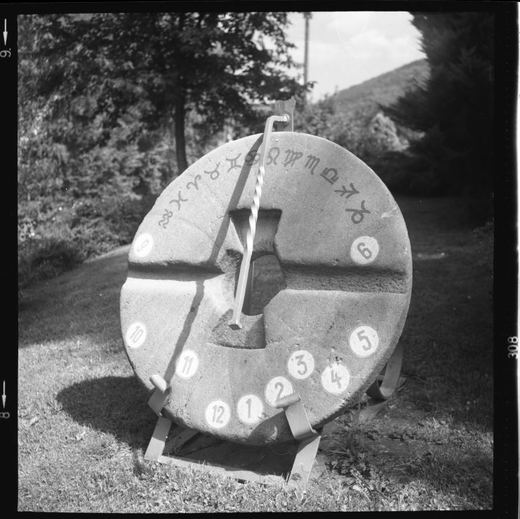
Instruments · 1900–1999
Sundial by Alwin Tölle ( - ), Germany, 1900–1999
Badisches Landesmuseum Karlsruhe
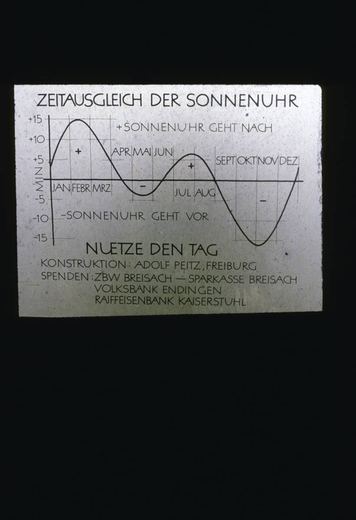
Instruments · 1900–1999
Sundial by Karl Kurrus, Karlsruhe, 1900–1999 (Badisches Landesmuseum Karlsruhe item_6ZY7V4HTXQCJ3GRSVUPXDNFOYWVIQAF4)
Badisches Landesmuseum Karlsruhe
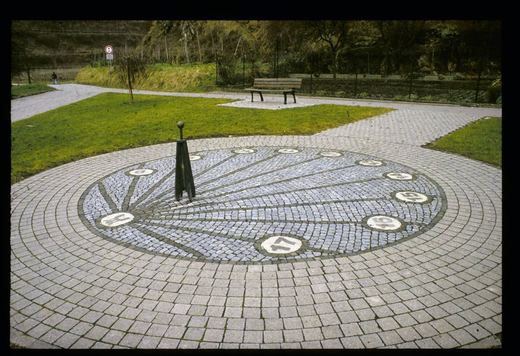
Instruments · 1900–1999
Sundial by Karl Kurrus, Karlsruhe, 1900–1999 (Badisches Landesmuseum Karlsruhe item_PUDMDMX3EG4DF2QITPXLVNDGH6EN5PAU)
Badisches Landesmuseum Karlsruhe
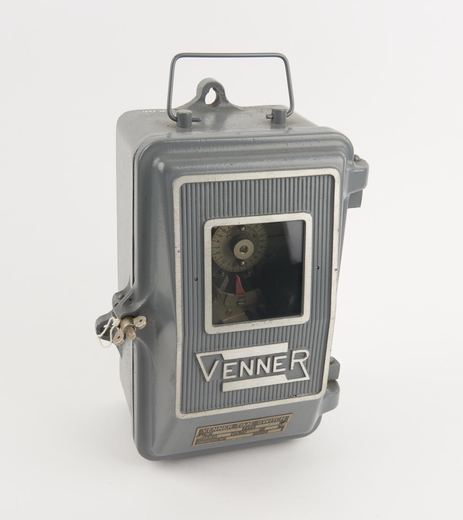
Instruments · 1930-1960
Electronically wound triple-pole changeover time-switch, type MWDGPS, by Venner Limited, New Malden, Kingston-upon-Thames, London, England, 1930-1960.
Science Museum Group, London
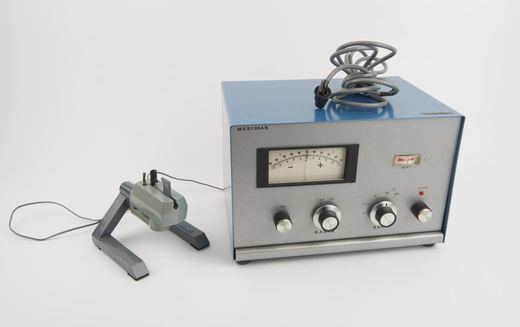
Instruments · 1940-1976
'Meridian' watch timer, by Walker Electronics, Newark-on-Trent, Nottinghamshire, England, 1940-1976.
Science Museum Group, London
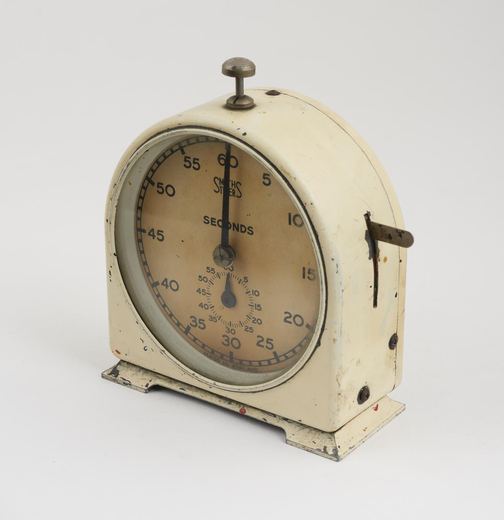
Instruments · 1940-1980
Clockwork timer used by renal dialysis patients to time blood clotting reaction when adding heparin to blood for dialysis
Science Museum Group, London
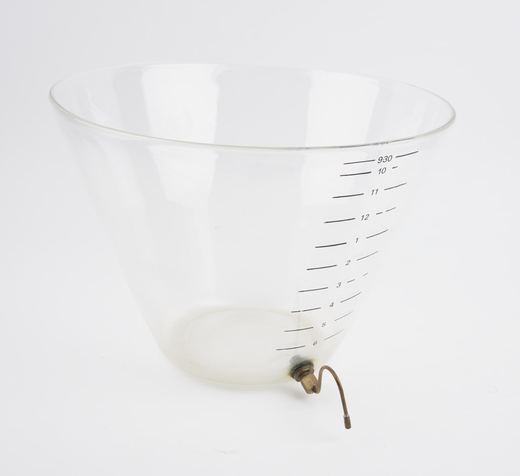
Instruments · 1940-1965
Glass bowl in the shape of an ancient Egyptian water-clock, 1940-1965
Science Museum Group, London
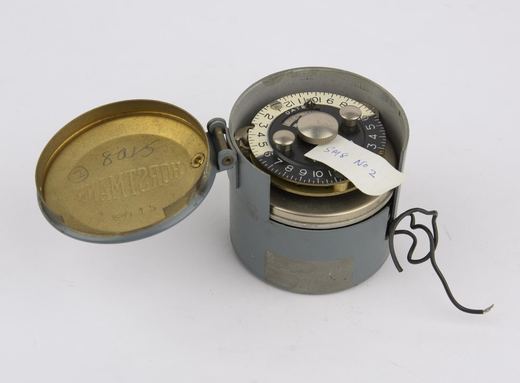
Instruments · 1940-1974
Stopwatch / timer by Horstmann Gear Co. Ltd. (maker), England, 1940-1974
Science Museum Group, London