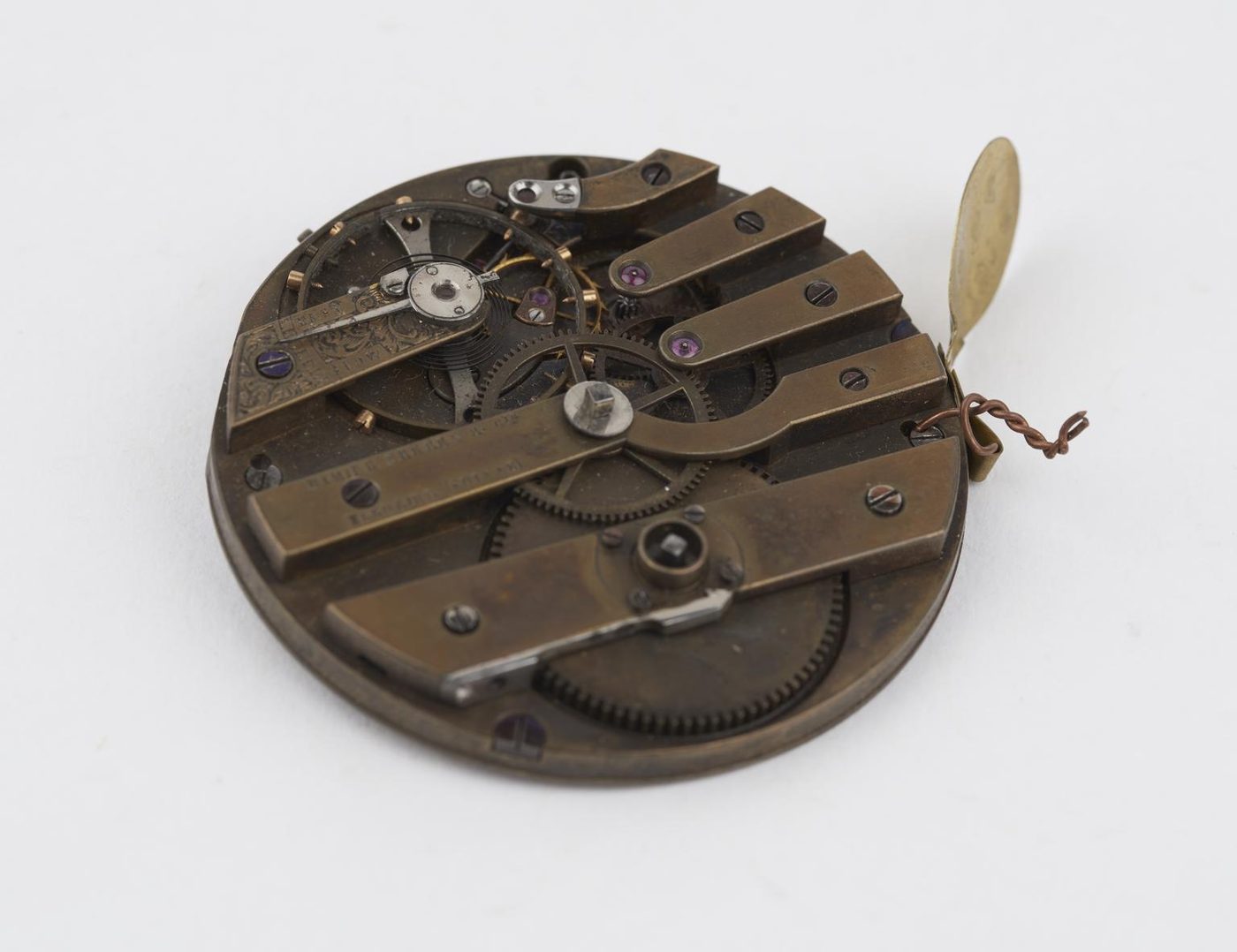
Instruments · Chronometer; instrument component
Swiss movement (incomplete and broken) with chronometer escapement by Dimier Freres et leic, Fleurier, nos.28981 and 475
- Maker / attribution
- Dimier Frères et Cie (maker)
- Date
- 475
- Historical period
- Classical Antiquity (500 BCE – 500 CE)
- Country of origin
- Switzerland
- Place
- Fleurier, Neuchâtel, Switzerland, Fleurier
- Object type
- Chronometer; instrument component
- Holding institution
- Science Museum Group, London
- Accession / object no.
- 1916-264
- Credit line
- Mr. Evan Roberts
- Catalogue title (original)
- Swiss movement (incomplete and broken) with chronometer escapement
Record summary
Held and catalogued by Science Museum Group, London (object number 1916-264), this is a chronometer; instrument component by Dimier Frères et Cie, made in Fleurier, Neuchâtel, Switzerland, Fleurier, dated 475. The Atlas places it in the Classical Antiquity period (500 BCE – 500 CE) of its Instruments collection. The record is illustrated with 1 photograph.
Assembled from the source record's structured fields. Dates and attributions are given as the source states them; where a field is missing the Atlas leaves it blank rather than estimating.
Catalogue description
The source record does not include a narrative description. The structured fields above are reproduced from it.
Historical context
Classical Antiquity (500 BCE – 500 CE)
Greek and Roman engineers refine the clepsydra; Ctesibius adds float regulation; the Antikythera mechanism models the heavens.
Greek astronomy produced the theory behind sundials and the astrolabe; the Antikythera mechanism (second or first century BCE) shows the sophistication of Hellenistic geared astronomical models.
Read the period in the timelineMore instruments from this periodEarlier: Ancient Civilizations
Atlas type guide
Chronographs and split-seconds watches
A chronograph is a watch with an additional seconds hand that can be started, stopped and returned to zero independently of the timekeeping. Louis Moinet built an early example in 1816 and Nicolas Rieussec a recording 'chronographe' in 1821; Adolphe Nicole's heart-shaped reset cam (patented 1862) made the modern return-to-zero possible. Split-seconds (rattrapante) chronographs add a second hand that can be stopped for intermediate times; flyback chronographs restart instantly.
Chronographs were essential tools for doctors (pulsometer scales), artillery (telemeter), engineers and sport. In wristwatches, Valjoux, Venus, Lemania and later the automatic chronographs of 1969 (Zenith El Primero, the Chronomatic Calibre 11 group and Seiko 6139) are milestones.
What to look for
- Push-pieces on the case band or a single button in the crown (monopusher).
- Subsidiary registers for minutes and hours; tachymeter, telemeter or pulsometer scales.
- Column wheel versus cam control visible in the movement.
- Calibre markings of specialist makers (Valjoux, Lemania, Venus, Landeron).
Dating clues
- Pocket chronographs with heart cam reset: after 1862.
- Wrist chronographs: from c. 1910; two-button designs from the 1930s.
- Automatic chronographs: from 1969.
General guidance written by the Atlas editors about this kind of object. It is not a statement about this particular piece; for that, rely on the source record above and on physical examination.
Related records
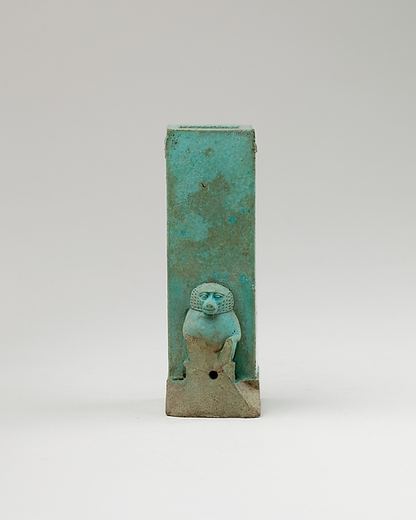
Instruments · 4th century BCE
Clepsydra, water clock model, baboon, Egypt, 4th century BCE
The Metropolitan Museum of Art, New York
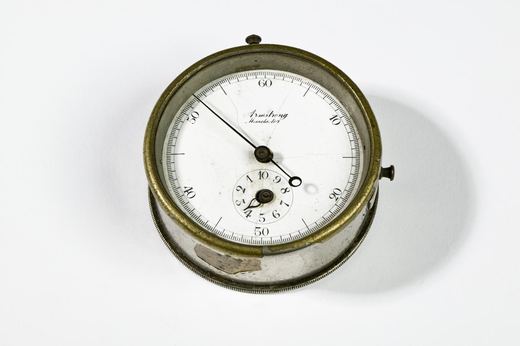
Instruments · 106
Stopwatch, may have belonged to Ferranti employee, marked 'F Ltd 106', made by Thomas Armstrong.
Science Museum Group, London
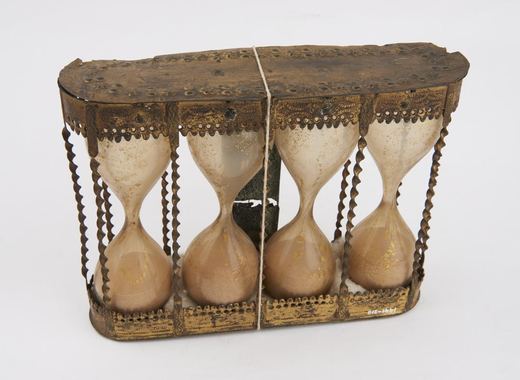
Instruments · 110
Quadruple sand-glass in twelve pillared gilded brass mount. 50, 63, 90, & 110 seconds. Horne Type B. ?Italian. Second half of the 18th century
Science Museum Group, London
Instruments · 183
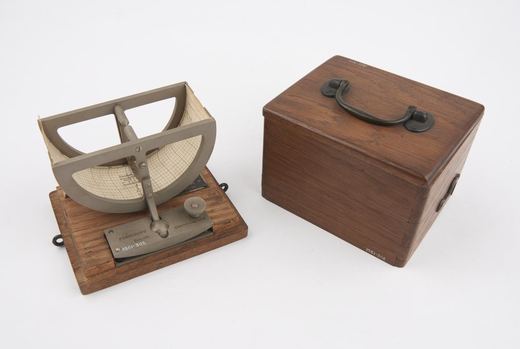
Ferguson solar chronometer, Serial Number: 183 Registered No. 576942
Science Museum Group, London
Instruments · 184
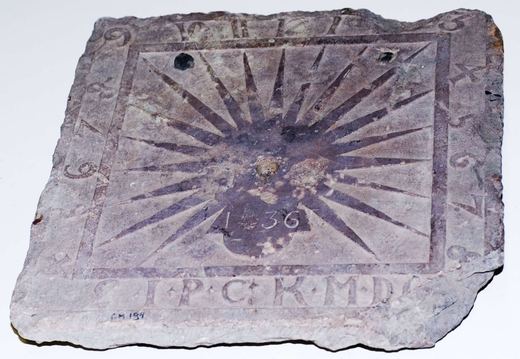
Sundial, 184
Upplands Museum
Instruments · 186
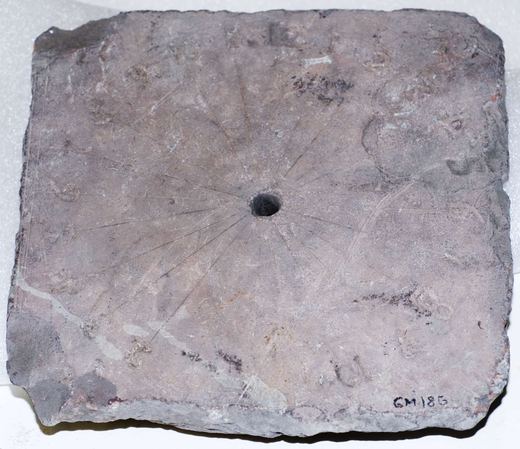
Sundial, 186
Upplands Museum
Instruments · 400-600
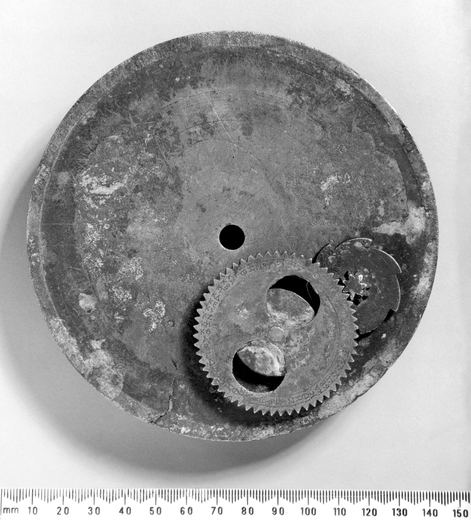
Sundial, Greece, 400-600
Science Museum Group, London