Instruments · Cooker timer
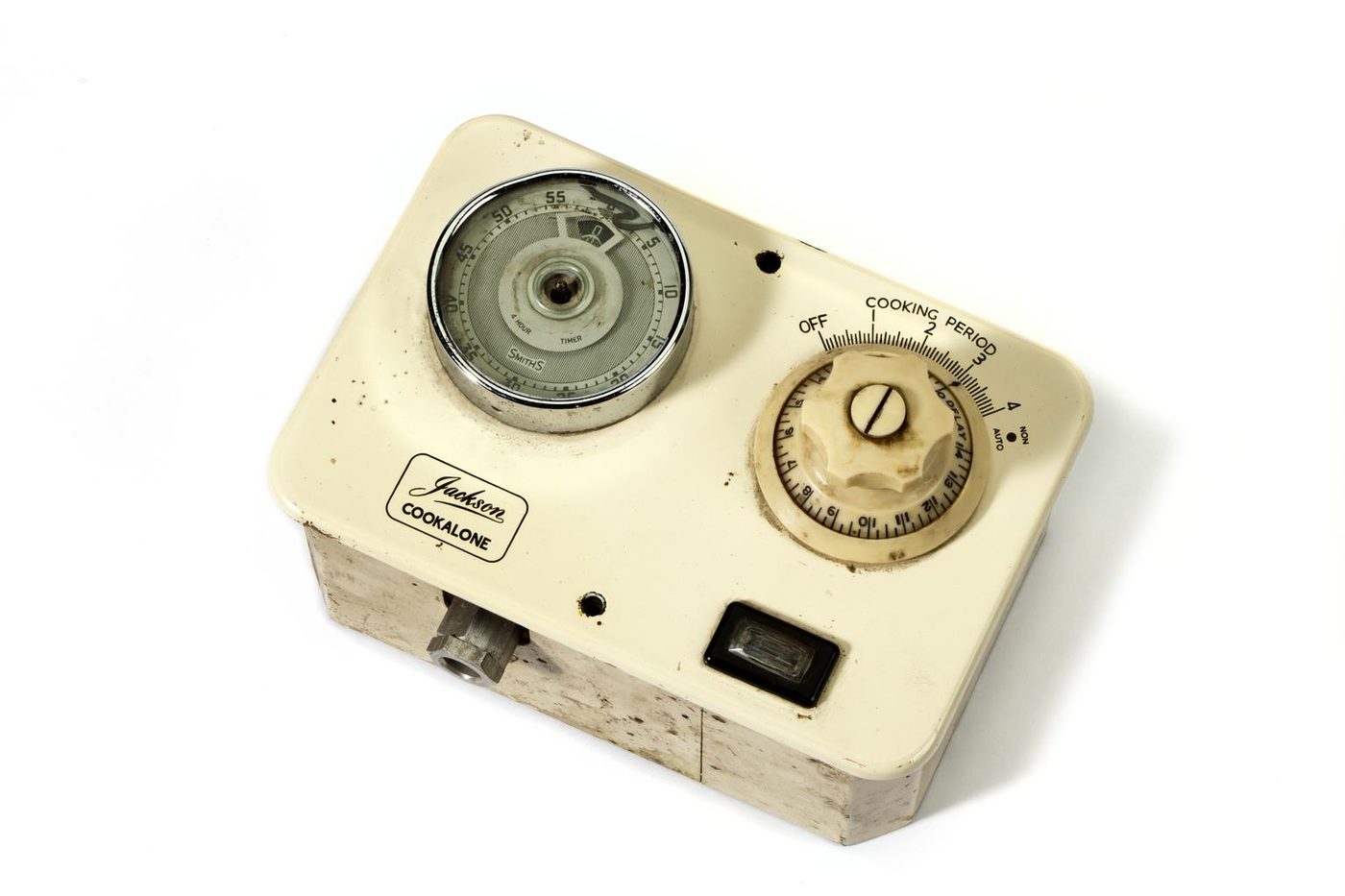
Stopwatch / timer by Jackson Electric Stove Co. Ltd, England, 1950-1959
- Maker / attribution
- Jackson Electric Stove Co. Ltd (maker)
- Date
- 1950-1959
- Historical period
- Modern Mechanical Horology (1945 – 1969)
- Country of origin
- England
- Place
- Luton, Luton, England, United Kingdom, Luton
- Object type
- Cooker timer
- Dimensions
- 160 mm x 135 mm, 215 mm, 2.3 kg
- Holding institution
- Science Museum Group, London
- Accession / object no.
- Y2012.15.66
- Credit line
- Mr Robert Gray
- Catalogue title (original)
- Jackson Cookalone cooker timer
Record summary
Held and catalogued by Science Museum Group, London (object number Y2012.15.66), this is a cooker timer by Jackson Electric Stove Co. Ltd, made in Luton, Luton, England, United Kingdom, Luton, dated 1950-1959. The Atlas places it in the Modern Mechanical Horology period (1945 – 1969) of its Instruments collection. Recorded dimensions: 160 mm x 135 mm, 215 mm, 2.3 kg. The record is illustrated with 1 photograph.
Assembled from the source record's structured fields. Dates and attributions are given as the source states them; where a field is missing the Atlas leaves it blank rather than estimating.
Catalogue description
Science Museum Group description
Throughout the twentieth century a number of devices were created to allow the tine control of cooking. This Jackson Cookalone dates from the 1950s and was designed to control and electric cooker as a retro-fit device. By the 1960s most good quality cookers were fitted with integral timers. Despite the large amount of advertising which suggested that these were effort-saving devices, most people in the UK never used them although they were more popular in the US. This is a high quality and expensive unit including parts made by the well-known instrument maker, Smiths.
Historical context
Modern Mechanical Horology (1945 – 1969)
Tool watches for divers, pilots and astronauts; electric watches anticipate the electronic age.
Electronic instruments, quartz frequency standards and the first atomic clocks transformed precision timing in laboratories and broadcasting.
Read the period in the timelineMore instruments from this periodEarlier: Golden Age of Mechanical Watchmaking
Atlas type guide
Timers, stopwatches, chronoscopes and time recorders
Instruments for measuring short intervals or recording when something happened form a large and practical branch of horology. Sports stopwatches and split-seconds timers, laboratory chronoscopes (such as Hipp's, which measured thousandths of a second for psychology and ballistics experiments), metronomes for music, watchmen's clocks that recorded patrol rounds, and the time recorders that clocked factory workers in and out all derive from clock and watch technology.
These objects matter historically because they show timekeeping leaving the observatory and the drawing room and entering industry, science and sport. Many were mass-produced, and their dials, scales and patents chart the rise of electrification and industrial management.
What to look for
- Scales graduated in fifths, tenths or hundredths of a second, or decimal minutes for industrial use.
- Start, stop and reset push-pieces; a second hand that can be stopped independently (split seconds).
- Recording devices: paper discs or tapes, printing mechanisms, keys or punches.
- Patent numbers and dates on the dial or case, which give a terminus post quem.
Dating clues
- Hipp chronoscopes were made from the 1840s into the twentieth century.
- Employee time recorders spread from the 1890s (Bundy, IBM, International Time Recording Co.).
- Quartz and electronic timers replaced mechanical stopwatches in sport from the 1970s.
General guidance written by the Atlas editors about this kind of object. It is not a statement about this particular piece; for that, rely on the source record above and on physical examination.
Read next:ChronographFlyback chronograph
Related records
Instruments · 1930-1960
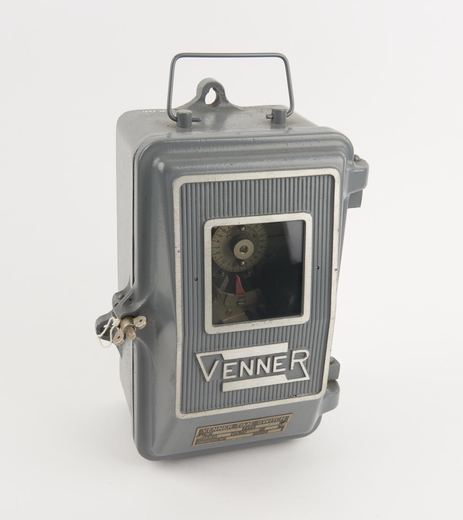
Electronically wound triple-pole changeover time-switch, type MWDGPS, by Venner Limited, New Malden, Kingston-upon-Thames, London, England, 1930-1960.
Science Museum Group, London
Instruments · 1940-1976
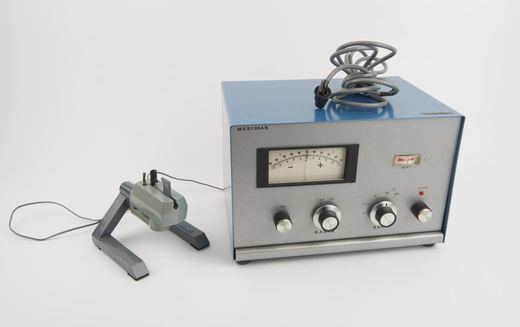
'Meridian' watch timer, by Walker Electronics, Newark-on-Trent, Nottinghamshire, England, 1940-1976.
Science Museum Group, London
Instruments · 1940-1965
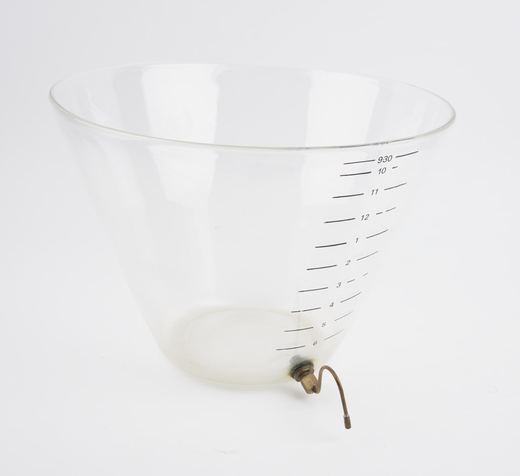
Glass bowl in the shape of an ancient Egyptian water-clock, 1940-1965
Science Museum Group, London
Instruments · 1940-1974
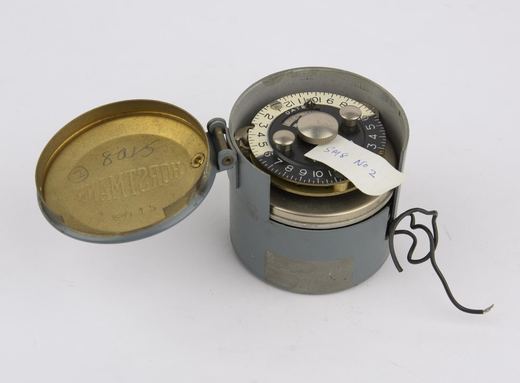
Stopwatch / timer by Horstmann Gear Co. Ltd. (maker), England, 1940-1974
Science Museum Group, London
Instruments · 1940-1974
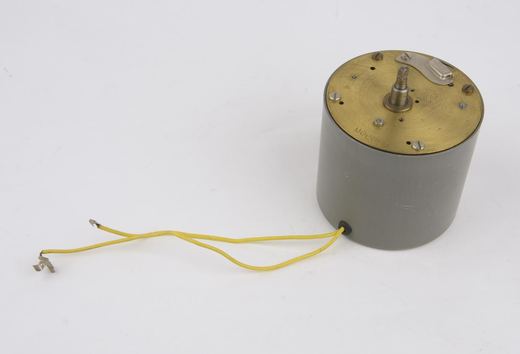
Stopwatch / timer by Horstmann Gear Co. Ltd., England, 1940-1974
Science Museum Group, London
Instruments · 350-250 BCE; 1945-1955
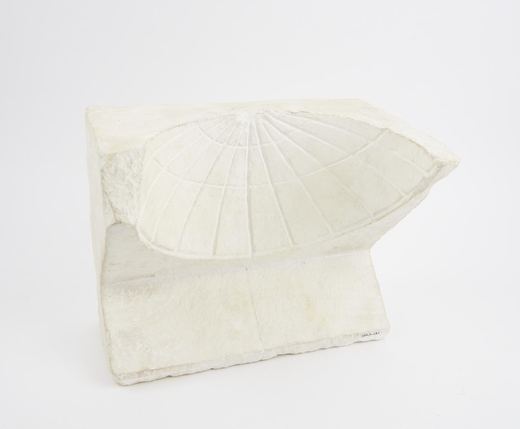
Sundial by British Museum, England, 350-250 BCE; 1945-1955
Science Museum Group, London
Instruments · 1960-1975
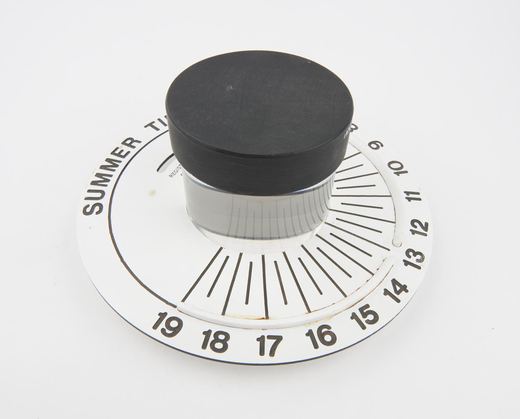
'Sunclock' optical sundial, designed and made by Walter Gordon Benoy for Sunclocks, High Street, Collingham, Newark, Nottinghamshire, England, 1960-1975.
Science Museum Group, London
Instruments · 1900–1999
Sundial by Alwin Tölle ( - ), Germany, 1900–1999
Badisches Landesmuseum Karlsruhe