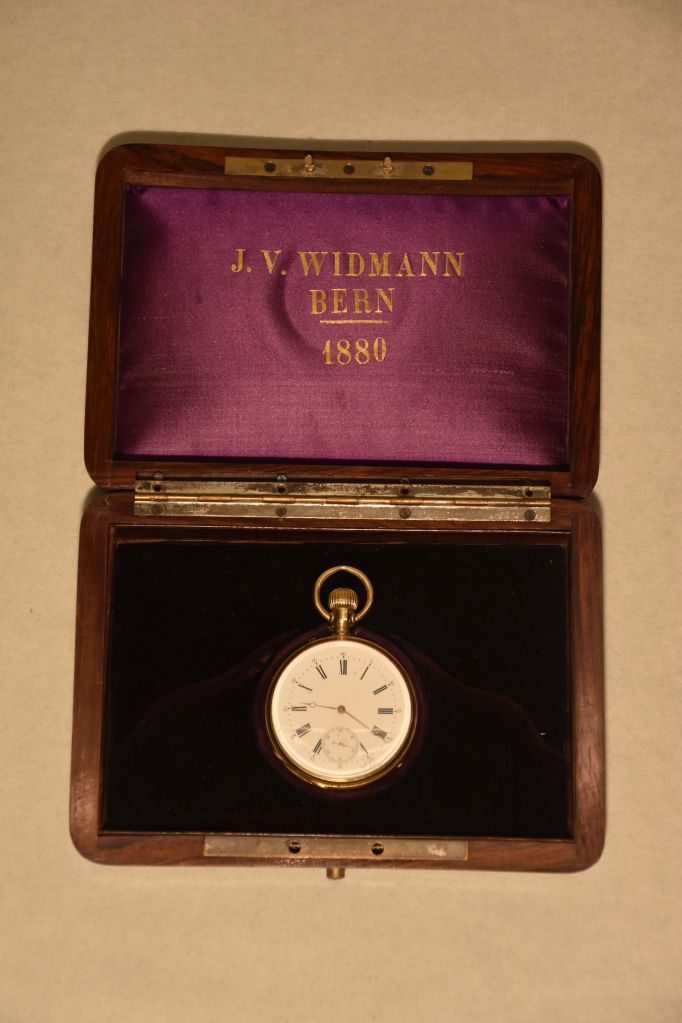
Pocket Watches · Pocket watch
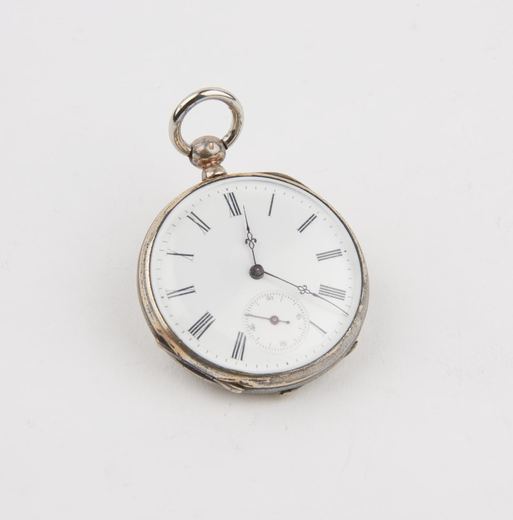
Pocket watch, Switzerland, 1880 (Poets and City Museum Liestal _kimnet_cho_ae33e922_613a_4c89_8ba3_aeca5500e320)
- Maker / attribution
- Unrecorded in source
- Date
- 1880
- Historical period
- Industrial Revolution (1850 – 1900)
- Country of origin
- Switzerland
- Place
- Liestal
- Object type
- Pocket watch
- Holding institution
- Poets and City Museum Liestal
- Accession / object no.
- _kimnet_cho_ae33e922_613a_4c89_8ba3_aeca5500e320
- Catalogue title (original)
- Taschenuhr Widmanns in Etui (German)
Record summary
Held and catalogued by Poets and City Museum Liestal (object number _kimnet_cho_ae33e922_613a_4c89_8ba3_aeca5500e320), this is a pocket watch, made in Liestal, Switzerland, dated 1880. The Atlas places it in the Industrial Revolution period (1850 – 1900) of its Pocket Watches collection. The record is illustrated with 1 photograph.
Assembled from the source record's structured fields. Dates and attributions are given as the source states them; where a field is missing the Atlas leaves it blank rather than estimating.
Catalogue description
Catalogue description from Poets and City Museum Liestal (German)
Widmanns Taschenuhr in Etui.Taschenuhr mit Gravur in Schatulle mit Widmung1880Goldgehäuse graviert, Stahlwerk mit 5 Rubinen und Steinanker, Emailzifferblatt; Mahagoniholz, Perlmutter, Eisen, Samt, Seide.Dieses Objekt stammt aus dem Nachlass des Dichters Josef Viktor Widmann, der als „Literaturpapst der Schweiz“ bekannt wurde. Objekt von Josef Viktor Widmanns Arbeitsort im Haus zum Leuenberg am kleinen Muristalden. 1842 im mährischen Nennowitz geboren, wuchs Josef Viktor Widmann in Liestal auf. Seine literarische Begabung zeigte sich früh. Nach dem Theologiestudium verheiratete er sich mit Sophie Brodbeck, der verwitweten Tante seines engsten Freundes Carl Spitteler. Von 1868 bis 1879 wirkte Widmann als Direktor der Einwohnermädchenschule Bern, von 1880 bis zu seinem Tod 1911 als hochgeschätzter Feuilletonredaktor der Berner Tageszeitung “Der Bund”. Er entdeckte Robert Walser, machte Ferdinand Hodler in der Schweiz bekannt, förderte Ricarda Huch und viele andere Schriftsteller und Schriftstellerinnen. Daneben entstand eine Fülle eigener Werke; besonders fruchtbar war Widmann als Reiseschriftsteller und Dramatiker.
Shown in the original language of the source catalogue. An editor-reviewed English translation has not yet been published; we do not publish machine translations as authoritative text.
Historical context
Industrial Revolution (1850 – 1900)
American interchangeable-parts manufacture; railroad time standards; Swiss and German factory systems.
Machine production with interchangeable parts, pioneered by Waltham (1850s) and adopted by Elgin, Longines, Omega and others, made reliable lever watches widely affordable. Keyless winding became standard, railroad watch standards were introduced (1890s), and Swiss and American industries competed globally.
Read the period in the timelineMore pocket watches from this periodEarlier: Precision & Scientific Horology
Atlas type guide
Pocket watches
The pocket watch was the dominant personal timekeeper from the late seventeenth century until the First World War. Its development tracks the history of the escapement: verge watches with fusees until the late eighteenth century; Thomas Mudge's lever escapement (c. 1755) and the cylinder escapement popularised by George Graham and later by Swiss makers; and the Swiss and English lever watches of the nineteenth century. Lépine's bar-bridge calibre and keyless winding made watches thinner and easier to use.
Industrialisation transformed the trade: American factories such as Waltham (from 1850) and Elgin produced interchangeable parts by machine, and Swiss makers responded with their own mechanisation after the 1876 Philadelphia Exhibition. By 1900 a reliable watch was affordable to millions; the finest makers continued to produce complications and precision watches.
What to look for
- The escapement: verge (crown wheel), cylinder, duplex, English or Swiss lever.
- Key winding (a square arbor in dial or back) or keyless crown winding.
- Signatures and serial numbers on the movement, dial and inside case back.
- Hallmarks, case maker's marks and gold or silver standards stamped in the case.
- Dial material: enamel, silver, gold, later printed metal.
Dating clues
- Verge watches dominate before c. 1800; cylinder watches c. 1770–1900; lever watches after c. 1820.
- Keyless winding: increasingly common after c. 1860.
- Manufacturer serial number lists exist for Waltham, Elgin, Longines, Omega, Patek Philippe and others.
General guidance written by the Atlas editors about this kind of object. It is not a statement about this particular piece; for that, rely on the source record above and on physical examination.
Read next:Verge escapementDetached lever escapementFuseeIdentification Centre
Related records
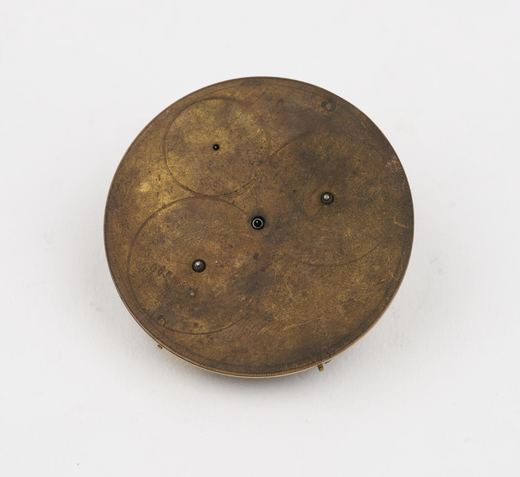
Pocket Watches · 1801-1900
Pocket watch, Switzerland, 1801-1900
Science Museum Group, London
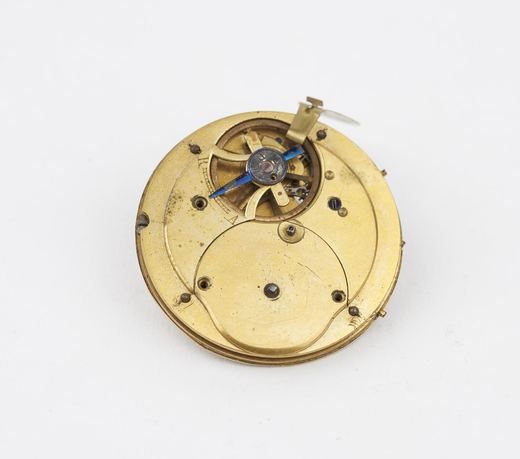
Pocket Watches · 1801-1900
Swiss or French movement with horizontal escapement including "Jumper" mechanism, damaged (cylinder broken), incomplete (dial etc. missing) no.390, 1801-1900
Science Museum Group, London
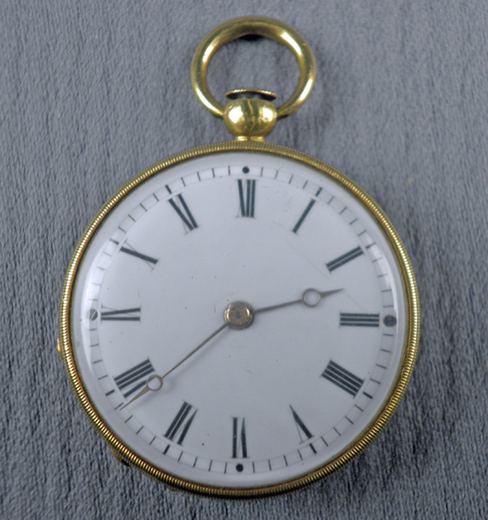
Pocket Watches · 1818–1902
Pocket watch, Switzerland, 1818–1902 (Sörmland Museum SLM_item_305547)
Sörmland Museum
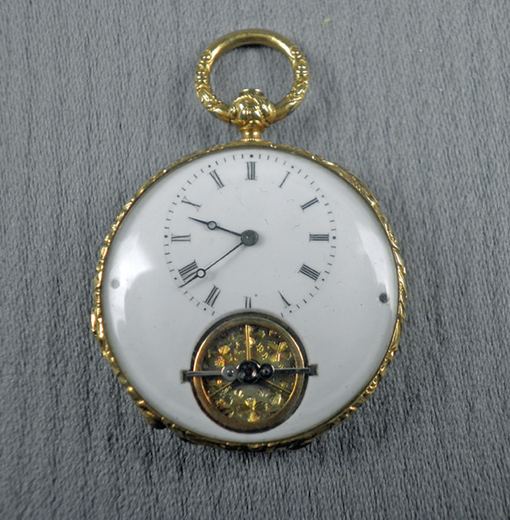
Pocket Watches · 1818–1902
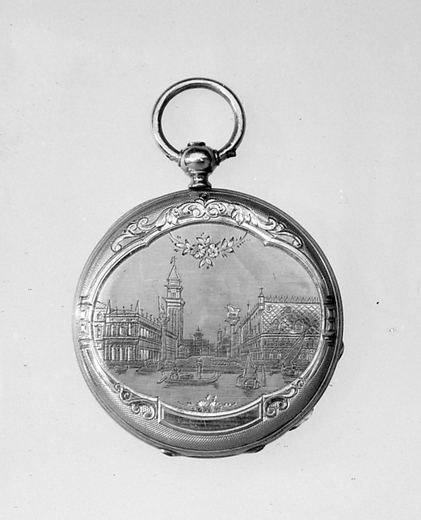
Pocket watch, Switzerland, 1818–1902 (Sörmland Museum SLM_item_305548)
Sörmland Museum
Pocket Watches · ca. 1850
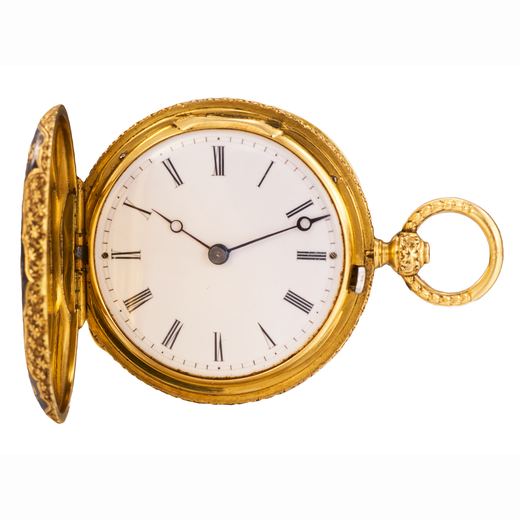
Watch by Eugène Bornand, Switzerland, ca. 1850
The Metropolitan Museum of Art, New York
Pocket Watches · circa 1850-1870
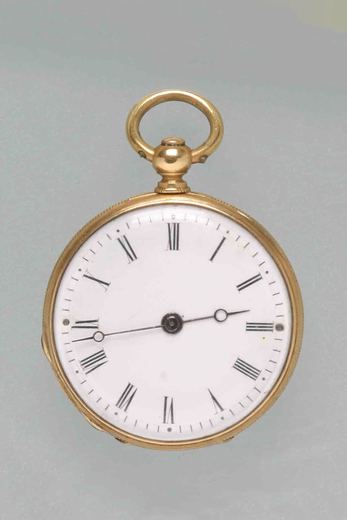
A. Golay Leresche watch, circa 1850-1870
Antiquorum auction archive, Geneva
Pocket Watches · 1850
Pocket watch by D Bachelard et Fils, Switzerland, 1850
German Clock Museum
Pocket Watches · 1850-1899
Pocket watch by GT, Switzerland, 1850-1899
Science Museum Group, London