Pocket Watches · Pocket watch
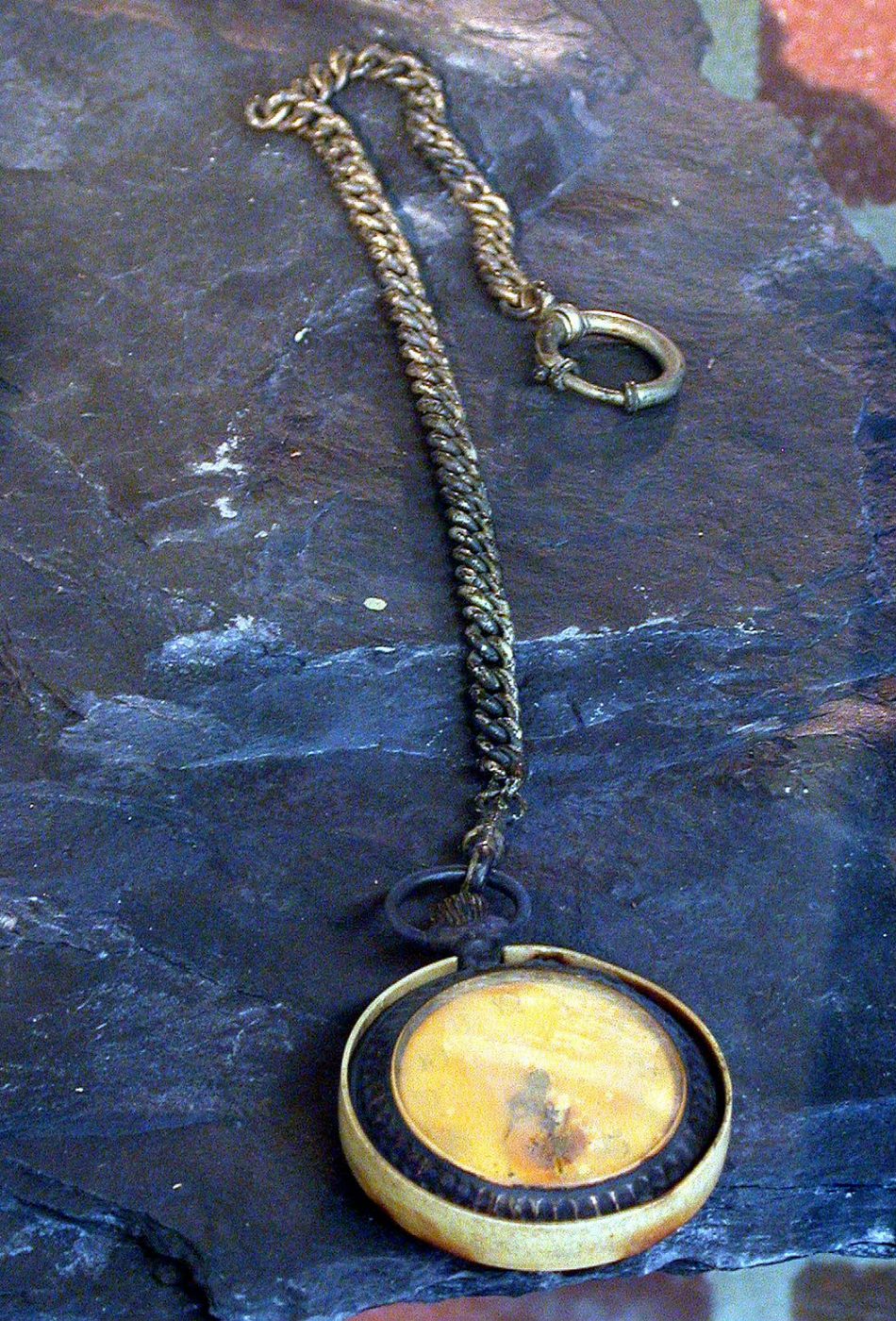
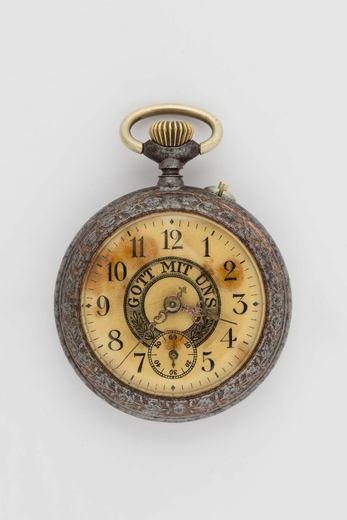
Pocket watch, Germany, 1908 (Montanhistorisches Dokumentationszentrum item_MMLQADVPA77LS47Z3BL4MRQ54ECKWW4Y)
- Maker / attribution
- Unrecorded in source
- Date
- 1908
- Historical period
- Golden Age of Mechanical Watchmaking (1900 – 1945)
- Country of origin
- Germany
- Place
- Germany
- Object type
- Pocket watch
- Holding institution
- Montanhistorisches Dokumentationszentrum
- Accession / object no.
- item_MMLQADVPA77LS47Z3BL4MRQ54ECKWW4Y
- Catalogue title (original)
- Taschenuhr eines verunglückten Bergmannes (Schlagwetterexplosion am 12.11.1908 auf Zeche Radbod) (German)
Record summary
Held and catalogued by Montanhistorisches Dokumentationszentrum (object number item_MMLQADVPA77LS47Z3BL4MRQ54ECKWW4Y), this is a pocket watch, made in Germany, dated 1908. The Atlas places it in the Golden Age of Mechanical Watchmaking period (1900 – 1945) of its Pocket Watches collection. The record is illustrated with 1 photograph.
Assembled from the source record's structured fields. Dates and attributions are given as the source states them; where a field is missing the Atlas leaves it blank rather than estimating.
Catalogue description
Catalogue description from Montanhistorisches Dokumentationszentrum (def)
Halboffene Taschenuhr mit geriffelter Krone und Pendant mit Bügel zur Befestigung einer Uhrkette auf Position 12. Seitlich am Gehäuse befindet sich zusätzlich auf Position 1 der Zeigerstelldrücker und das Drückerschiffchen. Das Uhrenglas ist in einem Deckel mit geriffelter Lünette eingelassen. Darunter liegt ein Ziffernblatt mit arabischen Ziffern, Hilfsblatt für Sekunden ("Kleine Sekunde") auf Position 6, verschnörkelten Stunden- und Minutenzeiger. Die Uhr ist in einem Schutzgehäuse aus Kunststoff eingefasst. Die Taschenuhr zeigt deutliche Brandspuren: Gehäuse flächig verfärbt, Schutzgehäuse insbesondere auf der Rückseite mit verfärbten Stellen, Uhrenglas trüb, Zifferblatt verfärbt und im Bereich des Hilfsblatts mit Korrosion. Das Schutzgehäuse lässt sich nicht von der Uhr lösen, auch lässt sich die Krone nicht herausziehen oder drehen. Zur Uhr gehört eine Uhrkette mit Federclip und Federring zur Befestigung an der Kleidung. Als wortwörtliche Zeitzeugen fungieren Taschenuhren insbesondere dann, wenn sie aus dem Kontext eines Grubenunglücks stammen. So können sie beispielsweise den Zeitpunkt einer Explosion bezeugen, in dem sie zu dieser Zeit stehengeblieben sind bzw. zerstört wurde.
Historical context
Golden Age of Mechanical Watchmaking (1900 – 1945)
The wristwatch displaces the pocket watch; waterproof cases, self-winding and grand complications.
The pocket watch reached technical maturity and then began to give way to the wristwatch after the First World War. Complicated watches for collectors such as Henry Graves Jr. and James Ward Packard, railroad watches, and slim Art Deco dress watches are characteristic.
Read the period in the timelineMore pocket watches from this periodEarlier: Industrial Revolution
Atlas type guide
Pocket watches
The pocket watch was the dominant personal timekeeper from the late seventeenth century until the First World War. Its development tracks the history of the escapement: verge watches with fusees until the late eighteenth century; Thomas Mudge's lever escapement (c. 1755) and the cylinder escapement popularised by George Graham and later by Swiss makers; and the Swiss and English lever watches of the nineteenth century. Lépine's bar-bridge calibre and keyless winding made watches thinner and easier to use.
Industrialisation transformed the trade: American factories such as Waltham (from 1850) and Elgin produced interchangeable parts by machine, and Swiss makers responded with their own mechanisation after the 1876 Philadelphia Exhibition. By 1900 a reliable watch was affordable to millions; the finest makers continued to produce complications and precision watches.
What to look for
- The escapement: verge (crown wheel), cylinder, duplex, English or Swiss lever.
- Key winding (a square arbor in dial or back) or keyless crown winding.
- Signatures and serial numbers on the movement, dial and inside case back.
- Hallmarks, case maker's marks and gold or silver standards stamped in the case.
- Dial material: enamel, silver, gold, later printed metal.
Dating clues
- Verge watches dominate before c. 1800; cylinder watches c. 1770–1900; lever watches after c. 1820.
- Keyless winding: increasingly common after c. 1860.
- Manufacturer serial number lists exist for Waltham, Elgin, Longines, Omega, Patek Philippe and others.
General guidance written by the Atlas editors about this kind of object. It is not a statement about this particular piece; for that, rely on the source record above and on physical examination.
Read next:Verge escapementDetached lever escapementFuseeIdentification Centre
Related records
Pocket Watches · 1891–1945
Pocket watch, Germany, 1891–1945
Montanhistorisches Dokumentationszentrum
Pocket Watches · circa 1900
A.Lange & Söhne pocket watch, circa 1900
Antiquorum auction archive, Geneva
Pocket Watches · 1900
Pocket watch by A. Eppner und Co., Germany, 1900
German Clock Museum
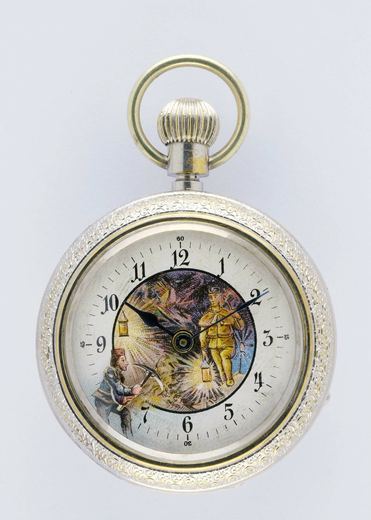
Pocket Watches · 1900
Pocket watch by Gebrüder Thiel, Germany, 1900 (German Clock Museum Museu_ProvidedCHO_museum_digital_29965__technical_number_)
German Clock Museum
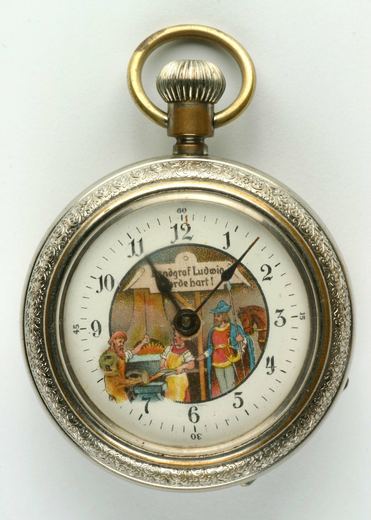
Pocket Watches · 1900
Pocket watch by Gebrüder Thiel, Germany, 1900 (German Clock Museum Museu_ProvidedCHO_museum_digital_29970__technical_number_)
German Clock Museum
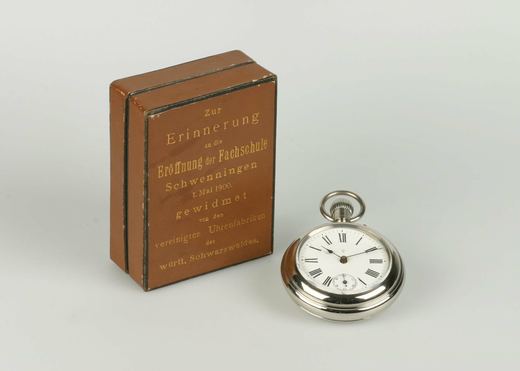
Pocket Watches · 1900
Pocket watch by Thomas Haller, Germany, 1900
German Clock Museum
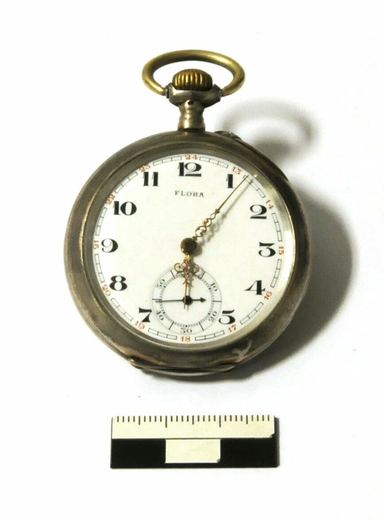
Pocket Watches · 1908
Pocket watch, Germany, 1908 (Montanhistorisches Dokumentationszentrum item_GGVIWWJB4XZ53KL4LNTN45MBO6MPWXFJ)
Montanhistorisches Dokumentationszentrum
Pocket Watches · 1914
Pocket watch by Gebrüder Thiel, Germany, 1914
German Clock Museum