Pocket Watches · Pocket watch
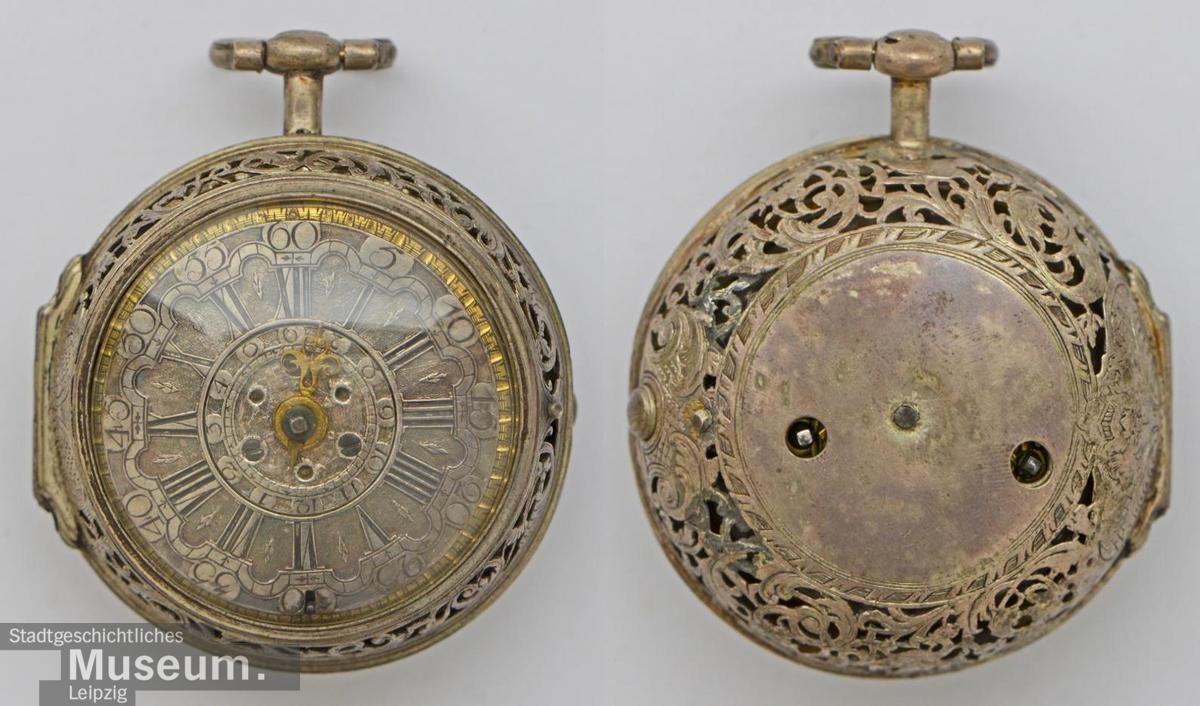
Pocket watch by John Beitelrock, Germany, 1730–1758
- Maker / attribution
- John Beitelrock (creator); Johannes Beitelrock (creator)
- Date
- 1730–1758
- Historical period
- Early Modern Horology (1600 – 1750)
- Country of origin
- Germany
- Object type
- Pocket watch
- Holding institution
- Museum of City History Leipzig
- Accession / object no.
- Museu_ProvidedCHO_Stadtgeschichtliches_Museum_Leipzig_UH000044
- Catalogue title (original)
- pocket watch (English)
Record summary
Held and catalogued by Museum of City History Leipzig (object number Museu_ProvidedCHO_Stadtgeschichtliches_Museum_Leipzig_UH000044), this is a pocket watch by John Beitelrock, made in Germany, dated 1730–1758. The Atlas places it in the Early Modern Horology period (1600 – 1750) of its Pocket Watches collection. The record is illustrated with 1 photograph.
Assembled from the source record's structured fields. Dates and attributions are given as the source states them; where a field is missing the Atlas leaves it blank rather than estimating.
Catalogue description
Catalogue description from Museum of City History Leipzig (German)
Sign. Johann Beitelrock, (Augsburg), Gehäuse: Silber, graviert (am Scharnier ein Maskaron), durchbrochenes filigranes Rankenwerk mit Tieren, in den Rückendeckel nachträglich eingeschraubter Staubschutz, Reparaturmarke an der Innenseite vom Glasreif, Zifferblatt: Silber, Rand vergoldet, mit radialen arab. und röm. Ziffern in Champlever (Grubenschmelz), Wecker-Einstellscheibe im Zentrum mit arab. Ziffern und kleinem Zeiger, handgesägter Stundenzeiger (Minutenzeiger fehlt), Werk: vergoldetes Spindelwerk mit Kette und Schnecke, durchbrochener Spindelkloben mit Blattwerk und im Fuß graviertes Maskaron, eckige Pfeiler; Schlüssel fehlt
Shown in the original language of the source catalogue. An editor-reviewed English translation has not yet been published; we do not publish machine translations as authoritative text.
Historical context
Early Modern Horology (1600 – 1750)
Huygens' pendulum and balance spring transform accuracy; English makers develop the anchor and deadbeat escapements.
The balance spring (c. 1675) improved watches dramatically and introduced the minute hand. English pair-cased verge watches with pierced balance cocks and French oignons were typical; enamel painting at Blois and Geneva, and the repeating watch (1680s), made watches objects of great refinement.
Read the period in the timelineMore pocket watches from this periodEarlier: Renaissance Horology
Atlas type guide
Pocket watches
The pocket watch was the dominant personal timekeeper from the late seventeenth century until the First World War. Its development tracks the history of the escapement: verge watches with fusees until the late eighteenth century; Thomas Mudge's lever escapement (c. 1755) and the cylinder escapement popularised by George Graham and later by Swiss makers; and the Swiss and English lever watches of the nineteenth century. Lépine's bar-bridge calibre and keyless winding made watches thinner and easier to use.
Industrialisation transformed the trade: American factories such as Waltham (from 1850) and Elgin produced interchangeable parts by machine, and Swiss makers responded with their own mechanisation after the 1876 Philadelphia Exhibition. By 1900 a reliable watch was affordable to millions; the finest makers continued to produce complications and precision watches.
What to look for
- The escapement: verge (crown wheel), cylinder, duplex, English or Swiss lever.
- Key winding (a square arbor in dial or back) or keyless crown winding.
- Signatures and serial numbers on the movement, dial and inside case back.
- Hallmarks, case maker's marks and gold or silver standards stamped in the case.
- Dial material: enamel, silver, gold, later printed metal.
Dating clues
- Verge watches dominate before c. 1800; cylinder watches c. 1770–1900; lever watches after c. 1820.
- Keyless winding: increasingly common after c. 1860.
- Manufacturer serial number lists exist for Waltham, Elgin, Longines, Omega, Patek Philippe and others.
General guidance written by the Atlas editors about this kind of object. It is not a statement about this particular piece; for that, rely on the source record above and on physical examination.
Related records
Pocket Watches · early 17th century
Engraved silver and gilt brass watch signed 'J. Bock', Germany (Frankfurt), early 17th century
Victoria and Albert Museum, London
Pocket Watches · 1600–1699
Pocket watch by #Georg_Ernst_Künstler/in, Germany, 1600–1699
Fine Arts Museum Vienna
Pocket Watches · 1600–1699
Pocket watch by Johan Etmiller, Germany, 1600–1699
Nordic Museum Foundation
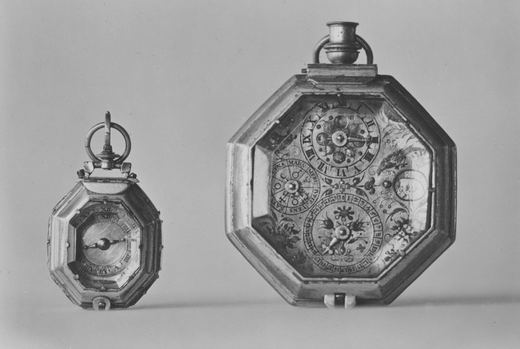
Pocket Watches · early 17th century
Watch with gilt brass case, crystal and blue glass panels signed 'Conradt Kreizer', Germany, early 17th century
Victoria and Albert Museum, London
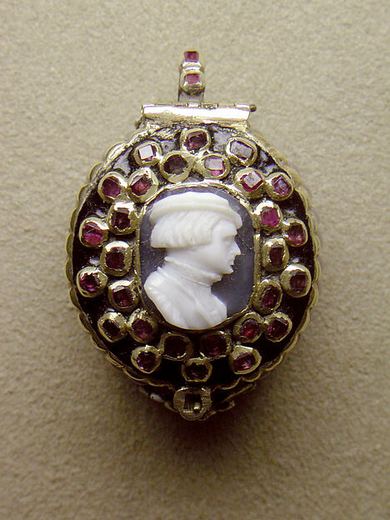
Pocket Watches · watch ca. 1650, cameo 16th–17th century
Watch by Wilhelm Peffenhauser, Germany, watch ca. 1650, cameo 16th–17th century
The Metropolitan Museum of Art, New York
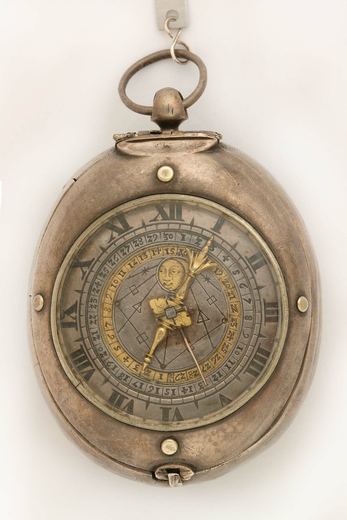
Pocket Watches · 1650
Pocket watch by Johann Sayller, Germany, 1650
German Clock Museum
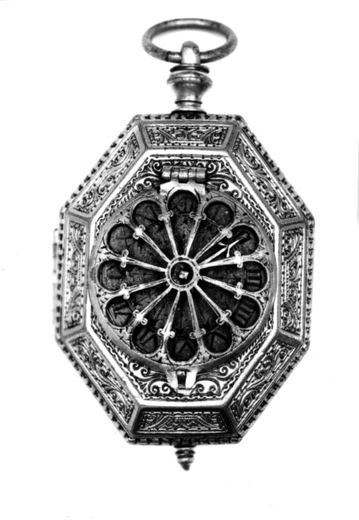
Pocket Watches · 1650–1699
Pocket watch, Germany, 1650–1699
Badisches Landesmuseum Karlsruhe
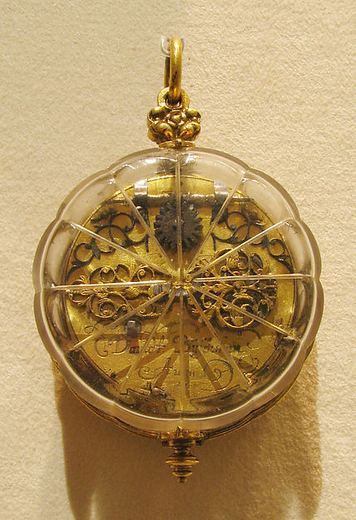
Pocket Watches · probably after 1657
Watch by David Buschman, Germany, probably after 1657
The Metropolitan Museum of Art, New York