Pocket Watches · Pocket watch
Pocket watch, Belgium, 1905 (Montanhistorisches Dokumentationszentrum item_IZ5UEWOHZFKDBCIREH6HCZP362PDZ6AN)
- Maker / attribution
- Unrecorded in source
- Date
- 1905
- Historical period
- Golden Age of Mechanical Watchmaking (1900 – 1945)
- Country of origin
- Belgium
- Place
- Belgium
- Object type
- Pocket watch
- Holding institution
- Montanhistorisches Dokumentationszentrum
- Accession / object no.
- item_IZ5UEWOHZFKDBCIREH6HCZP362PDZ6AN
- Catalogue title (original)
- Taschenuhr mit Eisenbahnmotiv (German)
Record summary
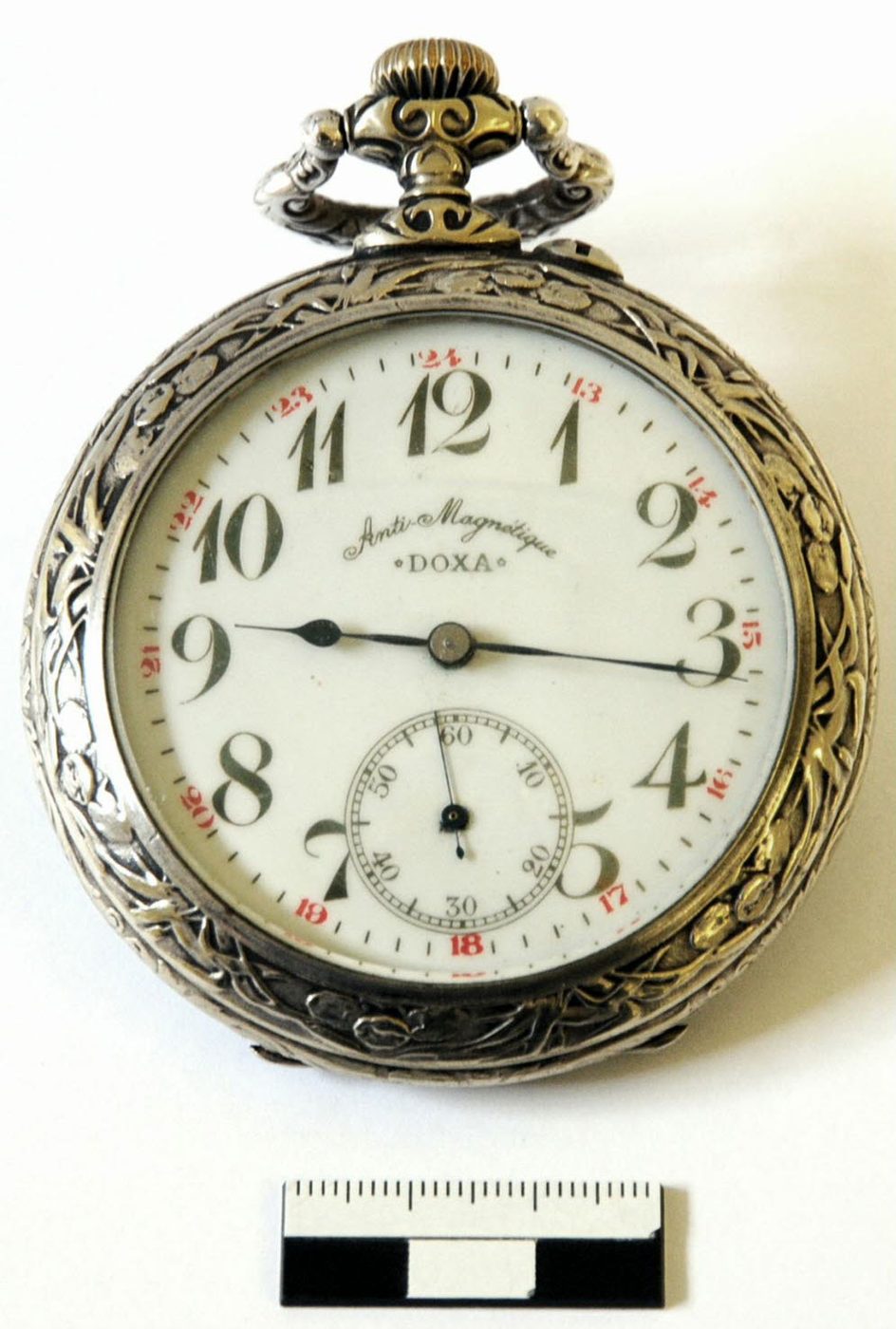
Held and catalogued by Montanhistorisches Dokumentationszentrum (object number item_IZ5UEWOHZFKDBCIREH6HCZP362PDZ6AN), this is a pocket watch, made in Belgium, dated 1905. The Atlas places it in the Golden Age of Mechanical Watchmaking period (1900 – 1945) of its Pocket Watches collection. The record is illustrated with 1 photograph.
Assembled from the source record's structured fields. Dates and attributions are given as the source states them; where a field is missing the Atlas leaves it blank rather than estimating.
Catalogue description
Catalogue description from Montanhistorisches Dokumentationszentrum (def)
Halboffene Taschenuhr mit floral verziertem Gehäuse, geriffelter Krone und Pendant mit verziertem Bügel zur Befestigung einer Uhrkette auf Position 12. Seitlich am Gehäuse befindet sich zwischen Position 12 und 1 der Zeigerstelldrücker und das Drückerschiffchen. Das Uhrenglas ist in einem Deckel mit Lünette eingelassen. Unter dem Uhrenglas liegt ein weißes Zifferblatt mit schwarzen und roten arabischen Ziffern, gebläuten Stunden- und Minutenzeigern und einem Hilfsblatt für Sekunden ("Kleine Sekunde") auf Position 6. Durch die Einbindung des Hilfsblattes sind die Ziffern 6 und 7 nicht vollständig abgebildet. Zusätzlich trägt das Zifferblatt auf Position 12 ein Herstellerlogo "DOXA" und die Angabe "Anti-Magnetique". Auf dem Rückdeckel mit Scharnier und Lippe zur Öffnung befindet sich eine plastische Darstellung. Das Uhrwerk wird durch einen verzierten Staubdeckel (Cuvette) geschützt. Neben einem Schriftzug sind Medaillen abgebildet. Auf der Rückseite finden sich u.a. verschiedene Stempelmarken. Das Uhrwerk ist u.a. mit der Herstellerlogo "DOXA" versehen. Das Stellen der Zeiger erfolgt über die Krone, während mit dem Fingernagel ein kleiner Pin an der Seite (Zeigerstelldrücker) eingedrückt wird. Dieser ist in eine geschlitzte Erhöhung am Gehäuse (Drückerschiffchen) eingelassen und so vor unbeabsichtigtes Eindrücken geschützt. Auf dem Rückdeckel ist befindet sich die Darstellung einer fahrenden Dampflokomotive mit Tender auf einer zweigleisigen Strecke mit Telegrafenleitungen im Hintergrund. Der Staubdeckel ist u.a. mit dem Hinweis über die Auszeichnung mit einer Goldmedaille auf der Weltausstellung 1906 in Mailand versehen und mit Abbildungen von Medaillen verschiedener (Welt-)Ausstellungen verziert.
Historical context
Golden Age of Mechanical Watchmaking (1900 – 1945)
The wristwatch displaces the pocket watch; waterproof cases, self-winding and grand complications.
The pocket watch reached technical maturity and then began to give way to the wristwatch after the First World War. Complicated watches for collectors such as Henry Graves Jr. and James Ward Packard, railroad watches, and slim Art Deco dress watches are characteristic.
Read the period in the timelineMore pocket watches from this periodEarlier: Industrial Revolution
Atlas type guide
Railroad and railway watches
Timetables made accurate timekeeping a matter of safety. After a fatal collision at Kipton, Ohio, in 1891, American railroads adopted strict standards: open-face watches, lever setting, at least 17 jewels, adjustment to temperature and five positions, and a performance within 30 seconds a week, inspected regularly by approved watch inspectors. Waltham, Elgin, Hamilton, Illinois and Ball made railroad-grade watches in large numbers.
European railways issued service watches to guards, drivers and station staff, often engraved with the railway's initials and a staff number. Such watches link industrial timekeeping with the standardisation of time zones (Greenwich Mean Time adopted by British railways in 1847; North American standard time in 1883).
What to look for
- Open-face cases with the crown at 12 and lever setting under the bezel.
- Montgomery dials with every minute numbered, or bold Arabic numerals.
- 'Railroad grade', '21 Jewels', 'Adjusted 5 positions' on the movement.
- Railway initials and issue numbers engraved on the case back.
Dating clues
- American railroad standards: from 1891–93, revised c. 1908.
- Serial numbers of American makers allow dating to within a year.
General guidance written by the Atlas editors about this kind of object. It is not a statement about this particular piece; for that, rely on the source record above and on physical examination.
Read next:Detached lever escapement
Related records
Pocket Watches · 1905
Pocket watch, Belgium, 1905 (Montanhistorisches Dokumentationszentrum item_ERYWCBULHSDZYDZWB7X7Z7JTZCGAOG2P)
Montanhistorisches Dokumentationszentrum
Pocket Watches · 1905
Pocket watch, Belgium, 1905 (Montanhistorisches Dokumentationszentrum item_RUIFR54JUHW4ARO6H6P3NY6YJ6EH5R2W)
Montanhistorisches Dokumentationszentrum
Pocket Watches · 1860–1951
Pocket watch, 1860–1951 (Upplands Museum upmu_object_UM28799)
Upplands Museum
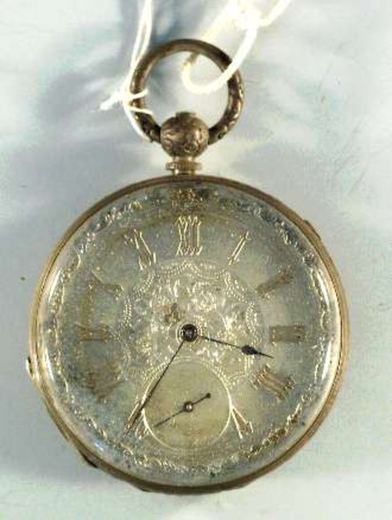
Pocket Watches · 1860–1951
Pocket watch, 1860–1951 (Upplands Museum upmu_object_UM28800)
Upplands Museum
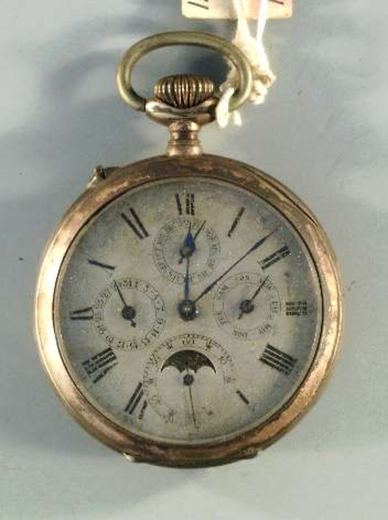
Pocket Watches · 1860–1951
Pocket watch, 1860–1951 (Upplands Museum upmu_object_UM28801)
Upplands Museum
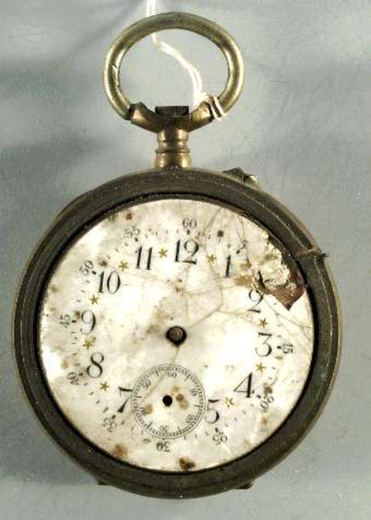
Pocket Watches · 1860–1951
Pocket watch, 1860–1951 (Upplands Museum upmu_object_UM29013)
Upplands Museum
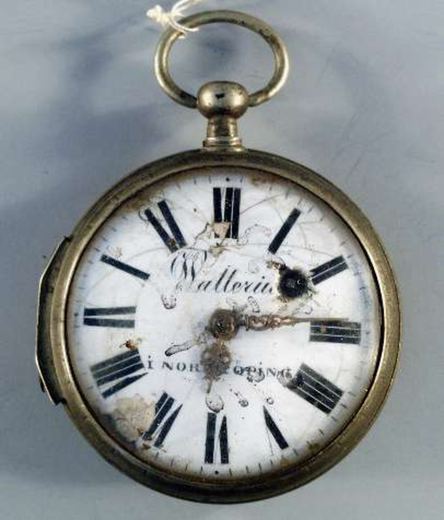
Pocket Watches · 1860–1951
Pocket watch, Sweden, 1860–1951
Upplands Museum
Pocket Watches · 1873–1930
Pocket watch, Lilla Malma socken, 1873–1930
Sörmland Museum