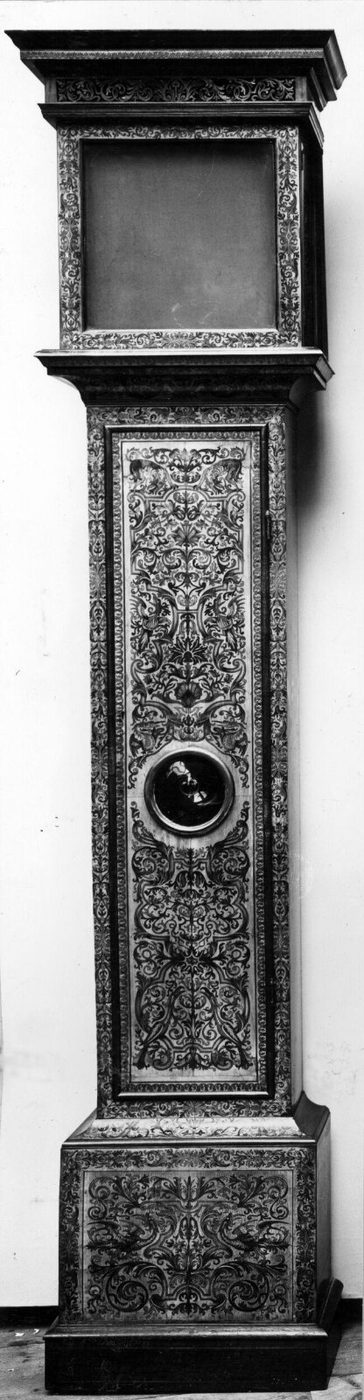
Movements & Components · Longcase clock case
Longcase clock case, marquetry of walnut and other woods, English, about 1700, maker unknown
- Maker / attribution
- Unrecorded in source
- Date
- ca. 1700
- Historical period
- Early Modern Horology (1600 – 1750)
- Country of origin
- England
- Place
- England
- Object type
- Longcase clock case
- Materials / technique
- walnut, wood
- Dimensions
- Height: 216 cm; Width: 50.3 cm; Depth: 26.5 cm
- Holding institution
- Victoria and Albert Museum, London
- Accession / object no.
- 225:1-1879
- Credit line
- Purchased in 1879
Record summary
Held and catalogued by Victoria and Albert Museum, London (object number 225:1-1879), this is a longcase clock case, made in England, dated ca. 1700. The Atlas places it in the Early Modern Horology period (1600 – 1750) of its Movements & Components collection. Materials and techniques recorded by the source: walnut, wood. Recorded dimensions: Height: 216 cm; Width: 50.3 cm; Depth: 26.5 cm. The record is illustrated with 1 photograph.
Assembled from the source record's structured fields. Dates and attributions are given as the source states them; where a field is missing the Atlas leaves it blank rather than estimating.
Catalogue description
V&A — Summary
This clock case was modified to accommodate a new movement, as the door which would open to the face has been altered in shape and given hinges (it is probable that the front originally did not open at all and the hood would lift off for the clock to be rewound). The single, large, rectangular marquetry door panel showing dragons, birds and arabesques is in contrast to the three separate marquetry panels with break-arch ends as seen on the case doors of the Clement and the Le Count. The circular lenticle appears to be made in bottle glass, like that of the Speakman. The original keys to both the lower and upper doors of this clock survive.
V&A — Physical description
Longcase clock case. The single, large, rectangular marquetry door panel has dragon, bird and arabesque motifs. The circular lenticle appears to be made in bottle glass
V&A — Object history
Bought from Mr. Samuel How (3, St. Mary’s Passage, Cambridge). Bought for £15 6s 6d. Condition: damaged, portions of inlay missing
Historical context
Early Modern Horology (1600 – 1750)
Huygens' pendulum and balance spring transform accuracy; English makers develop the anchor and deadbeat escapements.
The pendulum, anchor escapement and balance spring transformed movement design; English makers introduced jewelled bearings (1704).
Read the period in the timelineMore movements & components from this periodEarlier: Renaissance Horology
Atlas type guide
Cases, keys and accessories
Clock and watch cases protect the movement and express taste and status. Watch cases were made by separate specialist case-makers whose marks, along with assay hallmarks, help to date and place them. Clock cases were the work of cabinet-makers, bronze founders, ceramic factories and silversmiths, so they belong as much to the history of decorative arts as to horology.
Keys, chatelaines, watch stands, watch papers and winding tools are part of the material culture of timekeeping: they show how timepieces were worn, displayed, wound and maintained.
What to look for
- Case maker's sponsor's marks and assay hallmarks in gold and silver cases.
- Materials: shagreen, tortoiseshell, enamel, porcelain, jasperware, gilt bronze.
- Breguet-style ratchet keys, crank keys and watch-key fobs.
- Engraved names, presentations and dates.
Dating clues
- English hallmark date letters allow exact dating of the case assay.
- Porcelain cases from Meissen and Sèvres: mostly eighteenth century.
General guidance written by the Atlas editors about this kind of object. It is not a statement about this particular piece; for that, rely on the source record above and on physical examination.
Related records
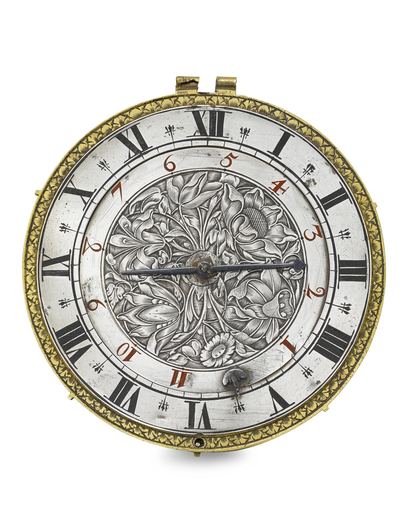
Movements & Components · 1640-1660
Watch movement by East, Edward, England, 1640-1660
Science Museum Group, London
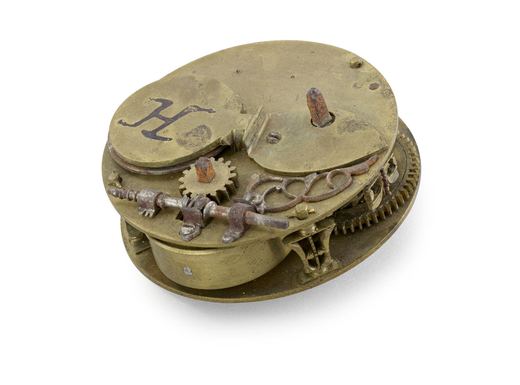
Movements & Components · 1670
Watch movement, England, 1670
Science Museum Group, London
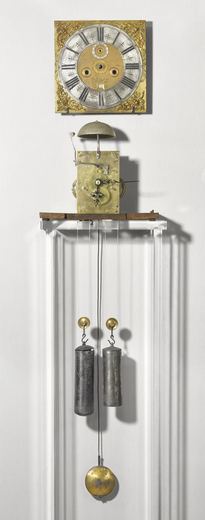
Movements & Components · 1690-1695
Clock movement by Bradford, Thomas, England, 1690-1695
Science Museum Group, London
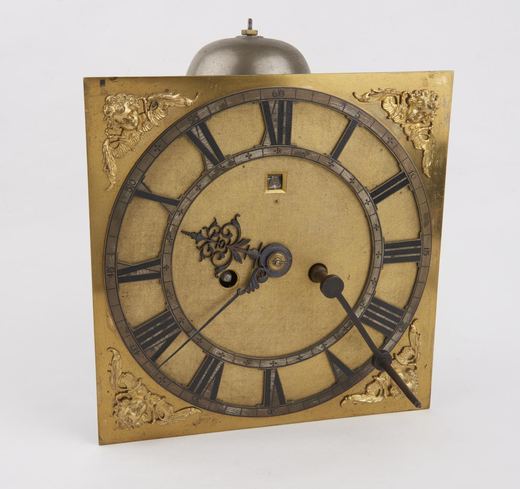
Movements & Components · 1690-1700
Movement of bracket clock by Edward Burges, c. 1690
Science Museum Group, London
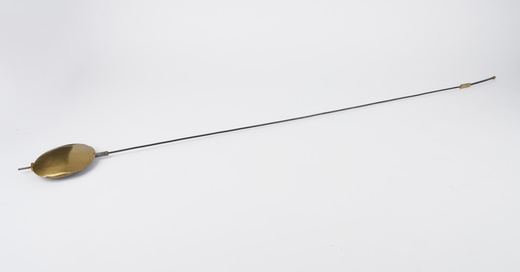
Movements & Components · 1690-1710
Pendulum from long-case clock, by Benjamin Nicholas, London, United Kingdom, 1690-1710
Science Museum Group, London
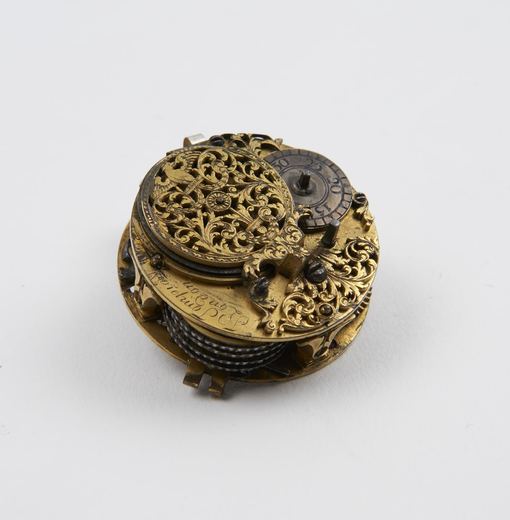
Movements & Components · 1690
Pocket watch verge escapement movement by Thomas. Tompion, London, England,1690
Science Museum Group, London
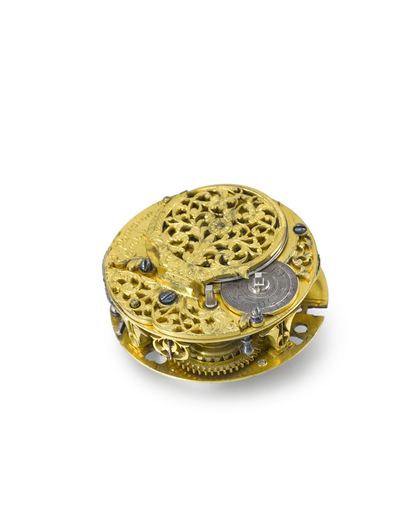
Movements & Components · 1692
Watch movement by Tompion, Thomas, England, 1692
Science Museum Group, London
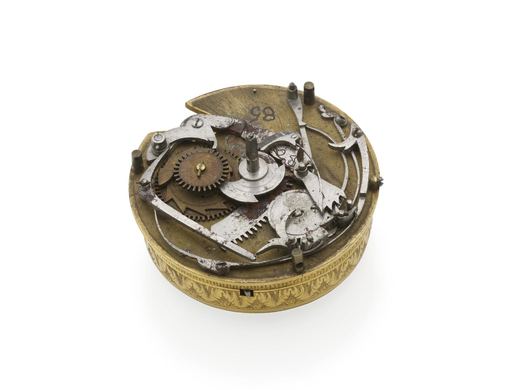
Movements & Components · 1700-1725
Repeating watch movement by Thomas Windmills, London, early 18th century. Rim cap. Signed ‘Thomas Windmills London’. Clockmakers' Museum No. 85
Science Museum Group, London