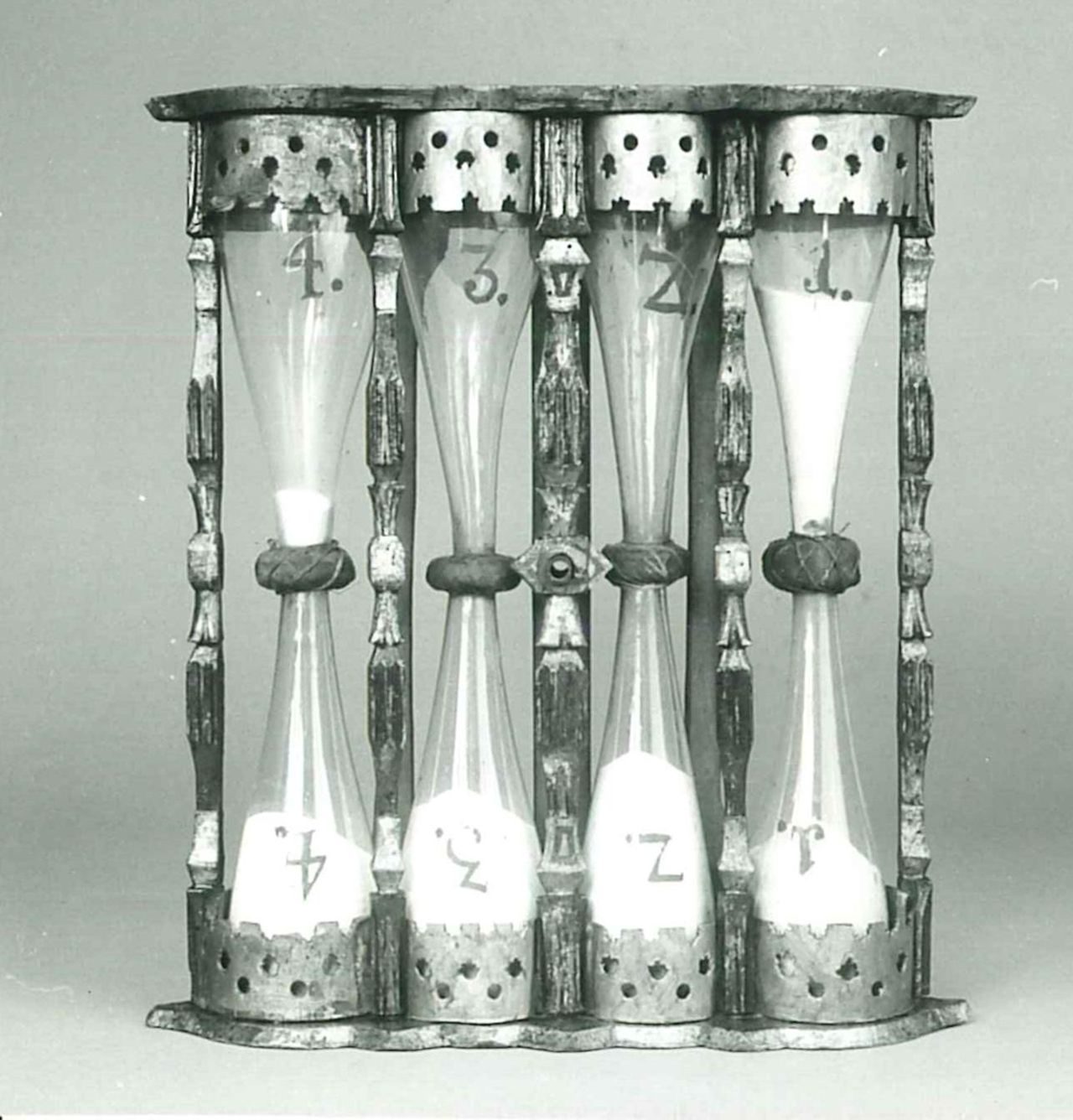
Instruments · Hourglass
Hourglass, Wildegg, 1500–1599
- Maker / attribution
- Unrecorded in source
- Date
- 1500–1599
- Historical period
- Renaissance Horology (1400 – 1600)
- Country of origin
- Unrecorded in source
- Place
- Wildegg
- Object type
- Hourglass
- Holding institution
- Museum Aargau
- Accession / object no.
- _kimnet_cho_36ade4a5_b0ba_9501_20cd_18b2849df12b
- Catalogue title (original)
- Sanduhr (German)
Record summary
Held and catalogued by Museum Aargau (object number _kimnet_cho_36ade4a5_b0ba_9501_20cd_18b2849df12b), this is a hourglass, made in Wildegg, dated 1500–1599. The Atlas places it in the Renaissance Horology period (1400 – 1600) of its Instruments collection. The record is illustrated with 1 photograph.
Assembled from the source record's structured fields. Dates and attributions are given as the source states them; where a field is missing the Atlas leaves it blank rather than estimating.
Catalogue description
Catalogue description from Museum Aargau (German)
Wer hat sich schon mal nicht gewünscht, die Zeit kontrollieren zu können? Ob die Verkürzung eines langwierigen Tages in der Schule oder in der Arbeitswelt, oder die Verlängerung eines perfekten Momentes, beides scheint ein prinzipiell unmögliches Unterfangen zu sein. Doch dabei darf nicht vergessen werden, dass die Zeit zwar eine universale Tatsache ist, doch die Zeitmessung etwas sehr Menschliches. Und gewiss wurden unsere Methoden der Zeitmessung durch die Geschichte hindurch stets ausgefeilter und genauer, doch so kreativ die Menschheit im Erfinden ist, so ist sie es eben auch im Betrug.Das vorliegende Exemplar der Zeitmessung, die Sanduhr, ist angelehnt an ältere Techniken wie den Wasseruhren und seit dem 14. Jahrhundert an bekannt. Die genaue Zeitdauer konnte dabei je nach Material und Grösse des Lochs in der Mitte eingestellt werden, durch welches dann der Sand fiel. Dabei wurde eine Eich-Sanduhr als Referenz herangezogen. Bei der hier abgebildeten handelt es sich um eine sogenannte Kanzeluhr, welche vier verschiedene Behälter hat um jeweils eine Viertel-, eine halbe, eine Dreiviertel- sowie eine volle Stunde zu messen. Diese wurde oft in Kirchen sowie in Parlaments- oder Gerichtssälen benutzt, um die genaue Redezeit festzulegen. Dabei waren jedoch manche Personen äusserst geschickt darin, diese Zeit mit einigen Tricks entweder zu verlängern oder zu verkürzen und somit die Zeit zu "kontrollieren". Denn so ist es eben mit der Technik. Sie mag zwar gestaltet sein, um eine genauere Kontrolle zu ermöglichen, doch genauso kann sie auch wieder manipuliert werden, sei es heutzutage durch ein ausgefeiltes Computerprogramm oder damals wohl einfach mit einem gut platzierten Tippen.
Shown in the original language of the source catalogue. An editor-reviewed English translation has not yet been published; we do not publish machine translations as authoritative text.
Historical context
Renaissance Horology (1400 – 1600)
Spring power makes clocks portable; Nuremberg and Augsburg produce the first watches; the Prague Orloj is built.
Instrument-making flourished in Nuremberg, Augsburg, Louvain and London: ivory diptych dials, astronomical compendia, astrolabes and nocturnals for wealthy patrons, navigators and scholars.
Read the period in the timelineMore instruments from this periodEarlier: Medieval Period
Atlas type guide
Sandglasses and hourglasses
A sandglass measures an interval rather than telling the time of day: a fixed quantity of fine material runs from one bulb into the other through a narrow neck. Documented in Europe from the fourteenth century, sandglasses were used on board ship to time watches and to measure speed with the log line, in churches to time sermons, in schools, laboratories and kitchens.
Early glasses were made as two separate bulbs bound together at the neck with a diaphragm and wax and thread; one-piece blown glasses only became usual in the nineteenth century. The 'sand' could be powdered marble, eggshell or metal filings, carefully sieved and dried. Sets of graduated glasses in one frame allowed several intervals to be timed.
What to look for
- Whether the two bulbs are separate and bound at the neck, or blown as one piece.
- The frame: turned wood, brass, silver or pewter, sometimes with pillars and decorated end plates.
- Multiple glasses in a single frame, giving quarter, half, three-quarter and full hours.
- Marine glasses of 30 seconds or 28 seconds used with the log line.
Dating clues
- Bound two-piece glasses predate about 1800; one-piece glasses are generally later.
- Sermon glasses on pulpits and multi-glass frames are characteristic of the sixteenth to eighteenth centuries.
General guidance written by the Atlas editors about this kind of object. It is not a statement about this particular piece; for that, rely on the source record above and on physical examination.
Related records
Instruments · 1425-1435
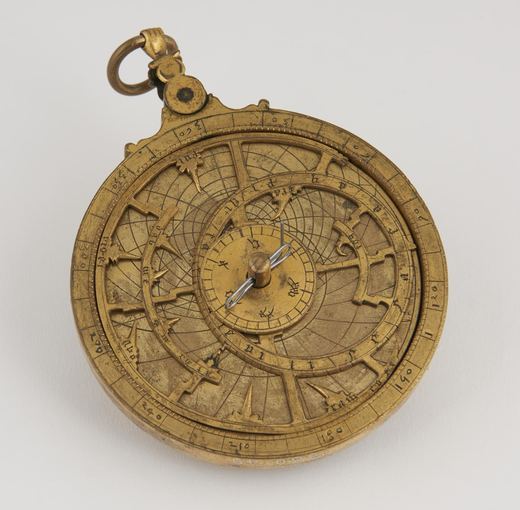
Astrolabe, 1425-1435
Science Museum Group, London
Instruments · late 15th century
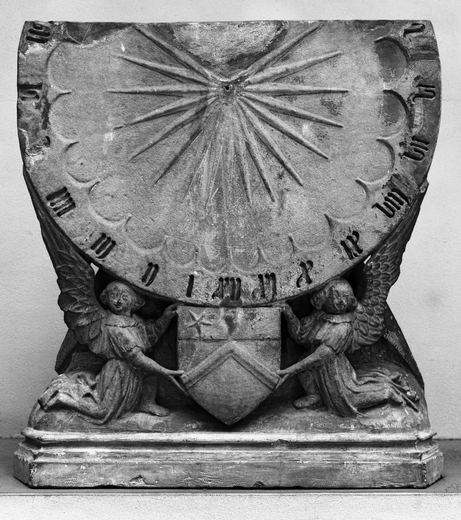
Sundial, stone, northern France, late 15th century
Victoria and Albert Museum, London
Instruments · 1462
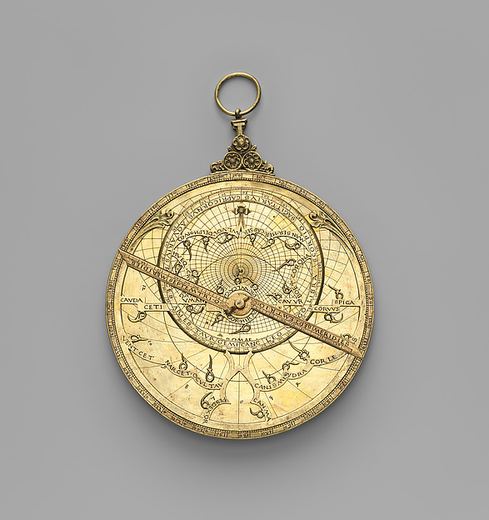
Astrolabe by Regiomontanus, Germany, 1462
The Metropolitan Museum of Art, New York
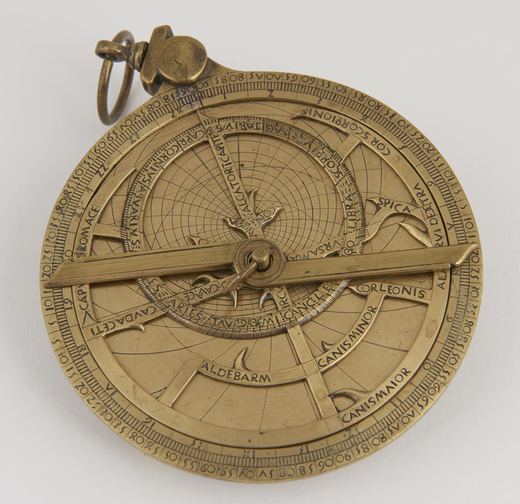
Instruments · 1495-1505
Astrolabe, Italy, 1495-1505
Science Museum Group, London
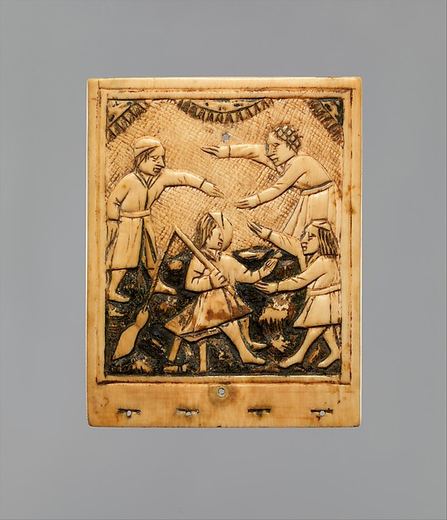
Instruments · ca. 1500
Sundial, Germany, ca. 1500
The Metropolitan Museum of Art, New York
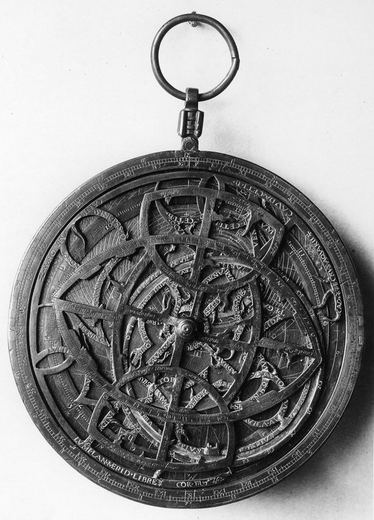
Instruments · 1500–1599
Astrolabe by Gemma Frisius, Belgium, 1500–1599
Royal Institute for Cultural Heritage
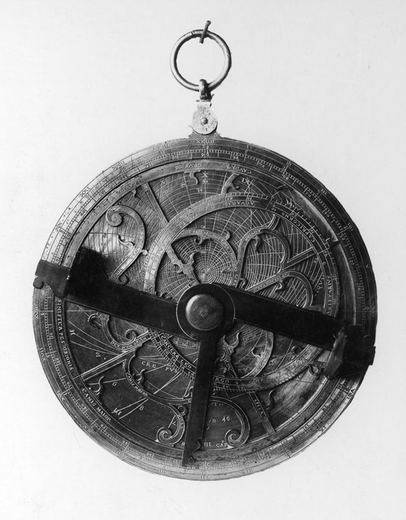
Instruments · 1500–1599
Astrolabe by J. A. Lynden, Belgium, 1500–1599
Royal Institute for Cultural Heritage
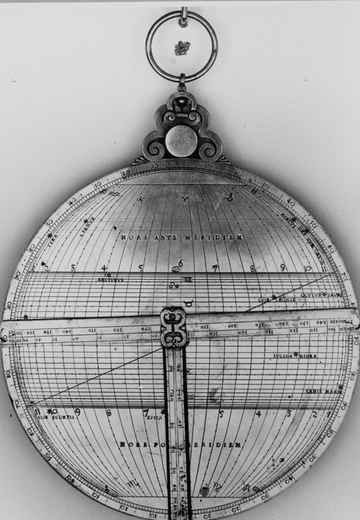
Instruments · 1500–1599
Astrolabe by Juan de Roias, Belgium, 1500–1599
Royal Institute for Cultural Heritage