Movements & Components · Clock case
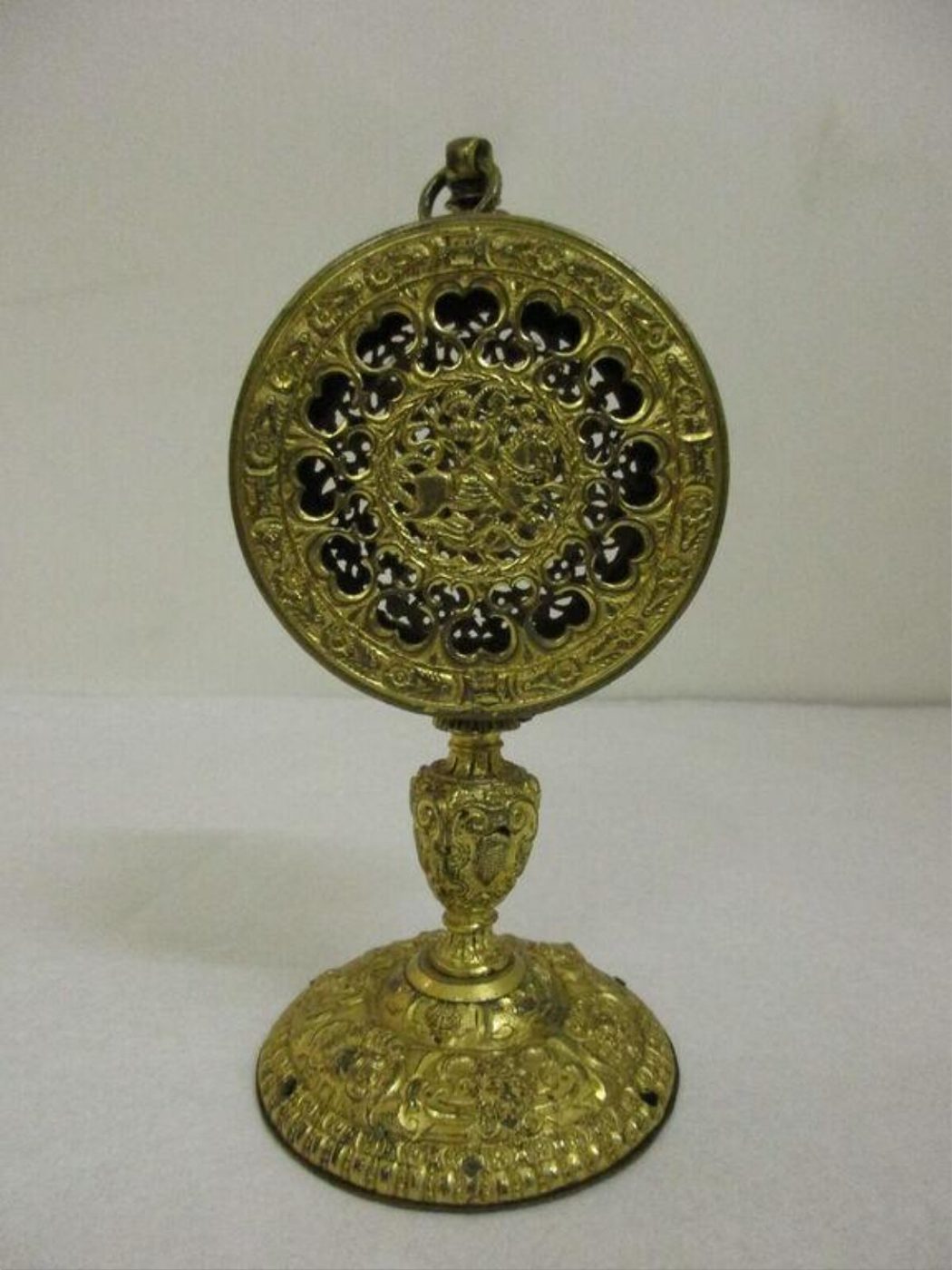
Clock case with figure of St George and the Dragon. Gilt brass openwork, cast and chased, South German, late 16th century.
- Maker / attribution
- Unrecorded in source
- Date
- late 16th century
- Historical period
- Renaissance Horology (1400 – 1600)
- Country of origin
- Germany
- Place
- Germany
- Object type
- Clock case
- Materials / technique
- Pierced drum, relief work
- Dimensions
- Height: 6 in
- Holding institution
- Victoria and Albert Museum, London
- Accession / object no.
- M.107-1923
Record summary
Held and catalogued by Victoria and Albert Museum, London (object number M.107-1923), this is a clock case, made in Germany, dated late 16th century. The Atlas places it in the Renaissance Horology period (1400 – 1600) of its Movements & Components collection. Materials and techniques recorded by the source: Pierced drum, relief work. Recorded dimensions: Height: 6 in. The record is illustrated with 4 photographs.
Assembled from the source record's structured fields. Dates and attributions are given as the source states them; where a field is missing the Atlas leaves it blank rather than estimating.
Catalogue description
V&A — Physical description
Drum pierced with St George and Dragon and floral ornament, on vase-shaped stem and spreading foot with masks and fruit in relief
Historical context
Renaissance Horology (1400 – 1600)
Spring power makes clocks portable; Nuremberg and Augsburg produce the first watches; the Prague Orloj is built.
Movements were made by hand in iron and brass; screws were rare and parts were fixed with pins and wedges.
Read the period in the timelineMore movements & components from this periodEarlier: Medieval Period
Atlas type guide
Cases, keys and accessories
Clock and watch cases protect the movement and express taste and status. Watch cases were made by separate specialist case-makers whose marks, along with assay hallmarks, help to date and place them. Clock cases were the work of cabinet-makers, bronze founders, ceramic factories and silversmiths, so they belong as much to the history of decorative arts as to horology.
Keys, chatelaines, watch stands, watch papers and winding tools are part of the material culture of timekeeping: they show how timepieces were worn, displayed, wound and maintained.
What to look for
- Case maker's sponsor's marks and assay hallmarks in gold and silver cases.
- Materials: shagreen, tortoiseshell, enamel, porcelain, jasperware, gilt bronze.
- Breguet-style ratchet keys, crank keys and watch-key fobs.
- Engraved names, presentations and dates.
Dating clues
- English hallmark date letters allow exact dating of the case assay.
- Porcelain cases from Meissen and Sèvres: mostly eighteenth century.
General guidance written by the Atlas editors about this kind of object. It is not a statement about this particular piece; for that, rely on the source record above and on physical examination.
Related records
Movements & Components · 1575-1600
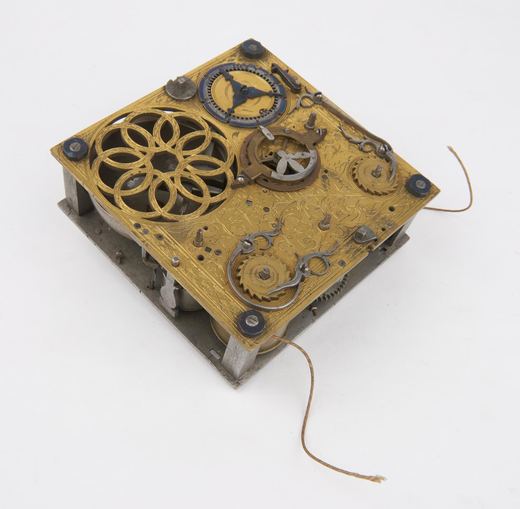
Movement or square striking table clock (probably 1575-1600, German)
Science Museum Group, London
Movements & Components · 1579
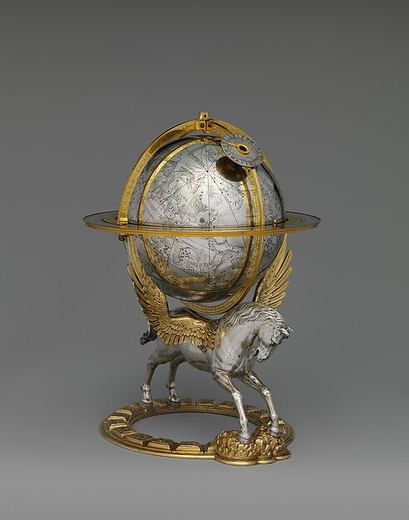
Celestial globe with clockwork by Gerhard Emmoser, Germany, 1579
The Metropolitan Museum of Art, New York
Movements & Components · 1500–1599
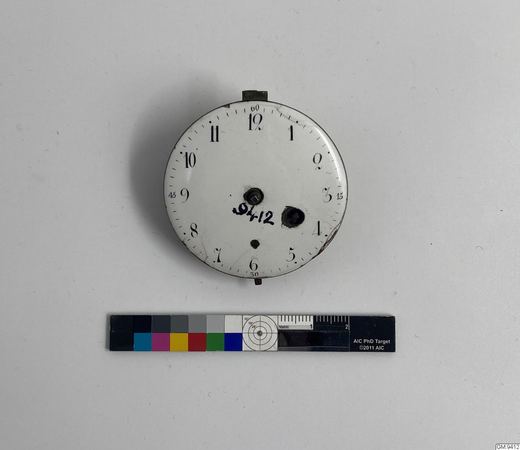
Watch movement by J. [trol.] Hovenschiöld, Sweden, 1500–1599
Museum of Gothenburg
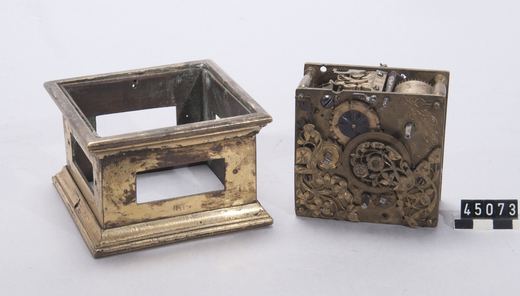
Movements & Components · 1500–1600
Watch movement, 1500–1600
Swedish National Museum of Science and Technology