Movements & Components · Clock case
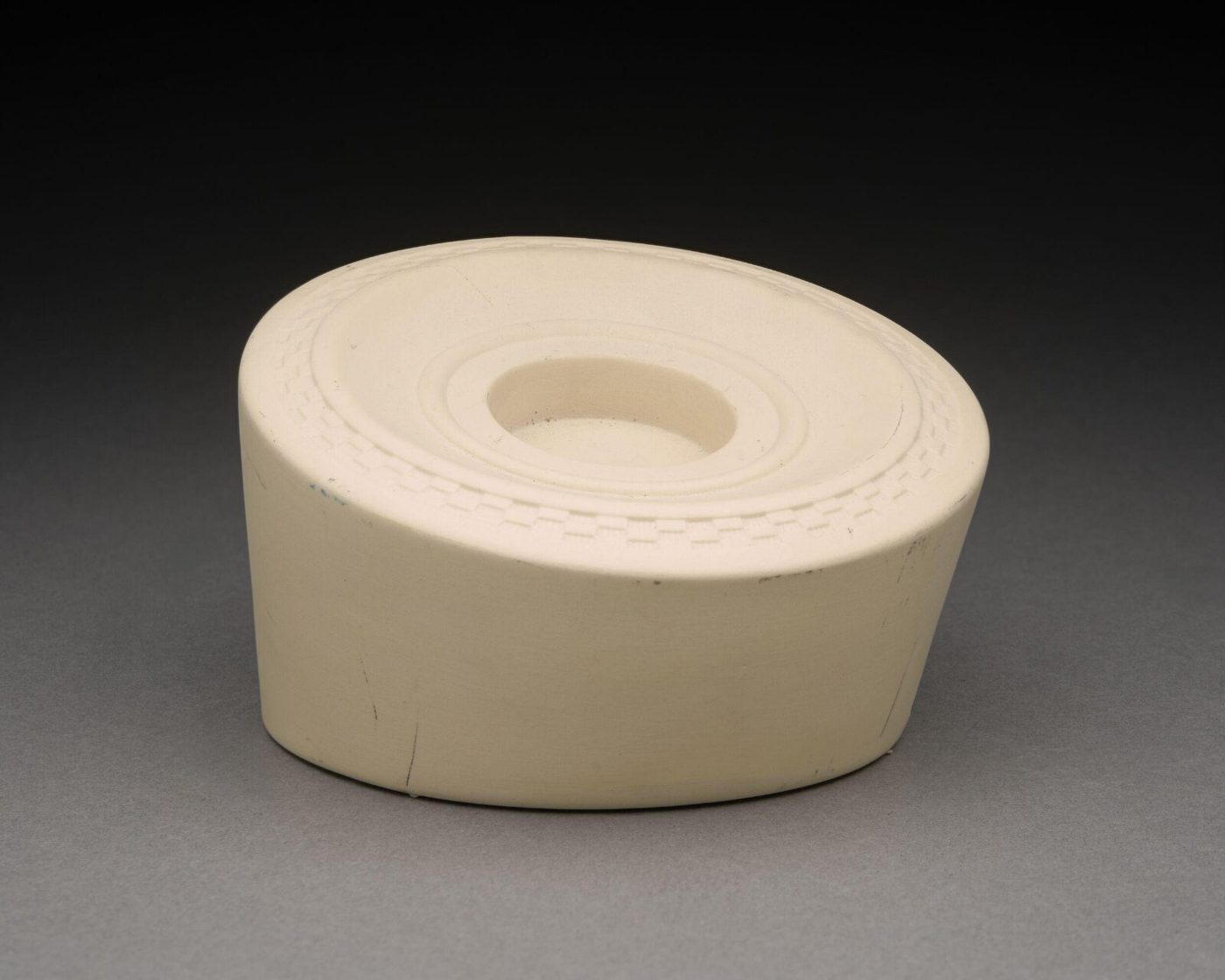
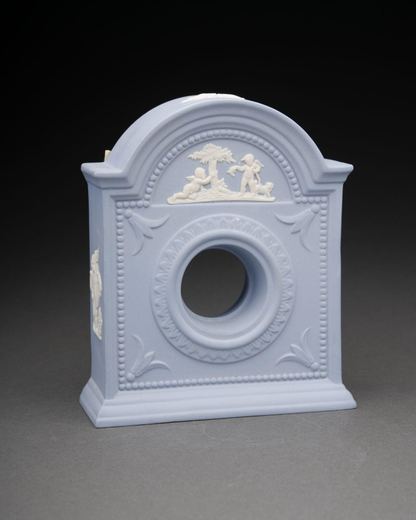
Clock case, Jasperware with moulding, Josiah Wedgwood and Sons, Barlaston, 1999
- Maker / attribution
- Josiah Wedgwood and Sons (Manufacturers)
- Date
- 1999
- Historical period
- Mechanical Renaissance (1990 – 2010)
- Country of origin
- Unrecorded in source
- Place
- Barlaston
- Object type
- Clock case
- Materials / technique
- Jasperware with moulding
- Dimensions
- Height: 115 mm; Depth: 71 mm; Diameter: 112 mm
- Holding institution
- Victoria and Albert Museum, London
- Accession / object no.
- WE.18557-2014
- Credit line
- V&A Wedgwood Collection. Presented by Art Fund with major support from the National Lottery Heritage Fund, private donations and a public appeal.
Record summary
Held and catalogued by Victoria and Albert Museum, London (object number WE.18557-2014), this is a clock case by Josiah Wedgwood and Sons, made in Barlaston, dated 1999. The Atlas places it in the Mechanical Renaissance period (1990 – 2010) of its Movements & Components collection. Materials and techniques recorded by the source: Jasperware with moulding. Recorded dimensions: Height: 115 mm; Depth: 71 mm; Diameter: 112 mm. The record is illustrated with 2 photographs.
Assembled from the source record's structured fields. Dates and attributions are given as the source states them; where a field is missing the Atlas leaves it blank rather than estimating.
Catalogue description
V&A — Physical description
Clock case, yellow jasperware with moulding. Circular shaped clock case with moulded decoration of bands with repeating rectangle decoration. Flat base so can stand independently. Circular indent for a clock fact, with a pierced circular hole in base.
Inscriptions & marks
W / WEDGWOOD / INTERIORS / MADE IN ENGLAND / C1999' (impressed)
Historical context
Mechanical Renaissance (1990 – 2010)
Mechanical watches return as cultural objects; independent watchmaking flourishes.
New mechanical calibres, co-axial and other escapements, and silicon components renewed mechanical movement design.
Read the period in the timelineMore movements & components from this periodEarlier: Quartz Revolution
Atlas type guide
Cases, keys and accessories
Clock and watch cases protect the movement and express taste and status. Watch cases were made by separate specialist case-makers whose marks, along with assay hallmarks, help to date and place them. Clock cases were the work of cabinet-makers, bronze founders, ceramic factories and silversmiths, so they belong as much to the history of decorative arts as to horology.
Keys, chatelaines, watch stands, watch papers and winding tools are part of the material culture of timekeeping: they show how timepieces were worn, displayed, wound and maintained.
What to look for
- Case maker's sponsor's marks and assay hallmarks in gold and silver cases.
- Materials: shagreen, tortoiseshell, enamel, porcelain, jasperware, gilt bronze.
- Breguet-style ratchet keys, crank keys and watch-key fobs.
- Engraved names, presentations and dates.
Dating clues
- English hallmark date letters allow exact dating of the case assay.
- Porcelain cases from Meissen and Sèvres: mostly eighteenth century.
General guidance written by the Atlas editors about this kind of object. It is not a statement about this particular piece; for that, rely on the source record above and on physical examination.
Related records
Clocks · ca. 1880
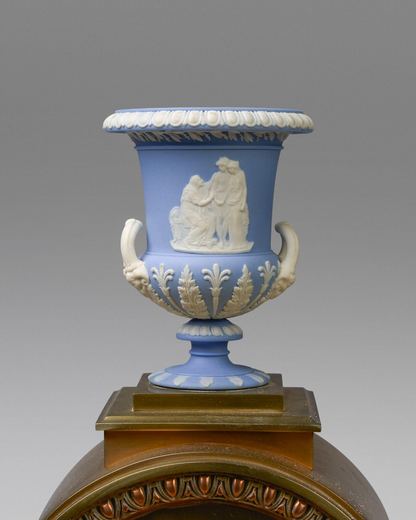
Clock, Jasperware with applied reliefs and brass, Josiah Wedgwood and Sons, Etruria, ca.1880
Victoria and Albert Museum, London
Clocks · ca. 1900
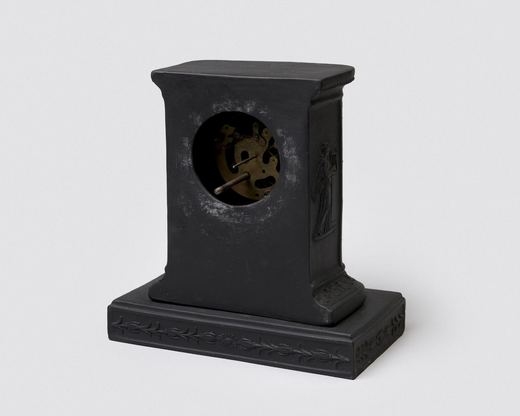
Clock, black basalt, brass, Josiah Wedgwood and Sons, Etruria, ca. 1900
Victoria and Albert Museum, London
Clocks · 20th century
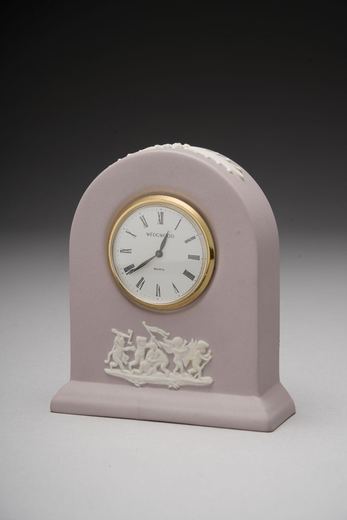
Clock, Jasperware with applied reliefs and metal and glass, Josiah Wedgwood and Sons, Stoke on Trent, 20th century (V&A WE.15628-2014)
Victoria and Albert Museum, London
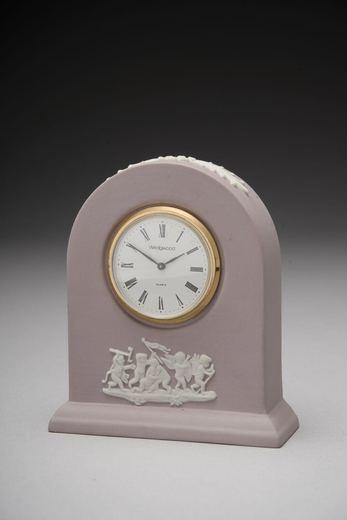
Clocks · 20th century
Clock, Jasperware with applied reliefs and metal and glass, Josiah Wedgwood and Sons, Stoke on Trent, 20th century (V&A WE.15629-2014)
Victoria and Albert Museum, London
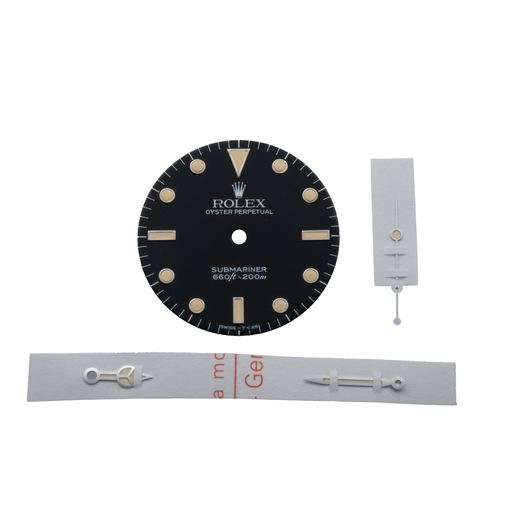
Movements & Components · circa 1990
Rolex watch dial, ref. 5513, circa 1990
Antiquorum auction archive, Geneva
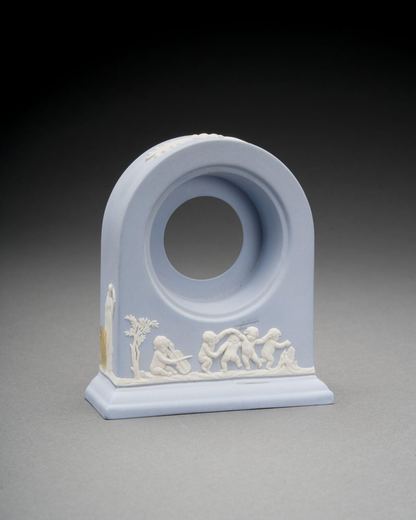
Movements & Components · 1993
Clock case, Jasperware with applied reliefs, Josiah Wedgwood and Sons, Barlaston, 1993 (V&A WE.18534-2014)
Victoria and Albert Museum, London
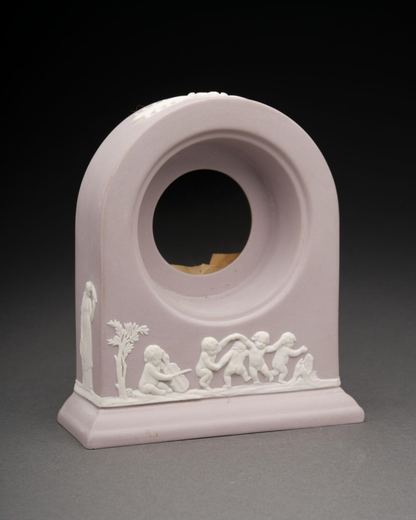
Movements & Components · 1993
Clock case, Jasperware with applied reliefs, Josiah Wedgwood and Sons, Barlaston, 1993 (V&A WE.18551-2014)
Victoria and Albert Museum, London
Movements & Components · ca. 1999
Clock case, Jasperware with applied reliefs and moulding, Josiah Wedgwood and Sons, Barlaston, ca. 1999
Victoria and Albert Museum, London