Clocks · Automaton
Automaton clock by Emett, Rowland, United Kingdom, 1984
- Maker / attribution
- Emett, Rowland (maker)
- Date
- 1984
- Historical period
- Quartz Revolution (1969 – 1990)
- Country of origin
- United Kingdom
- Place
- United Kingdom, United Kingdom
- Object type
- Automaton
- Holding institution
- Science Museum Group, London
- Accession / object no.
- 2020-4
- Credit line
- Acquired with the support of the Science Museum Foundation, Art Fund and the Friends of the National Railway Museum
- Catalogue title (original)
- A Quiet Afternoon in the Cloud Cuckoo Valley
Record summary
Held and catalogued by Science Museum Group, London (object number 2020-4), this is an automaton by Emett, Rowland, made in United Kingdom, United Kingdom, dated 1984. The Atlas places it in the Quartz Revolution period (1969 – 1990) of its Clocks collection. The record is illustrated with 4 photographs.
Assembled from the source record's structured fields. Dates and attributions are given as the source states them; where a field is missing the Atlas leaves it blank rather than estimating.
Catalogue description
Science Museum Group description
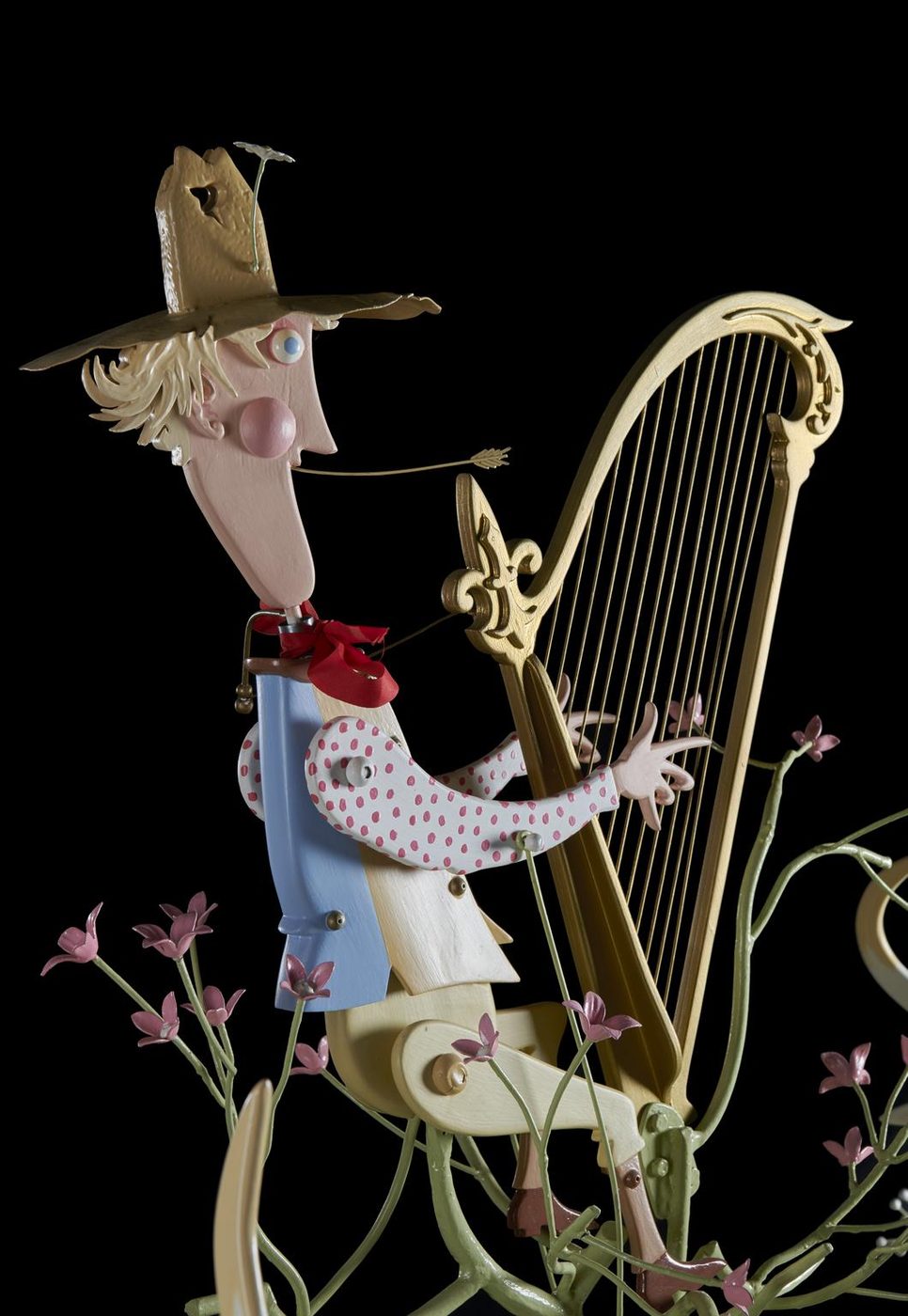
A Quiet Afternoon in the Cloud Cuckoo Valley was the last and largest of the automata created by Rowland Emett, one of Britain’s foremost artists in the field of kinetic sculpture. it was built in 1984 for a shopping centre in Basildon, but never installed. Born in London in 1906, Emmet studied at the Birmingham School of Arts & Crafts, before working as a commercial artist and then for the Air Ministry during the Second World War. He began producing cartoons for Punch in 1939, eventually becoming the magazine’s cartoon editor. His intricate drawings were inspired by the wonders of Victorian engineering and often featured unusual trains hauled by engines with elongated boilers and tall chimneys, carrying an eccentric range of passengers. In 1951 Emett designed a real-life version of his Far Twittering & Oyster Creek Railway for the Festival of Britain, at which it carried over 2 million passengers. He also designed the inventions of Caractacus Potts for the 1968 film Chitty Chitty Bang Bang and his working sculptures were exhibited at venues around the world. Emett died in 1990. A Quiet Afternoon in the Cloud Cuckoo Valley comprises eight separate automota, each representing a scene on a journey on Emett’s fictional Far Tottering & Oyster Creek Railway. The passenger train, pulled by a locomotive named Wild Goose, runs on a raised railway. At Cow Parsley meadow, cows nod their heads as a farmer plays to them on his harp, and at Far Tottering a water wheel revolves. A fisherman hauls a mermaid into his net at Shrimphaven, while at Wisteria Halt a clock is positioned at the top of a flowering tree. An ornithologist, disguised as a bush, cycles past Twittering Woods, with a bird nesting in his bicycle lamp. An elderly gentleman in a Victorian swimsuit dives from a bathing machine at Oyster Creek, and the journey ends with a Wishing Well. The clock at Wisteria Halt is designed to strike on the quarter hour, at which point all the automata come to life for a few minutes.
Historical context
Quartz Revolution (1969 – 1990)
Seiko's Astron begins mass quartz timekeeping; traditional industries contract sharply.
Quartz movements and digital displays made accurate clocks cheap and ubiquitous after the early 1970s. LED and LCD clocks, clock radios and radio-controlled clocks appeared, while traditional mechanical clockmaking contracted sharply in Germany, France and Britain.
Read the period in the timelineMore clocks from this periodEarlier: Modern Mechanical Horology
Atlas type guide
Astronomical, musical and automaton clocks
Astronomical clocks display more than the hour: the positions of the sun and moon in the zodiac, the phase of the moon, the calendar, sometimes the planets and eclipses. From Richard of Wallingford's and Giovanni de' Dondi's fourteenth-century clocks to the Prague Orloj and the Strasbourg cathedral clocks, they demonstrated the order of the cosmos. Renaissance makers in Augsburg and Nuremberg built celestial globe clocks and monstrance clocks as princely treasures.
Automaton and musical clocks entertained as well as informed: figures move, birds sing, organs and carillons play tunes from pinned cylinders. The eighteenth-century trade with China ('sing-songs') and Ottoman Turkey created a market for elaborate English, Swiss and French automata.
What to look for
- Subsidiary dials for moon phase, calendar, zodiac and planetary positions.
- Celestial globes or armillary spheres turned by the movement.
- Pinned cylinders, bellows and pipes or bells for music.
- Figures on cams and levers; separate trains for automaton work.
Dating clues
- Renaissance astronomical table and globe clocks: c. 1550–1650.
- English and Swiss automaton clocks for the Chinese market: c. 1760–1820.
- Picture clocks (clockwork pictures) are mostly nineteenth century.
General guidance written by the Atlas editors about this kind of object. It is not a statement about this particular piece; for that, rely on the source record above and on physical examination.
Read next:Verge escapementFusee
Related records
Clocks · 1964-1988
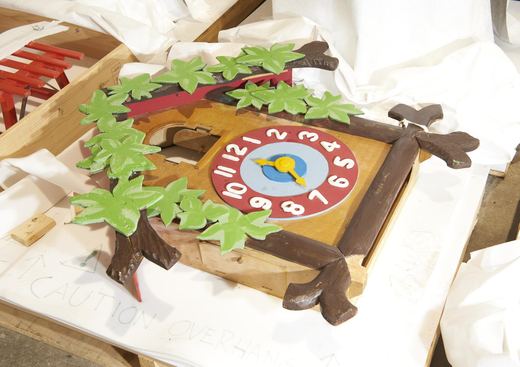
The clock from BBC children's television series 'Playschool', c 1977
Science Museum Group, London
Clocks · 1964-1988
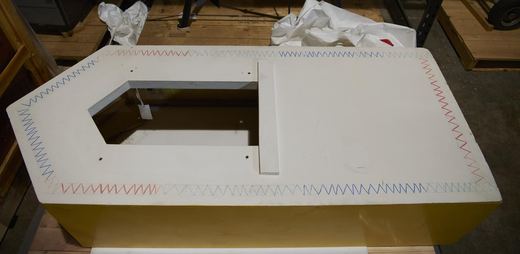
The clock housing from BBC children's television series 'Playschool', c 1977
Science Museum Group, London
Clocks · ca.1970
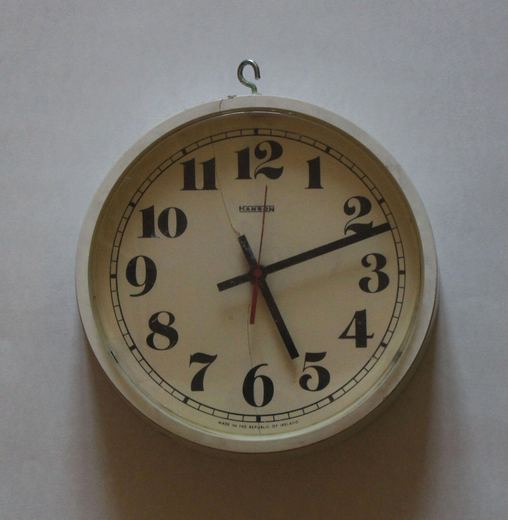
Comedy clock used in performance by Tommy Cooper, ca.1970
Victoria and Albert Museum, London
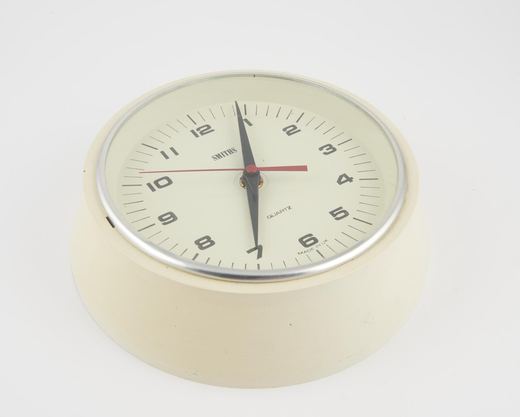
Clocks · 1971-1979
Electric clock by Smiths, United Kingdom, 1971-1979
Science Museum Group, London
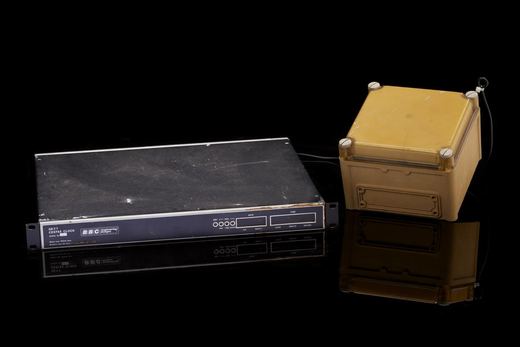
Clocks · 1974
CEEFAX clock Serial No. 1 GE7/7.
Science Museum Group, London
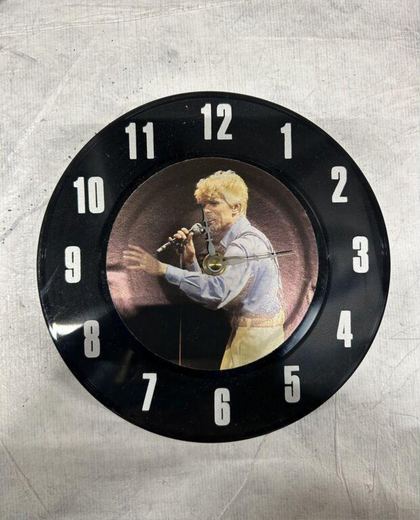
Clocks · 1983
Record-shaped clock printed with photograph of David Bowie performing on the Serious Moonlight live tour, 1983
Victoria and Albert Museum, London
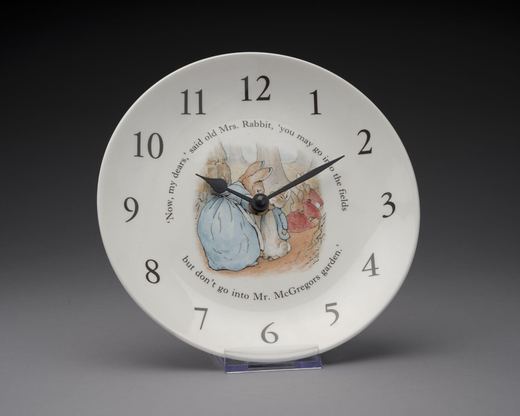
Clocks · late 20th century
Clock, 'Peter Rabbit', Queen's ware, transfer printing, Josiah Wedgwood and Sons, Barlaston, late 20th century (V&A WE.17466-2014)
Victoria and Albert Museum, London
Clocks · late 20th century
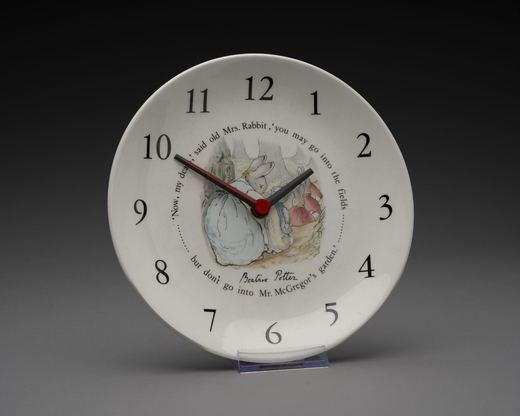
Clock, 'Peter Rabbit', Queen's ware, transfer printing, Josiah Wedgwood and Sons, Barlaston, late 20th century (V&A WE.18029-2014)
Victoria and Albert Museum, London