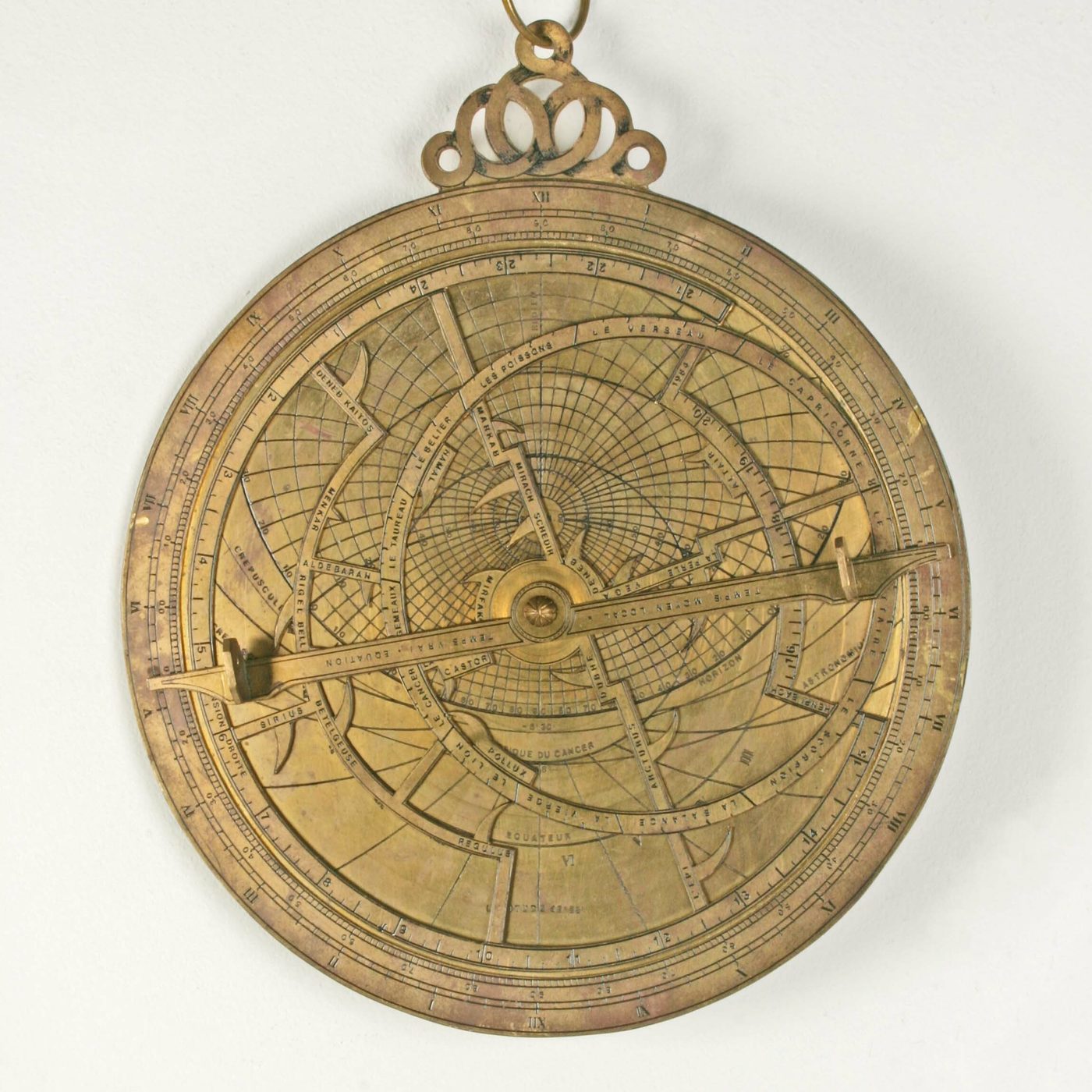
Instruments · Astrolabe
Astrolabe by Henri Bach, France, 1978
- Maker / attribution
- Henri Bach (creator)
- Date
- 1978
- Historical period
- Quartz Revolution (1969 – 1990)
- Country of origin
- France
- Place
- Strasbourg
- Object type
- Astrolabe
- Holding institution
- German Clock Museum
- Accession / object no.
- Museu_ProvidedCHO_museum_digital_57223__technical_number_
- Catalogue title (original)
- Astrolabium, Henri Bach, Straßburg, 1978 (German)
Record summary
Held and catalogued by German Clock Museum (object number Museu_ProvidedCHO_museum_digital_57223__technical_number_), this is an astrolabe by Henri Bach, made in Strasbourg, France, dated 1978. The Atlas places it in the Quartz Revolution period (1969 – 1990) of its Instruments collection. The record is illustrated with 1 photograph.
Assembled from the source record's structured fields. Dates and attributions are given as the source states them; where a field is missing the Atlas leaves it blank rather than estimating.
Catalogue description
Catalogue description from German Clock Museum (German)
Astrolabium, Henri Bach, Straßburg, 1978 (Deutsches Uhrenmuseum Furtwangen)
Shown in the original language of the source catalogue. An editor-reviewed English translation has not yet been published; we do not publish machine translations as authoritative text.
Historical context
Quartz Revolution (1969 – 1990)
Seiko's Astron begins mass quartz timekeeping; traditional industries contract sharply.
Electronic timing replaced mechanical instruments in sport, industry and navigation.
Read the period in the timelineMore instruments from this periodEarlier: Modern Mechanical Horology
Atlas type guide
Astrolabes, quadrants and astronomical compendia
The planispheric astrolabe is a two-dimensional model of the sky. A pierced rotating star map (the rete) turns over a plate engraved for a particular latitude; by aligning a star or the sun with its observed altitude, the user can read the time of day or night, the time of sunrise and sunset, and solve many other astronomical problems. Developed in the Hellenistic world and refined by astronomers in the Islamic world from the eighth century, it reached Latin Europe through al-Andalus.
Quadrants, compendia, armillary spheres and later orreries belong to the same family of instruments that model the heavens. They were teaching tools, status objects and practical time-finders. Many surviving examples are signed and dated, which makes them important evidence for the history of instrument-making workshops in Baghdad, Isfahan, Lahore, Toledo, Louvain, Nuremberg, London and elsewhere.
What to look for
- The latitudes engraved on the plates — they show which cities the instrument was made for.
- The script and calendar used: Arabic or Persian inscriptions, abjad numerals, Hebrew or Latin text indicate tradition and region.
- The design of the rete: the number of named stars and the style of the star pointers changes by region and period.
- Shadow squares, unequal-hour lines and zodiac scales on the back (dorsum).
- Signatures, dedications and dates, often hidden on the throne (kursi) or the back.
Dating clues
- Signed and dated astrolabes allow precise dating; undated ones are attributed by star positions on the rete, which shift slowly through precession.
- Gothic-style retes with tracery are typical of European instruments of the fourteenth and fifteenth centuries.
- Printed paper astrolabes and planispheres became common from the sixteenth century onward.
General guidance written by the Atlas editors about this kind of object. It is not a statement about this particular piece; for that, rely on the source record above and on physical examination.
Related records
Instruments · 1959 (designed); 2001(made)
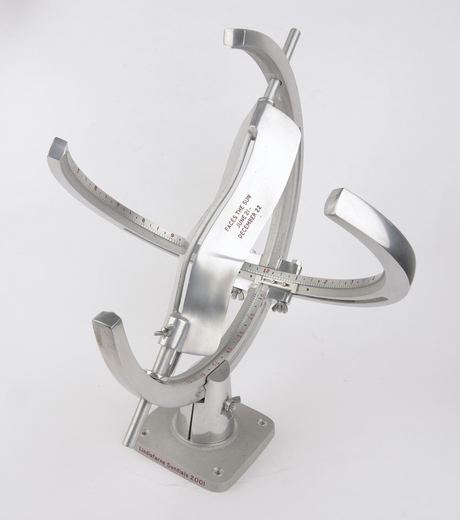
Sundial by Moss, Tony; Schmoyer, R. L.; Lindisfarne sundials, England, 1959 (designed); 2001(made)
Science Museum Group, London
Instruments · 1960-1979
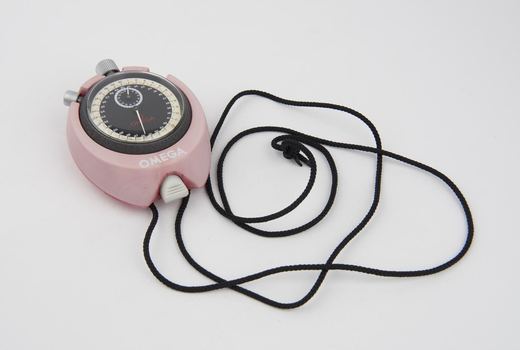
Stopwatch / timer by Omega, 1960-1979
Science Museum Group, London
Instruments · 1960-1979
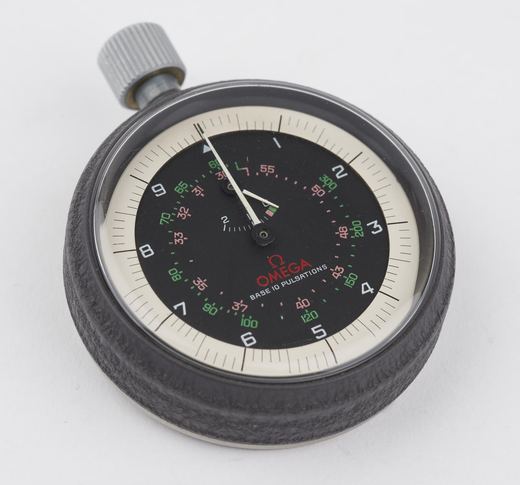
Stopwatch / timer by Omega, Switzerland, 1960-1979
Science Museum Group, London
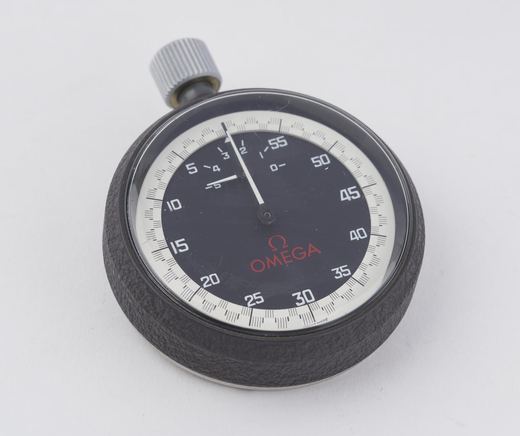
Instruments · 1960-1979
Stopwatch by Omega, Swiss made, single-button type reading 0 - 60 seconds in fifths and 0 - 5 minutes in minutes on subsidiary dial, 1960-79.
Science Museum Group, London
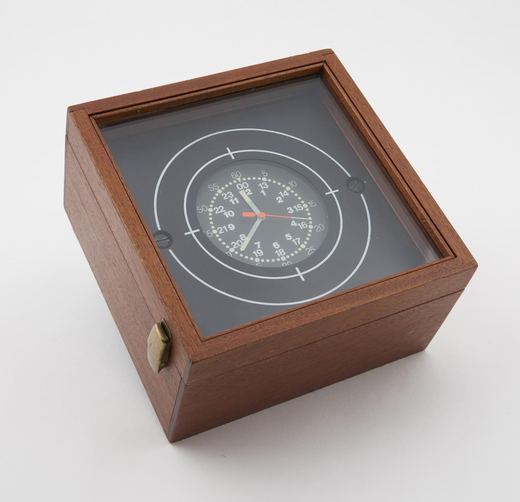
Instruments · 1965-1984
Chronometer by Patek Philippe; Kelvin Hughes, England, 1965-1984
Science Museum Group, London
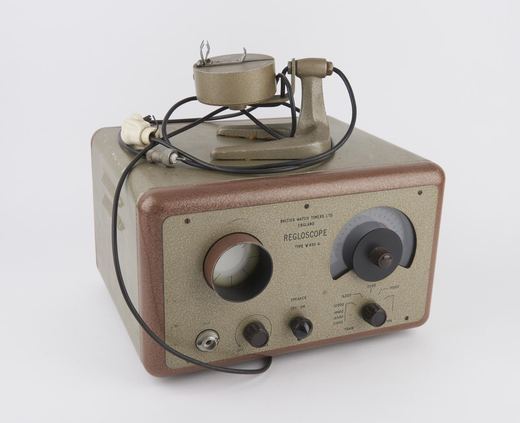
Instruments · 1970-1989 (estimated)
Stopwatch / timer by British Watch Timers Ltd., England, 1970-1989 (estimated)
Science Museum Group, London
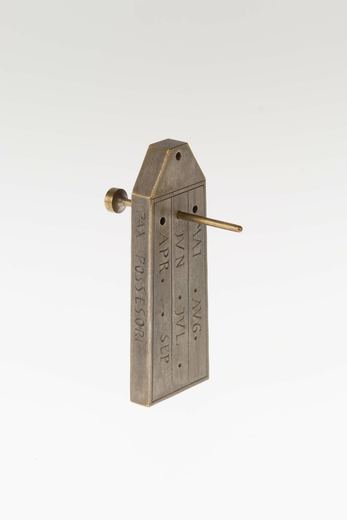
Instruments · 1970
Sundial, Germany, 1970
German Clock Museum
Instruments · 1971
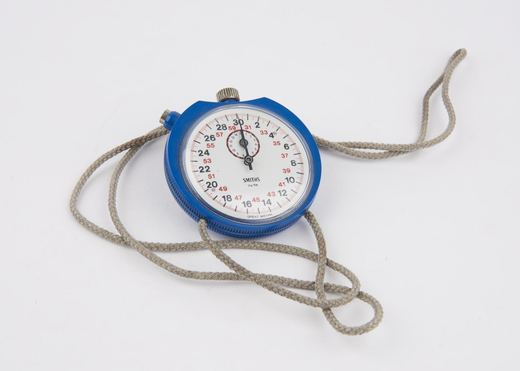
Stop-watch reading to 1/10th of a second, with pin pallet lever escapement and plastics case (see note). Made by Smiths Industries in Great Britain, 1971
Science Museum Group, London