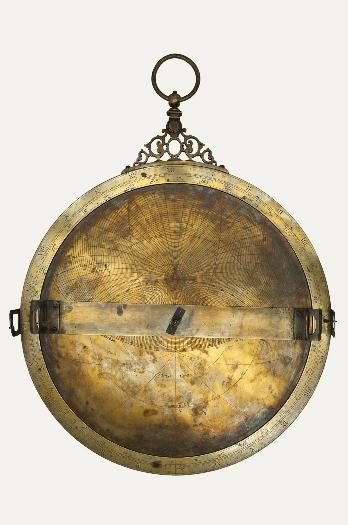
Instruments · Astrolabe
Astrolabe by Ferdinandus [Grabador] Arsenius, Belgium, 1618
- Maker / attribution
- Ferdinandus [Grabador] Arsenius (creator)
- Date
- 1618
- Historical period
- Early Modern Horology (1600 – 1750)
- Country of origin
- Belgium
- Place
- Antwerp
- Object type
- Astrolabe
- Holding institution
- National Archaeological Museum
- Accession / object no.
- pages_Main_idt_58577_inventary_54803_table_FMUS_museum_MAN
- Catalogue title (original)
- Astrolabio
Record summary
Held and catalogued by National Archaeological Museum (object number pages_Main_idt_58577_inventary_54803_table_FMUS_museum_MAN), this is an astrolabe by Ferdinandus [Grabador] Arsenius, made in Antwerp, Belgium, dated 1618. The Atlas places it in the Early Modern Horology period (1600 – 1750) of its Instruments collection. The record is illustrated with 1 photograph.
Assembled from the source record's structured fields. Dates and attributions are given as the source states them; where a field is missing the Atlas leaves it blank rather than estimating.
Catalogue description
Catalogue description from National Archaeological Museum (def)
Los astrolabios planos están compuestos por tres discos grabados por ambas caras con gráficos y escalas numéricas necesarias para su funcionamiento. El disco de mayor tamaño o madre es fijo y sirve de estuche a una o varias láminas o tímpanos y a un disco calado y giratorio denominado araña, que van sujetos mediante un tornillo, que acoge además, dos alidadas rotatorias para alinear los astros. Su construcción se basa en un tipo de proyección estereográfica que permite representar los cuerpos esféricos en un plano y reproducir el movimiento aparente de los astros y de la Tierra. El tímpano del astrolabio representa la esfera terrestre y en él se encuentran grabados el ecuador, los trópicos, el horizonte, las latitudes y los azimuts o longitudes. La araña es una proyección de la bóveda celeste, que incluye la elíptica o recorrido aparente del Sol durante un año y un número variable de estrellas fijas. Este astrolabio no tiene araña. En el dorso de la pieza, debajo del cuadrado altímetro o de sombras hay una inscripción con la leyenda ASTROLABIUM C. PTOLEMACI ABSOLUTISSIMUM/IN QUO FIXAE SUNT IUXTA TYCHONIS OBSERVATIONES:/ORDI CONSTRUCTIONIS EST MICHAELIS COIGNETI/SER.m BELGI/P.m MATHEMATICI/M. IACOBUS DE COSTERE, ARTIVEX LOLERTISSIMUS FABRICAUIT/ FERD. ARSSENIUS, OMNES INCISIONES AC GRADUUM DIVISIONES INSCULPSIT/ANTUERPIAE AN A XPO NATO CID.CD.XVIII. En el fondo de la madre ostenta el Quadratum Nauticum con una rosa náutica en la parte central, cuyo Norte está marcado por una flor de lis; el Sur, con una especie de escudo en forma de O adornada; el Este, con la clásica cruz que se encuentra actualmente representada en las rosas modernas y que parece que indicaba la dirección de los Santos Lugares. La punta del Oeste presenta una P inicial del viento de poniente, así como la O antes citada corresponde al Ostro italiano o lemosín. Una utilización correcta del astrolabio permitía imaginar, desde una latitud determinada, la rotación diaria de la bóveda celeste, observar la posición de los astros en relación a la Tierra, medir el tiempo o realizar numerosas operaciones de cálculo. El astrolabio plano es un instrumento que se conoce en Oriente desde la Alta Edad Media. Su incorporación a Occidente es algo más tardía, pero fue en el siglo XVI cuando alcanzó los niveles más elevados de perfección.
Historical context
Early Modern Horology (1600 – 1750)
Huygens' pendulum and balance spring transform accuracy; English makers develop the anchor and deadbeat escapements.
Pocket sundials, Butterfield dials and sandglasses remained essential companions to imperfect clocks; navigators used sandglasses and the log line; observatories began to combine telescopes with pendulum clocks.
Read the period in the timelineMore instruments from this periodEarlier: Renaissance Horology
Atlas type guide
Astrolabes, quadrants and astronomical compendia
The planispheric astrolabe is a two-dimensional model of the sky. A pierced rotating star map (the rete) turns over a plate engraved for a particular latitude; by aligning a star or the sun with its observed altitude, the user can read the time of day or night, the time of sunrise and sunset, and solve many other astronomical problems. Developed in the Hellenistic world and refined by astronomers in the Islamic world from the eighth century, it reached Latin Europe through al-Andalus.
Quadrants, compendia, armillary spheres and later orreries belong to the same family of instruments that model the heavens. They were teaching tools, status objects and practical time-finders. Many surviving examples are signed and dated, which makes them important evidence for the history of instrument-making workshops in Baghdad, Isfahan, Lahore, Toledo, Louvain, Nuremberg, London and elsewhere.
What to look for
- The latitudes engraved on the plates — they show which cities the instrument was made for.
- The script and calendar used: Arabic or Persian inscriptions, abjad numerals, Hebrew or Latin text indicate tradition and region.
- The design of the rete: the number of named stars and the style of the star pointers changes by region and period.
- Shadow squares, unequal-hour lines and zodiac scales on the back (dorsum).
- Signatures, dedications and dates, often hidden on the throne (kursi) or the back.
Dating clues
- Signed and dated astrolabes allow precise dating; undated ones are attributed by star positions on the rete, which shift slowly through precession.
- Gothic-style retes with tracery are typical of European instruments of the fourteenth and fifteenth centuries.
- Printed paper astrolabes and planispheres became common from the sixteenth century onward.
General guidance written by the Atlas editors about this kind of object. It is not a statement about this particular piece; for that, rely on the source record above and on physical examination.
Related records
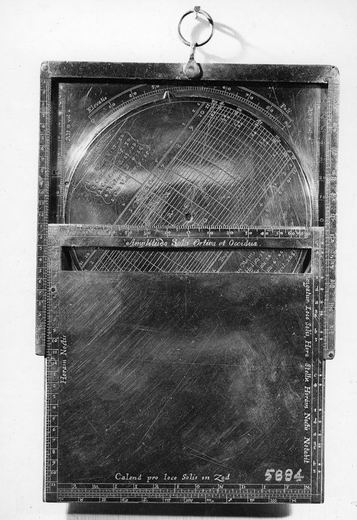
Instruments · 1600–1699
Astrolabe by Henry Sutton, Belgium, 1600–1699
Royal Institute for Cultural Heritage
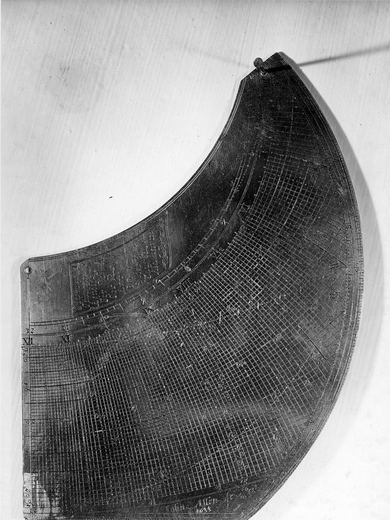
Instruments · 1600–1699
Astrolabe by John Allen, Belgium, 1600–1699
Royal Institute for Cultural Heritage
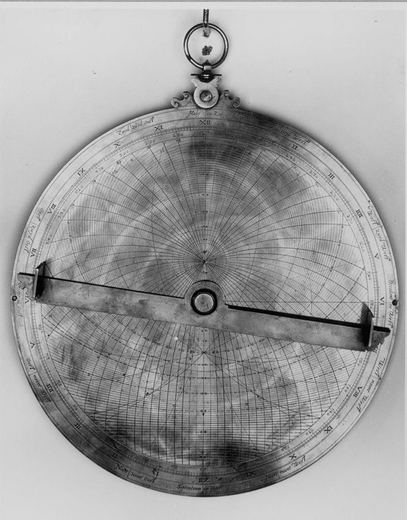
Instruments · 1600–1699
Astrolabe by Lambert Damery, Belgium, 1600–1699 (Royal Institute for Cultural Heritage AP_10277393)
Royal Institute for Cultural Heritage
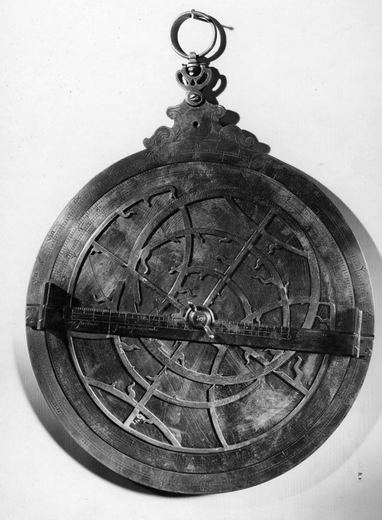
Instruments · 1600–1699
Astrolabe by Lambert Damery, Belgium, 1600–1699 (Royal Institute for Cultural Heritage AP_10368156)
Royal Institute for Cultural Heritage
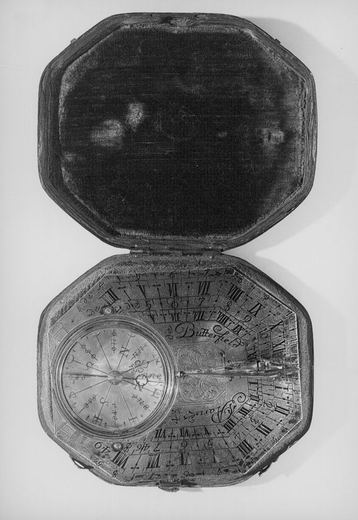
Instruments · 1600–1699
Sundial by Butterfield, Belgium, 1600–1699
Royal Institute for Cultural Heritage
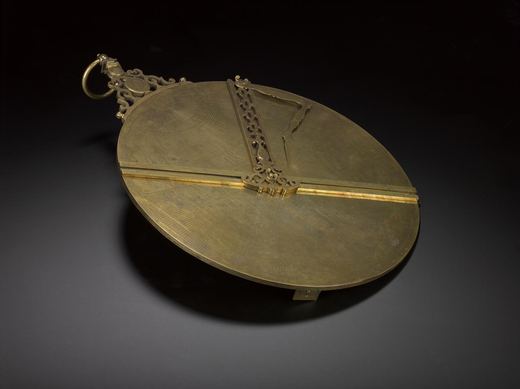
Instruments · 1607-1618
Astrolabe made by Ferdinand Arsenius, Antwerp, Flanders, 1607-1618.
Science Museum Group, London
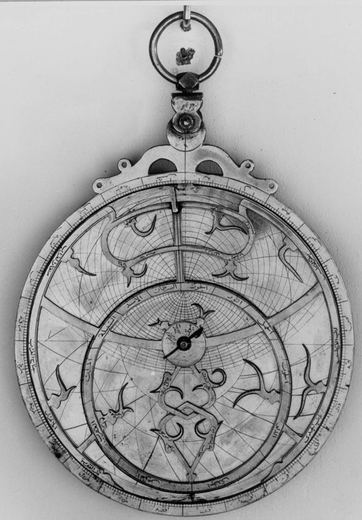
Instruments · 1700–1799
Astrolabe by Ibrahim al Mufti, Belgium, 1700–1799
Royal Institute for Cultural Heritage
Instruments · 1700–1799
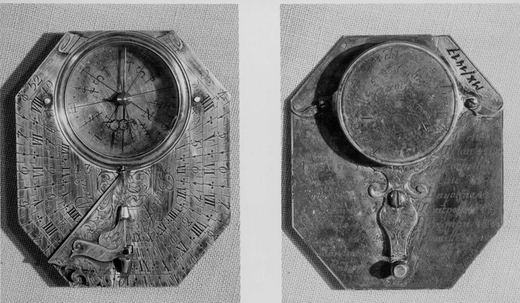
Sundial by Butterfield, Belgium, 1700–1799
Royal Institute for Cultural Heritage