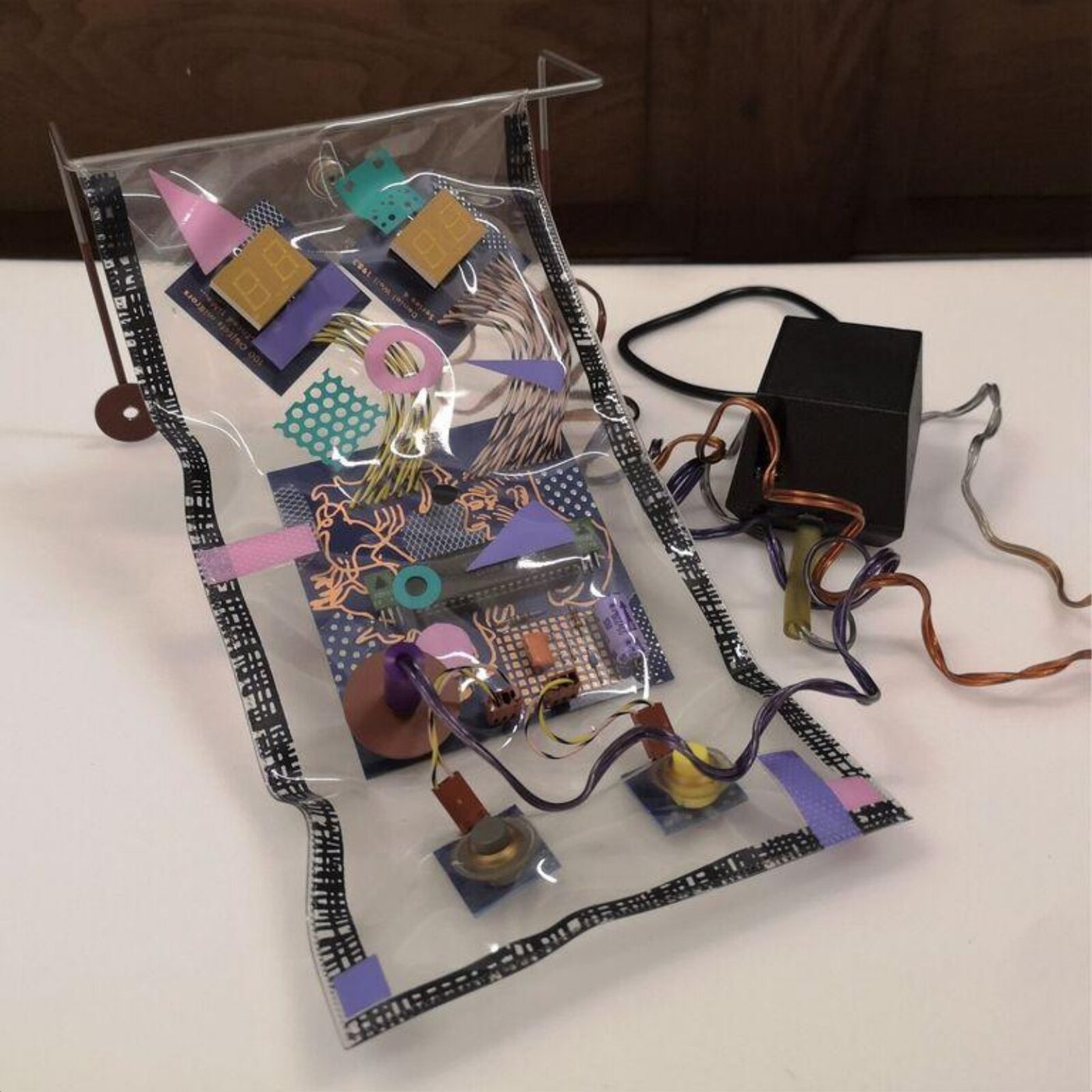
Clocks · Clock
'100 Objects Mirrors of Silent Time' clock, PVC, plastic and electrical components, designed by Daniel Weil, 1983
- Maker / attribution
- Daniel Weil (designer); Parenthesis Ltd (maker)
- Date
- 1983
- Historical period
- Quartz Revolution (1969 – 1990)
- Country of origin
- England
- Place
- London
- Object type
- Clock
- Materials / technique
- PVC, plastic and metal components
- Holding institution
- Victoria and Albert Museum, London
- Accession / object no.
- W.662-2001
- Credit line
- Given by the designer
- Catalogue title (original)
- 100 Objects Mirrors of Silent Time
Record summary
Held and catalogued by Victoria and Albert Museum, London (object number W.662-2001), this is a clock by Daniel Weil, made in London, England, dated 1983. The Atlas places it in the Quartz Revolution period (1969 – 1990) of its Clocks collection. Materials and techniques recorded by the source: PVC, plastic and metal components. The record is illustrated with 1 photograph.
Assembled from the source record's structured fields. Dates and attributions are given as the source states them; where a field is missing the Atlas leaves it blank rather than estimating.
Catalogue description
V&A — Physical description
The electrical components of the clock are contained within a see-through PVC bag which hangs from a metal wall fixing. Wires coated in multi-coloured plastic protrude from the front of the bag. The bag is printed with multi-coloured shapes and patterns. The circuit board is also printed with a drawing and various shapes and patters, again multi-coloured.
V&A — Historical context
Daniel Weil has been influential in changing and creating new forms for ordinary mass-produced products. In the 1980s one of his interest was how objects could be imbued with imagery and symbolism, through colour, shape and texture.
V&A — Object history
The title - '100 Objects Mirrors of Silent Time' refers to a) the fact that this is one of an edition of 100 clocks and b) that it is electric and therefore doesn't tick like a mechanical clock. It was designed for an Italian lawyer called Guiseppe Melzi who sent them to clients as a Christmas gift.
V&A gallery label
Twentieth Century Gallery Label, Room 71: Clock: '100 Objects Mirrors of Silent Time' Designed by David Weil (British, born Argentina, 1953), 1983 Made by Parenthesis Ltd., London, 1985 PVC, electrical components W.662-2001 This clock derives the maximum from each component in terms of technical efficiency and visual expression. For example the printed circuit board not only provides the circuit but is also a drawing and the electrical wires, which enter the clock at the front, were specially made to add visual elaboration. The title refers to the silence of the electronic clock by contrast with the mechanical.
Historical context
Quartz Revolution (1969 – 1990)
Seiko's Astron begins mass quartz timekeeping; traditional industries contract sharply.
Quartz movements and digital displays made accurate clocks cheap and ubiquitous after the early 1970s. LED and LCD clocks, clock radios and radio-controlled clocks appeared, while traditional mechanical clockmaking contracted sharply in Germany, France and Britain.
Read the period in the timelineMore clocks from this periodEarlier: Modern Mechanical Horology
Atlas type guide
Electric and synchronous clocks
Alexander Bain patented the electric clock in 1841, and through the later nineteenth century electricity was used both to drive pendulums and to distribute time. Master clocks sent impulses every half-minute or minute to subsidiary ('slave') dials across factories, schools, railway stations and post offices; Matthäus Hipp's toggle (1842) kept pendulums swinging with minimal interference. William Hamilton Shortt's free-pendulum clock (1921), with a slave pendulum doing the mechanical work, became the most accurate mechanical clock ever made in series.
In the 1920s and 1930s synchronous motor clocks, which count the alternating-current cycles of the mains supply (50 or 60 Hz), arrived in homes; Telechron in the United States and Smiths 'Sectric' and Ferranti in Britain made them in great numbers. Battery clocks such as the Bulle, Eureka and ATO used electromagnetic impulsing of balances or pendulums.
What to look for
- Electromagnets, contacts and coils in place of springs or weights.
- Cables, terminal blocks and labels for voltage or frequency.
- Master/subsidiary systems: a subsidiary dial has a stepping mechanism and no escapement.
- Brand names such as Synchronome, Gent, Magneta, Telechron, Smiths, Ferranti.
Dating clues
- Bain and Hipp clocks: from the 1840s.
- Synchronome master clocks: from 1895.
- Synchronous mains clocks: from the late 1920s (UK grid frequency standardised in the 1930s).
General guidance written by the Atlas editors about this kind of object. It is not a statement about this particular piece; for that, rely on the source record above and on physical examination.
Related records
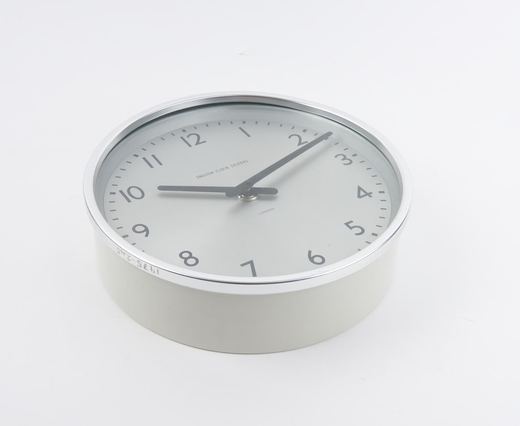
Clocks · 1965-1975
9-inch wall clock (School/3/P) by English Clock Systems, London, England, 1965-1975.
Science Museum Group, London
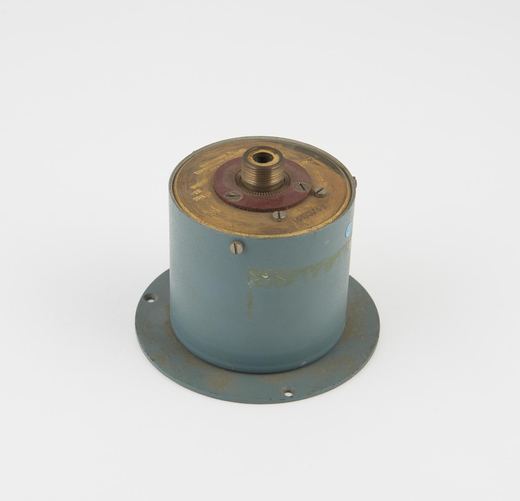
Clocks · 1969
Clock, weekly, Mk 2A, serial No. 14410/69, date 1969. By the Horstmann Gear Co. Ltd., Bath, England.
Science Museum Group, London
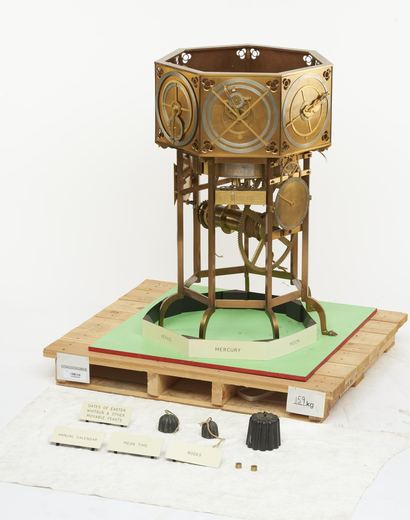
Clocks · 1974
Astronomical clock by Thwaites and Reed Ltd., England, 1974
Science Museum Group, London
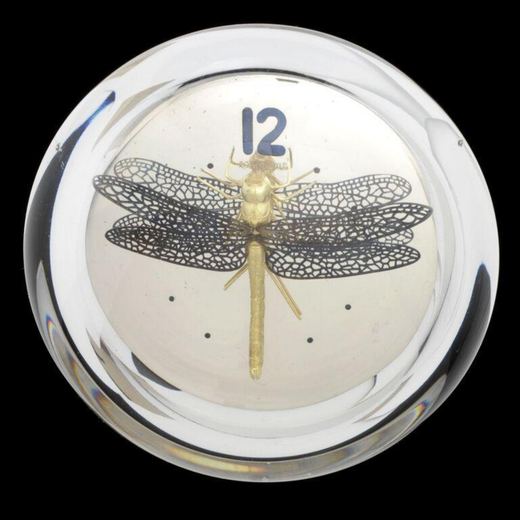
Clocks · 1976
Clock by Roger (Ltd) Doyle, England, 1976
Victoria and Albert Museum, London
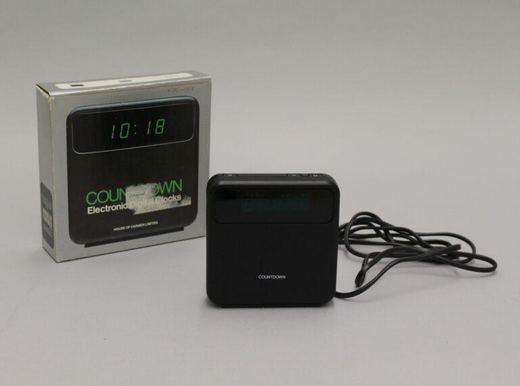
Clocks · 1977
English, 1977, designed by J. Ryan for Carmen
Victoria and Albert Museum, London
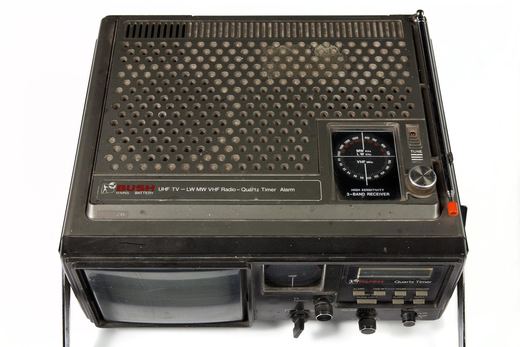
Clocks · 1979
Bush portable combined radio/ television/ alarm clock, model number BN6520A (includes a carrying handle and battery or mains supply), 1979, Hertfordshire.
Science Museum Group, London
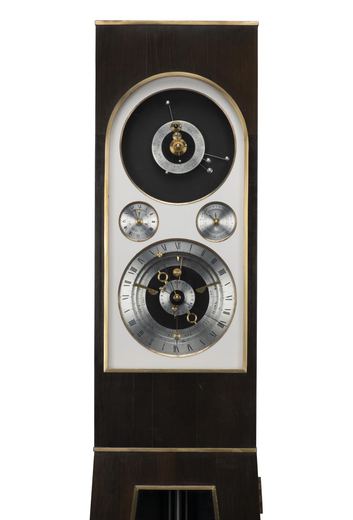
Clocks · 1982
Regulator clock by Jarvis, Roland, England, 1982
Science Museum Group, London
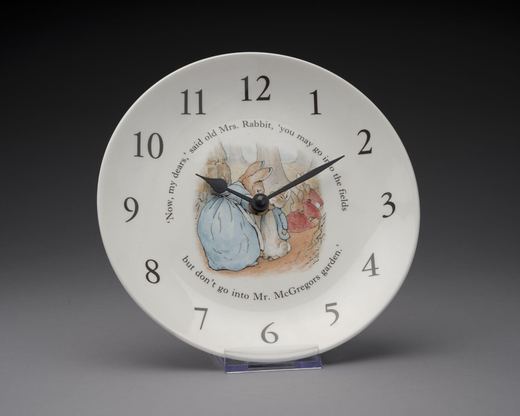
Clocks · late 20th century
Clock, 'Peter Rabbit', Queen's ware, transfer printing, Josiah Wedgwood and Sons, Barlaston, late 20th century (V&A WE.17466-2014)
Victoria and Albert Museum, London